





For five seasons, Eric Kripke’s adaptation of Garth Ennis and Darick Robertson’s comic-book acid trip has enthralled and entertained us with one diabolical bar fight staged against the corpo-fascist echelons of the American elite after another. After seven years of watching caped celebrities juiced-up on pharmaceutical-grade godhood collide with the titular rag-tag insurgency of traumatised malcontents, The Boys has finally staggered towards its curtain call.

The premise behind The Boys has always rested on a pleasingly ugly foundation: superheroes exist, albeit as intellectual property assets manufactured by the fictional conglomerate Vought International, while Billy Butcher (Karl Urban) and his coalition of anti-supe insurgents dedicate their lives to exposing and dismantling these superhuman mascots of late capitalism. The fifth and final season carries the burden of concluding that mission in a cultural ethos where our political realities seem to have developed the disturbing habit of stealing the writers’ material in real time.
The Boys Season 5 (English)
Creator: Eric Kripke
Cast: Karl Urban, Jack Quaid, Antony Starr, Erin Moriarty, Jessie T. Usher, Laz Alonso, Chace Crawford, Tomer Capone, Karen Fukuhara, Nathan Mitchell, Colby Minifie, Susan Heyward, Valorie Curry
Episodes: 8
Runtime: 63–68 minutes
Storyline: As Homelander tightens his grip on America and begins recasting himself as a divine authority, Billy Butcher and the Boys race to stop his ascent once and for all.
As Season 5 begins, Homelander (Antony Starr), the all-American lab-grown crown jewel and television’s premier prophet of superhuman megalomania, has secured control over the machinery of the American state after spending previous seasons consolidating Vought’s media apparatus and transforming his supporters into a congregation of star-spangled loyalists. The season opens with concentration camps housing political dissidents, media networks manufacturing superganda at industrial scale, and nationalist hysteria machinery providing entertainment to the aloof. With earlier seasons, most of this sardonic imagery felt exaggerated enough to come off as political satire. But in this final season, the material has unfortunately aged like fine wine, much to the chagrin of Kripke’s razor sharp wit.
The writing spends much of the season placing Homelander on a theological escalator because political authority no longer satisfies him once power from the White House and beyond enters his bloodstream. Through Firecracker’s evangelical broadcasts and Oh Father’s super-powered sermons, Homelander attempts to apotheosise himself from his own state-sponsored gospel dubbed the Democratic Church of America — Starr attacks this material with frightening precision as always.
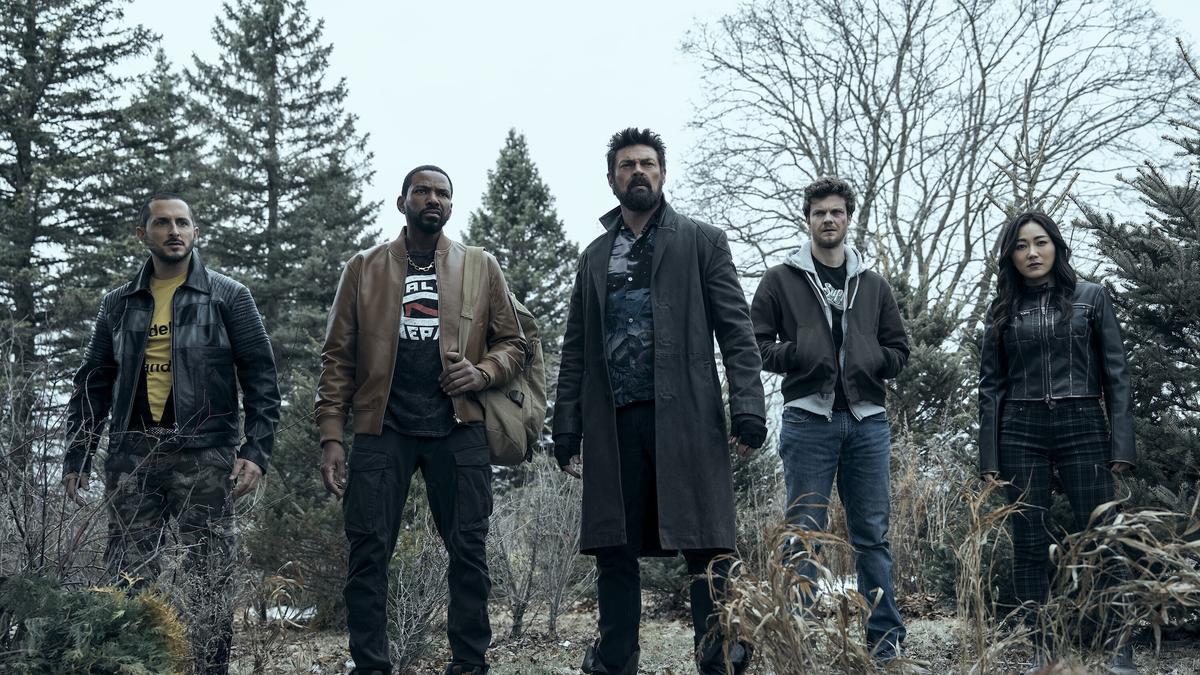
A still from ‘The Boys’ Season 5
| Photo Credit:
Prime Video
The problems begin accumulating around Homelander because Season 5 spends an extraordinary amount of narrative capital constructing elaborate pathways towards his downfall that lead practically nowhere. The supe-killing virus built up throughout Season 4 as the series’ biological doomsday device that repeatedly forced Hughie and Butcher into ethical warfare over whether mass extermination could ever justify stopping Homelander, is eventually pushed into the margins with surprisingly little consequence. Homelander briefly even acquires a terrifying new threshold of power through the Compound V-One, although his supposed immortality is rendered redundant almost instantaneously. Soldier Boy too, drifts aimlessly through large portions of the season despite carrying one of the few abilities capable of stripping powers, and despite MM’s entire revenge arc being fused to him since Season 3, the story eventually stores him safely away, with zero closure. Homelander’s estranged son Ryan, also spent considerable time as the ideological tug-of-war between Butcher and Homelander across previous seasons, but the finale eventually reduces him to reinforcement arriving midway through the fight. Likewise, across its eight final episodes, The Boys keeps arranging loaded firearms before eventually discovering a completely different and wildly unsatisfying answer to end the caped menace once and for all.

The Oval Office showdown in the finale carried the heaviest burden because The Boys spent years feeding us promises of an apocalyptic confrontation. The final image of Homelander’s transformation from self-appointed godhead into a pathetic snivelling wreck of panic and humiliation, getting his head split open across the Resolute Desk like a can of soda on live television felt genuinely cathartic because Starr finally strips the super-demagogue down to the frightened child hiding beneath the stars and stripes. However, the road leading upto that moment feels frustratingly undercooked, and one of the most egregious narrative decisions was Kimiko’s sudden evolution into a walking deus ex machina at the eleventh hour, whose convenient supe-depowering ability instantly resolves the greatest Homelander-killing problem that every prior season had already spent years trying to solve.
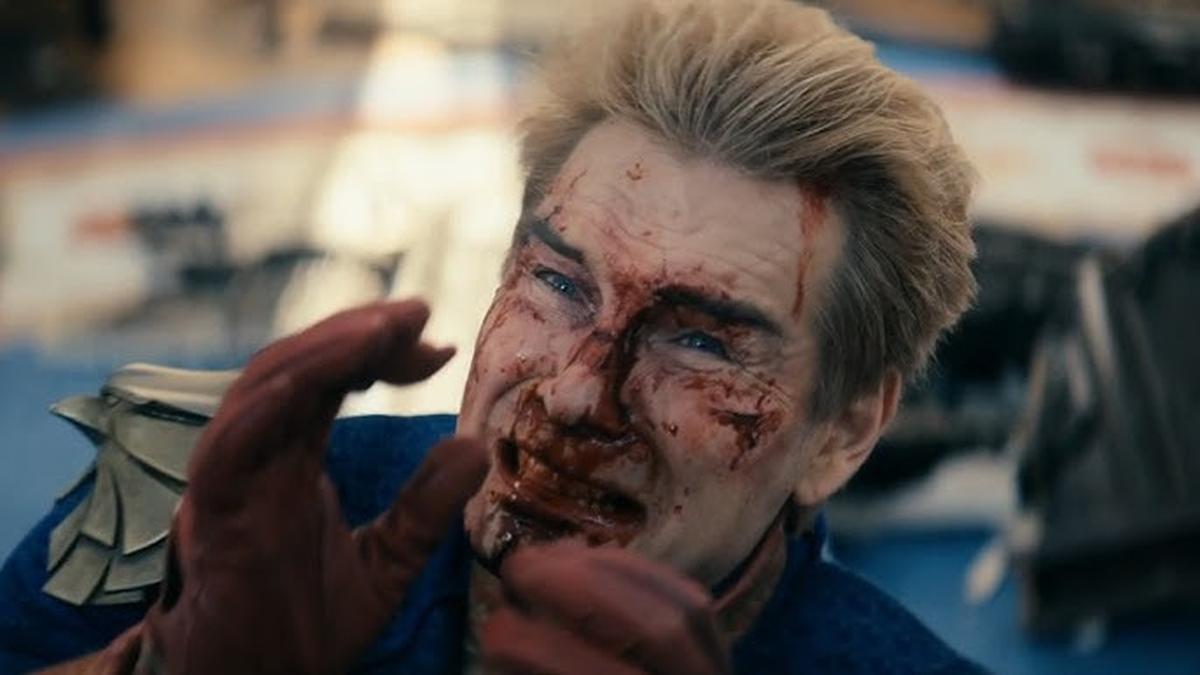
A still from ‘The Boys’ Season 5
| Photo Credit:
Prime Video
The finale also creates casualties through rushed creative accounting because every remaining active member of the Seven gets swept off the board with startling haste, despite years of buildup attached to these characters. Marie Moreau and the Gen V characters spend inconsequential stretches as mere cameos. Susan Heyward’s Sister Sage also escapes with startling ease after orchestrating large-scale horrors. MM watches Stan Edgar reclaim Vought despite previous promises involving bullets and revenge. What’s worse is Annie’s decision to name her child after Hughie’s deceased former girlfriend.
But despite this growing landfill of inconsistencies and narrative self-sabotage, one of the season’s most revolting choices this is its nauseatingly contrived coronation of Frenchie’s martyrdom. Since The Boys has long presented itself as television’s loudest anti-authoritarian carnival of political outrage, watching the series construct swelling grief and near-saintly reverence around a character played by an ex-IDF soldier, creates one of the most grotesque ironies.

Alas, the tragedy surrounding The Boys is its awkwardly serendipitous timing. The series once possessed a sharp eye for celebrity worship and military-industrial branding before the American political reality accelerated into increasingly on-brand habits involving messianic AI portraiture and a growing enthusiasm for masked-men-in-unmarked-vans democratically eliminating all dissenters, among many other bizarre dystopic truths. Though the season still carries gallons of blood and enough mutilated anatomy to sustain its carnival of excess, its satirical teeth repeatedly grind against real-world headlines already vying for attention.
Perhaps the series’ last laugh still lies somewhere beyond the screen. Since reality has spent so much of the year shadowing The Boys with unnerving fidelity, here’s hoping it eventually follows the script all the way towards its close, in a near-future where self-anointed messiahs eventually complete their televised humiliations as whimpering little frauds.
The Boys Season 5 is currently streaming on Prime Video
Published – May 27, 2026 04:08 pm IST
