





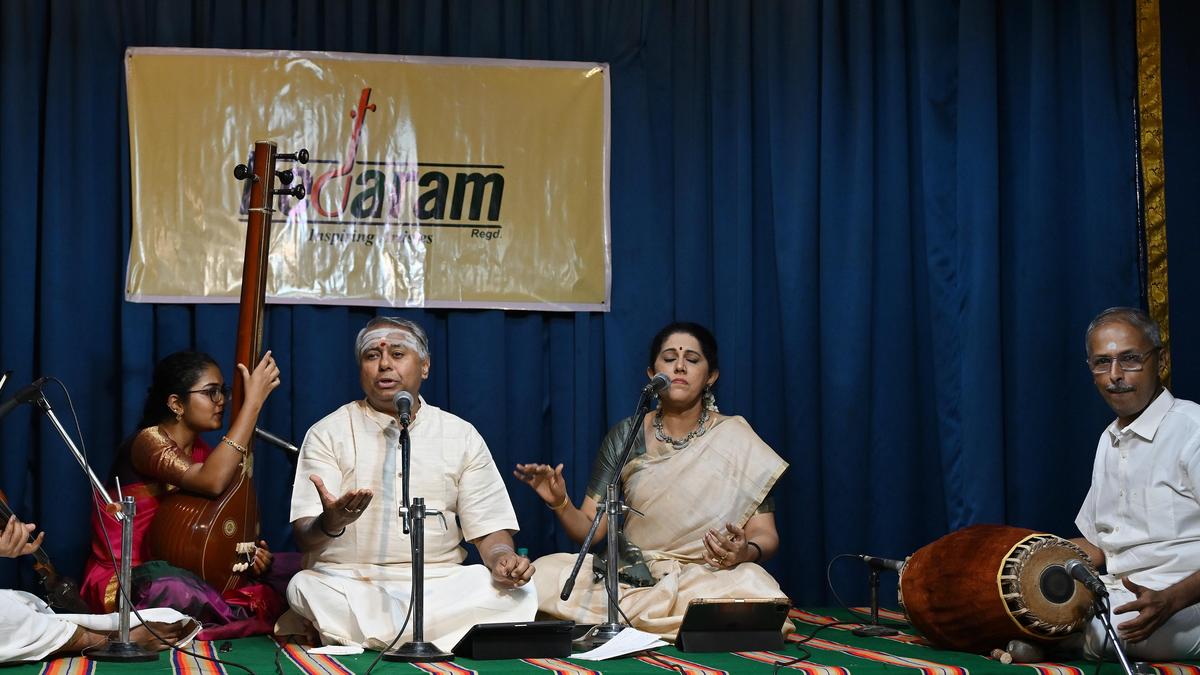
R.K. Shriramkumar at the lecture demonstration on ‘The sangeetam and Sahityam of Syama Sastri kritis’ with Amirtha Murali (vocal), K. Arunprakash (mridangam) and Madan Mohan (violin).
| Photo Credit: B. Velankanni Raj
Next year marks 200 years since Syama Sastri (1762–1827) left this world. Yet, his kriti ‘O jagadamba’ still anchors many concerts. Though no one insists, it is just sung. This paradox formed the core of R.K. Shriramkumar’s recent lec-dem, organised by Kedaram Trust at Ragasudha Hall. Supporting him in this reflective presentation were vocalist Amirtha Murali, violinist Madan Mohan, mridangist K. Arunprakash and Nanditha Kannan (tambura and vocal).
Born in Tiruvarur into a family of Kamakshi archakas, Syama Sastri inherited a life devoted to worship. After political upheaval, his family brought the Bangaru Kamakshi idol to Thanjavur, where the Maratha court built them a temple (on West Main Street) and agrahara homes. Syama Sastri’s house, behind that temple, still stands in its original Maratha style — a preservation Shriramkumar praised. Syama Sastri was the first musician in the family and trained under Sangita Swami and then Pacchimiriyam Adiappayya.
Published – April 30, 2026 01:48 pm IST