




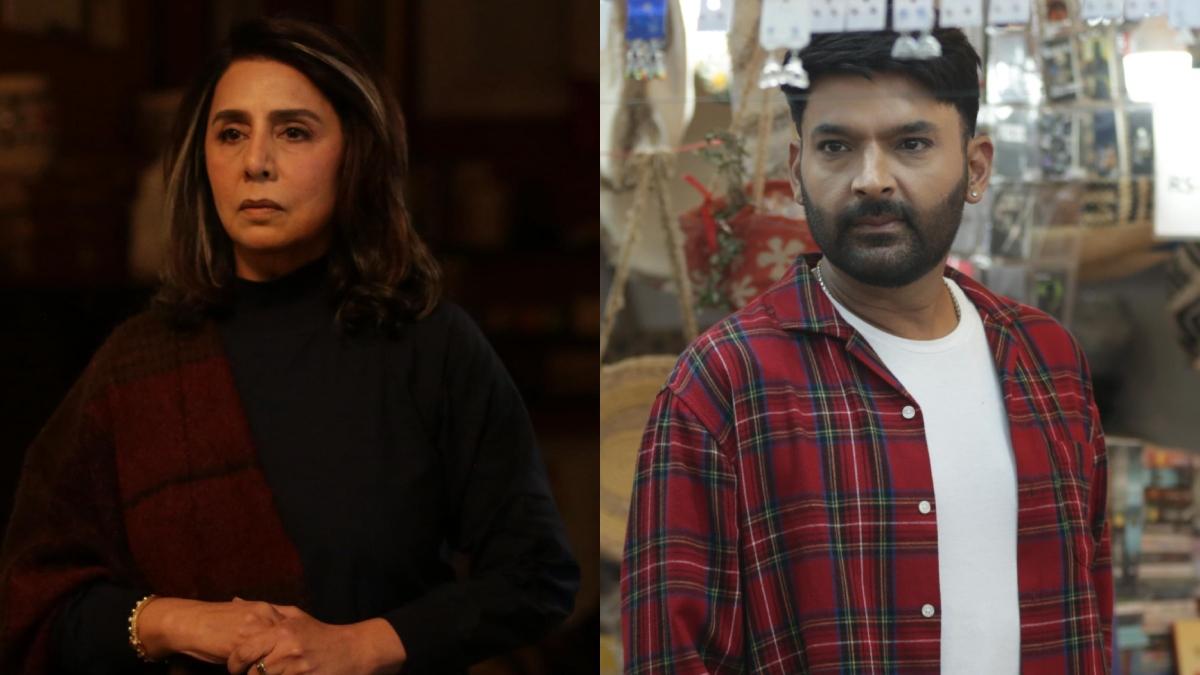
Neetu Kapoor and Kapil Sharma’s stills from the film
| Photo Credit: Panorama Studios
In a cinematic universe that has long portrayed Indian elders — particularly widows — as embodiments of quiet sacrifice or burdensome relics, Daadi Ki Shaadi arrives as a gently subversive, commercially packaged provocation.
Neetu Kapoor, still radiant and effortlessly charismatic, steps into the lead as a spirited grandmother who dares to assert her right to companionship and romance in her later years. The premise reminds of Badhaai Ho (2018) where a middle-aged mother gets pregnant. While Daadi Ki Shaadi doesn’t feel as lived-in or organically rooted as Neena Gupta-led dramedy, it still delivers several sparkling moments that make it an enjoyable watch.

Daadi Ki Shaadi (Hindi)
Director: Ashish R Mohan
Duration: 150 minutes
Cast: Neetu Kapoor, Kapil Sharma, R. Sarathkumar, Sadia Khateeb, Yograj Singh, Riddhima Kapoor, Deepak Dutta, Jitendra Hooda
Synopsis: A spirited and widowed grandmother shocks her traditional family by deciding to marry a charming retired army officer in picturesque Shimla.
When Vimla Ahuja (Neetu Kapoor), who lives alone in Shimla, announces on social media that she is giving love a second chance, it causes chaos in Delhi, coinciding with her granddaughter’s (Sadia Khateeb) engagement to Tony Kalra (Kapil Sharma) and sparking generational conflicts and meltdowns. Vimla’s sons, Jeevan (Deepak Dutta) and Nagendra (Jitendra Hooda), along with Tony, rush to Shimla upon learning of her plan to marry a retired army officer (a dashing R. Sarathkumar charms in a rare Hindi film appearance). Her daughter (played by Kapoor’s daughter Riddhima Kapoor in her debut) returns from Singapore to add another layer of property rights to the story. Determined to stop the wedding, they make frantic attempts that trigger an escalating cycle of hilarious situational comedy amid family confrontations, as we discover that roles have been reversed.
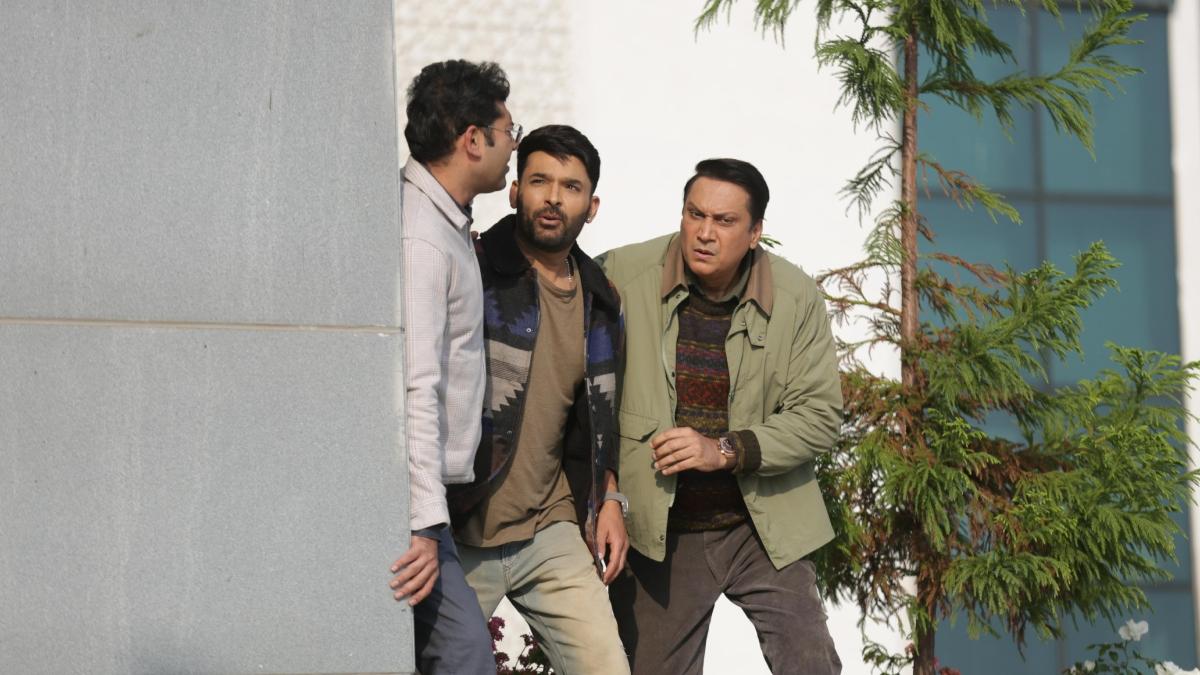
A still from the film
| Photo Credit:
Panorama Studios
Deepak and Jitendra strike a wonderful comical chord with Kapil, delivering several rib-tickling moments of humour that feel refreshingly rooted in realistic family situations. Over the years, Kapil has focused on the dynamics of the Indian middle-class family, and the film gives him familiar turf, making the audience feel he is one of them. As the grandson of a sweetmeat baron (Yograj Singh takes forward Dara Singh’s robust warmth of Punjab), Kapil’s character is at the center of the chaos. He is trying to manage his own one-sided love story with the granddaughter while dealing with Daadi’s bold plans for remarriage. This gives him scope for both panic-driven situational comedy and emotional family moments. Tweaking his stand-up style to the demands of the story and character, Kapil’s improvisational skill and quick comebacks blend seamlessly into the situational comedy.
Beneath the humour, the central hook — an elderly widow asserting her desire for a second marriage or companionship — challenges deep-rooted taboos. As widowhood has long been associated with austerity, isolation, and renunciation, portraying Dadi as vibrant and entitled to joy subverts the sacrificial elder stereotype. Within the light-hearted setup, the film offers a commentary on how tradition is selectively applied — the family resists the grandmother’s remarriage while embracing modern freedoms for the young. The best part is the film resists becoming a guilt-laden melodrama and works like a situational comedy that flips the familiar trope on its head. Director Ashish R. Mohan, along with writers Bunty Rathore and Saahil S Sharma, maintains the tonal balance of a crowd-pleaser that makes you chuckle.

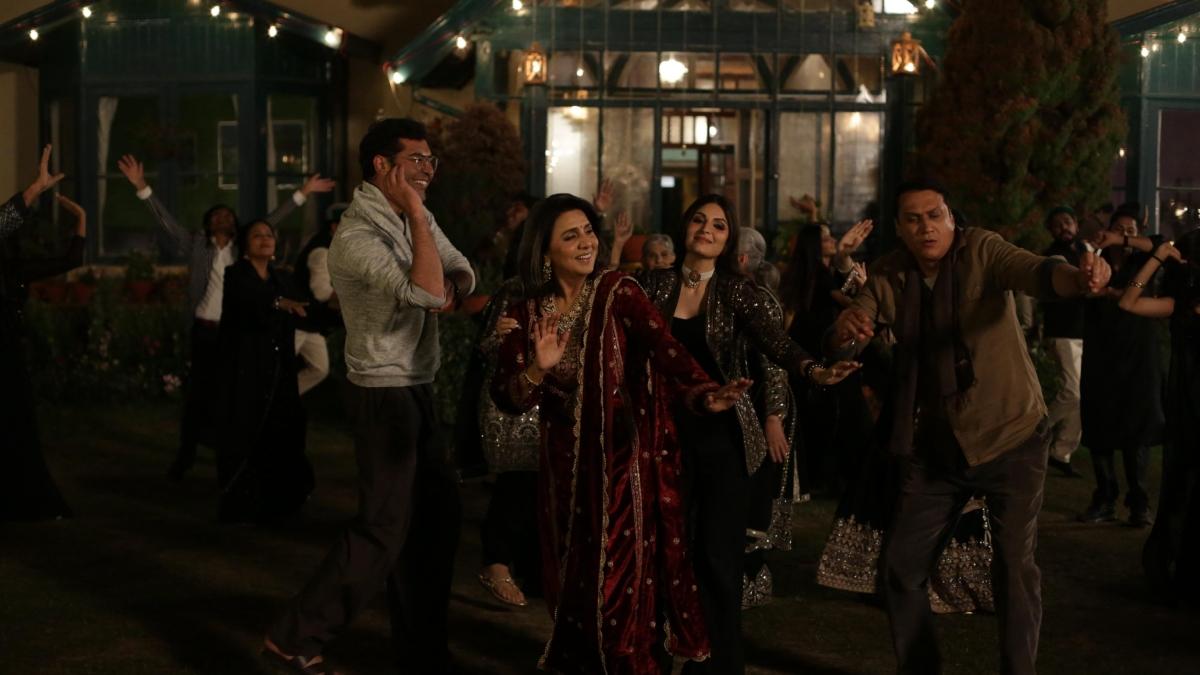
A still from the film
| Photo Credit:
Panorama Studios
However, designed as a fun family entertainer for the summer vacation, you realise the film doesn’t truly critique how society polices women’s desires across ages. In the beginning, the light-hearted banter gives the impression that it will break the Baghban mould by treating the elder as a human being with romantic needs, not just a parent demanding respect; ultimately, it reaffirms family harmony at the cost of Dadi’s autonomy. One wished Neetu Kapoor and Sarathkumar’s camaraderie and chemistry had a degree of intimacy, but like most such stories, it takes the safe, everyone-learns-a-lesson approach, sidestepping deeper power dynamics and emotional imbalances.
Moreover, the problem with writing a 150-minute film is that the premise is inherently funny and subversive for the first hour. Gradually, the shock value tapers off, but the makers keep milking the same reactions and repeating the same ‘embarrassed family, defiant grandmother’ trope in different, convoluted ways. Here, as the premise’s novelty wears thin, the screenplay loses its dramatic momentum and begins to feel like an overextended skit. More like a new bride with an old soul. Still, an option worth savouring when the current mainstream box office menu is rather limited.
Daadi Ki Shaadi is currently running in theatres
Published – May 08, 2026 02:35 pm IST