





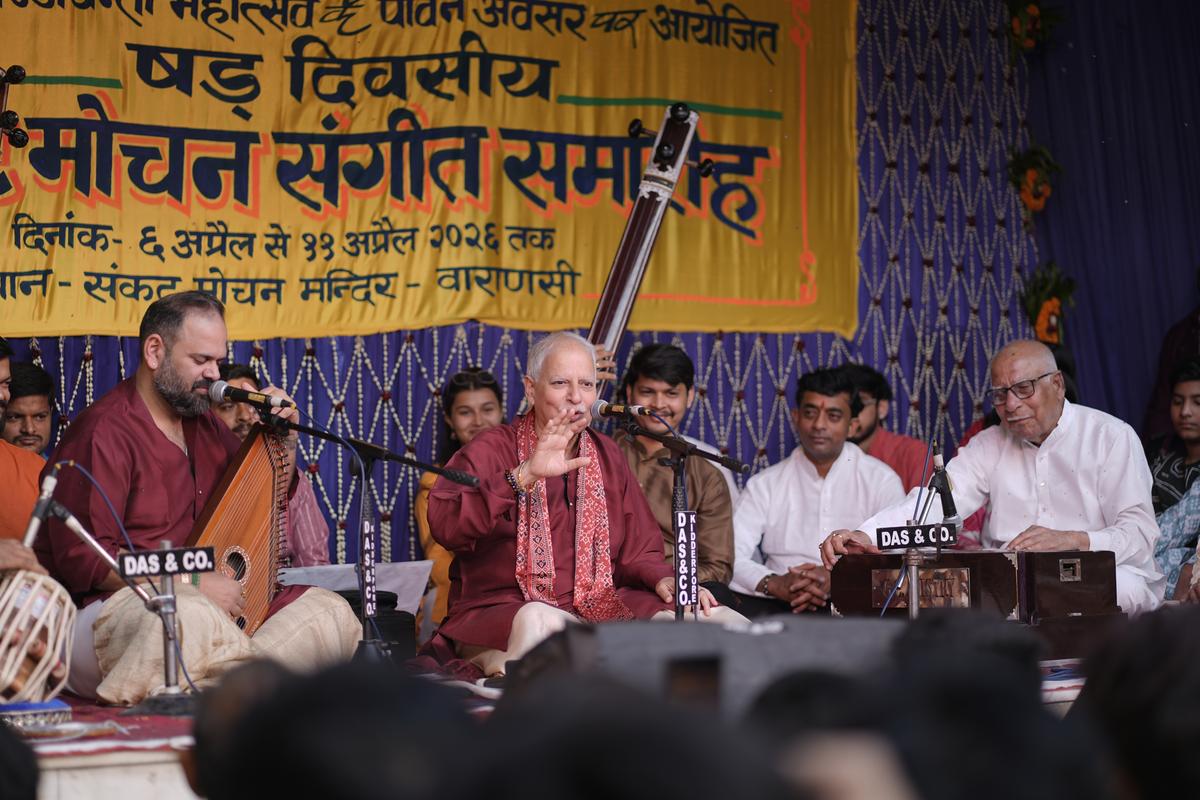
Benaras follows its own unique rhythm. At sunrise, the Ganga comes alive with the gentle lifting of the mist, as the boats criss-cross its waters, hundreds of seagulls flutter above the surface and people gather along its ghats. By dusk, the river quietens, turning into an expanse of varied hues of the night , occasionally illuminated by the flicker of the floating diyas. Within this eternal cycle of faith and time, the Sankat Mochan Sangeet Samaroh has evolved over a century.
As night deepens, all roads leading to the Sankat Mochan temple grow thick with traffic. Wading through them is a challenge. But when you finally step into the temple, the world seems to pause. Melody and rhythm fill the air, blending seamlessly with chants and prayers.
Though the Samaroh takes place within the hallowed precincts of a 16th-century temple, founded by Tulsidas after his vision of Hanuman, it is not merely a devotional gathering. Initially conceived as a modest cultural offering, it sought to celebrate the musical soul of the ancient city and provide a platform for Benaras’ musicians. “My grandfather launched it, and it was later carried forward by my father; and now, I continue after becoming a professor at the Banaras Hindu University, I took on the responsibility of nurturing it,” says curator and organiser Vishwambhar Nath Mishra,, who belongs to the lineage of Sant Tulsidas and is popularly known as the Mahant.
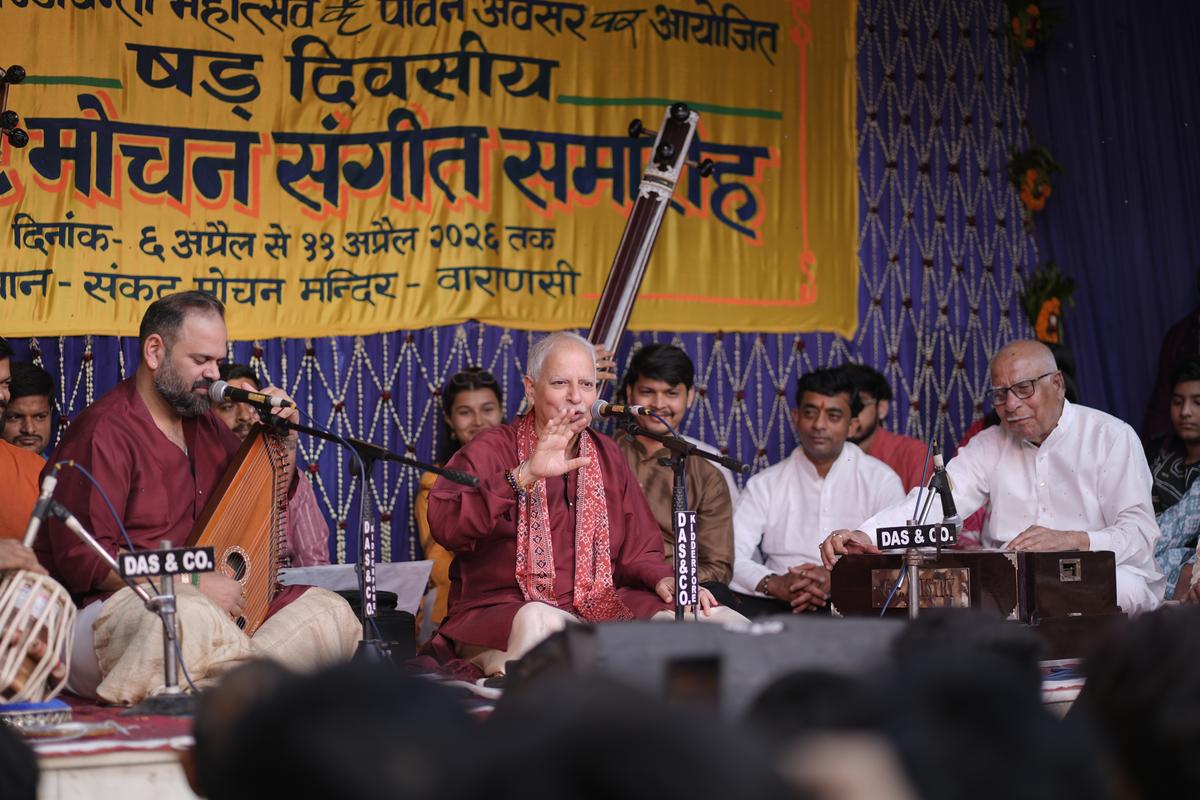
Pt. Sajan Mishra performing with son Swaransh
| Photo Credit:
Ravi Deo Mishra
Over the years, the Samaroh has evolved into one of the country’s most distinctive music festivals, shaping Benaras’ identity as a vital seat of Hindustani classical music.
By framing performances as haaziri — an act of marking attendance in Hanuman’s durbar — the festival infuses music with spiritual gravitas. “This not only deepens the musicians’ engagement with their art but also draws the audience into an immersive experience where devotion and classical music converge. Beyond serving as a cherished stage for legendary artistes, the Samaroh also supports local talent and sustains gharana traditions. More importantly, it democratises access to classical music by opening its doors to all, free of charge,” says the Mahant, a skilled pakhawaj player himself, who often accompanies musicians at the Samaroh. With a gentle smile, he adds, “To retain the essence of the festival, it is important to understand sound more as an artiste and a rasika than as an orgniser.”
That pulse comes alive throughout the five-day festival held every April. Devotees sit around the sanctum reciting the Hanuman Chalisa, while music lovers occupy the entire courtyard, listening through the night to vocalists and instrumentalists. Some in the audience doze off on the dhurries, yet refuse to leave till the last note fades into the early-morning aarti. For many, like the students from the music departments of Banaras Hindu University and Allahabad University, staying awake through all five nights of the Samaroh has become an annual ritual. “This is the best practical lesson in music that we can get, and as learners we can’t afford to miss it,” says Shraddha Sharma. “Taking selfies with my favourite artistes is a must too,” she laughs. Her friend, Abhishek Pandey, joins in: “The people of Benaras are known for their deep love of classical music, which is woven into their everyday life. Even those who may not grasp the finer nuances of raag and taal still connect with its emotional resonance. After all, the Benaras gharana is among the most influential traditions in Hindustani music.“
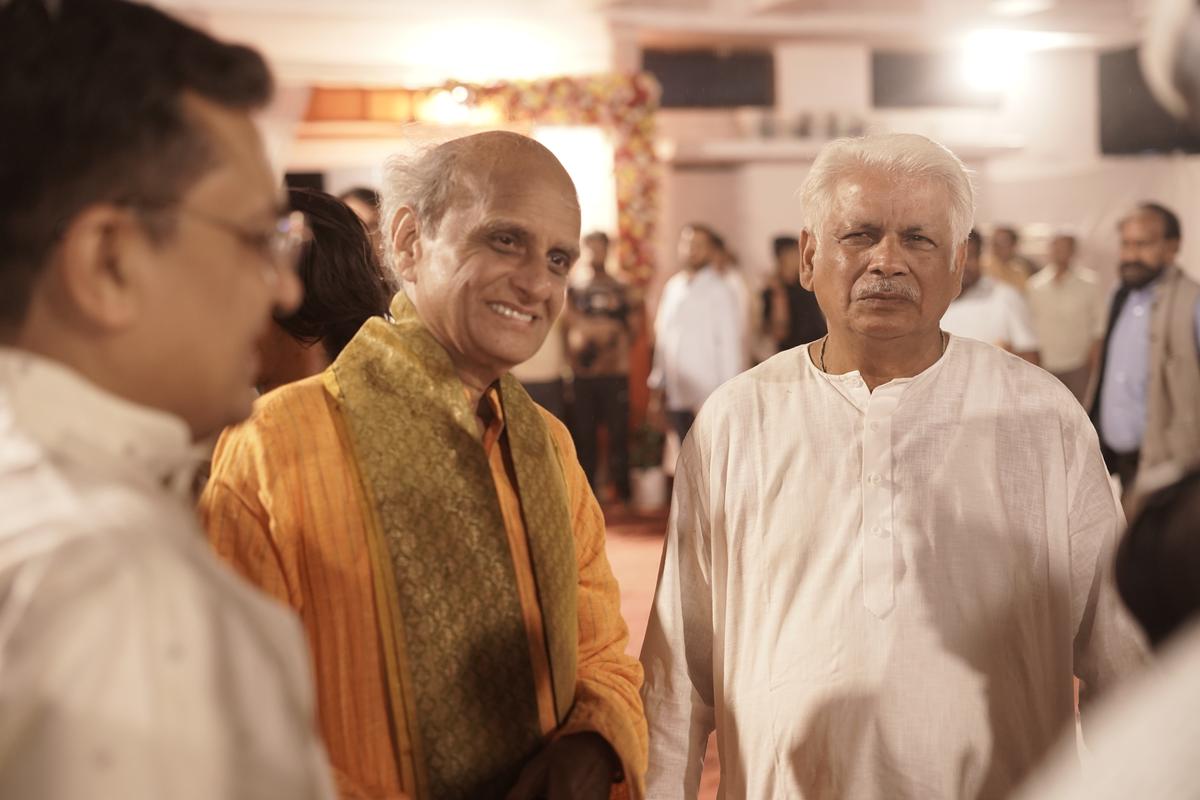
Prof. Vishwambhar Nath Mishra with Pt. Ulhas Kashalkar at the festival.
| Photo Credit:
Ravi Deo Mishra
The conversation trails off as the students spot Mehtab Ali Niazi. As the young and talented sitarist, accompanied by the dynamic tabla artiste Ishaan Ghosh, rises from the stage after a riveting 90-minute rendition of raag Jaijaivanti, the temple courtyard erupts in a cry of ‘Har Har Mahadev’. Mehtab responds with a warm namaskar — the exchange embodies the inclusive spirit of the Sankat Mochan Sangeet Samaroh. “This emotion is embedded in the city’s many names — Kashi, Benaras and Varanasi. The audience here has always been open in its appreciation of art, irrespective of an artiste’s faith,” points out the Mahant.
The Benaras‑based Ustad Bismillah Khan became one of the earliest Muslim artistes to perform at the Samaroh. His shehnai resonated through the temple, breaking barriers and setting a precedent for inclusivity. His participation remains a defining moment in the festival’s history. Over the years, the Samaroh has grown into a congregation of musicians from across the country, welcoming even those from the Carnatic tradition. “There was a time when women artistes were not allowed to participate, but that is no longer the case. I also made it a point to invite dancers practising diverse styles. The purpose was to place art at the core, with no distinction of gender, faith or form. What matters here is the sincerity and that is what keeps the Samaroh alive,” says the Mahant.
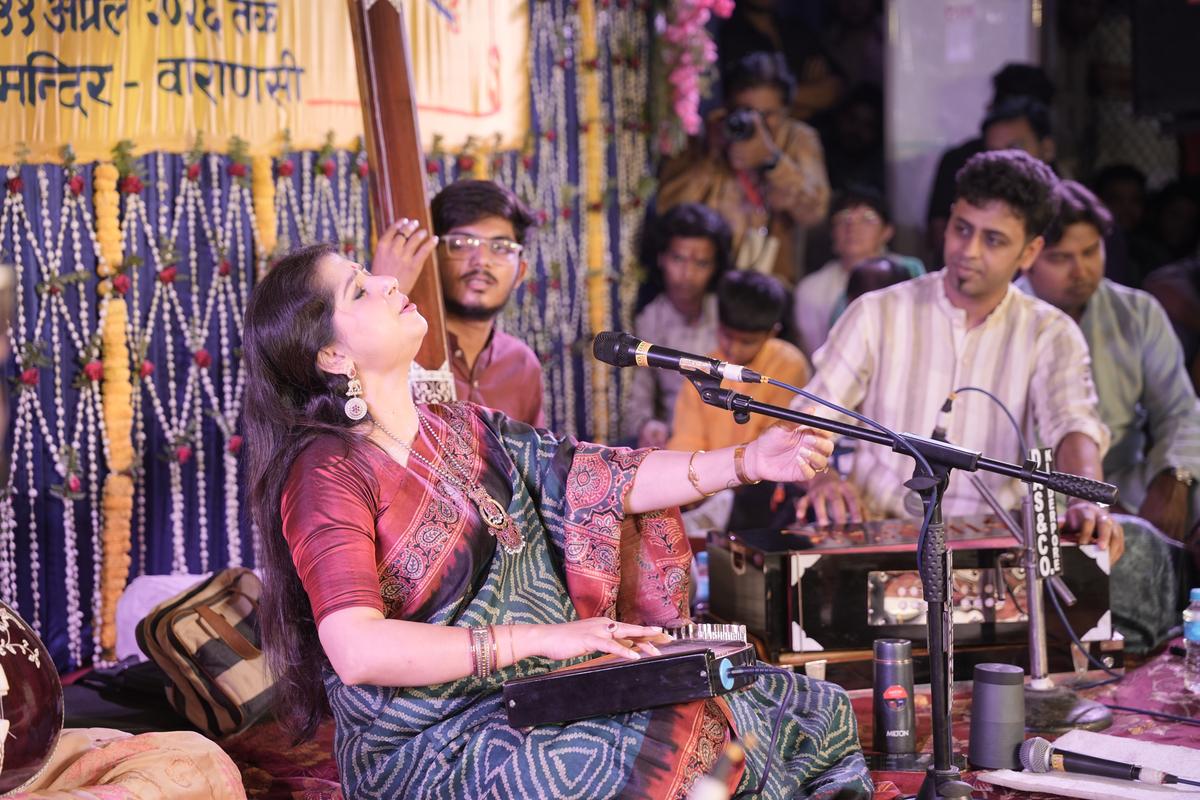
Kaushiki Chakraborty at the Samaroh
| Photo Credit:
Ravi Deo Mishra
“It’s not hard for such a festival to sustain its momentum, as the temple setting lends an extra vibration and energy. I am the third generation in my family to perform here, so it is deeply special,” says Ishaan Ghosh, grandson of tabla maestro Nikhil Ghosh and son of tabla exponent Nayan Ghosh. “Indian classical music has never allowed religion to become a boundary — Bade Ghulam Ali Khan sang ‘Hari om tat sat’ and Pt. Jasraj rendered ‘Allah tero naam’. As musicians, we must recognise and celebrate this feature of art.”
Ishaan adds that what is most heartening is the large turnout of youngsters each year at the festival. Their presence, he notes, is proof that classical music is the most contemporary form of art because it can be improvised and is adaptable. “Also, the open‑minded mahaul (ambience) here allows them to enjoy it at their own pace, without being judged about their knowledge level.”
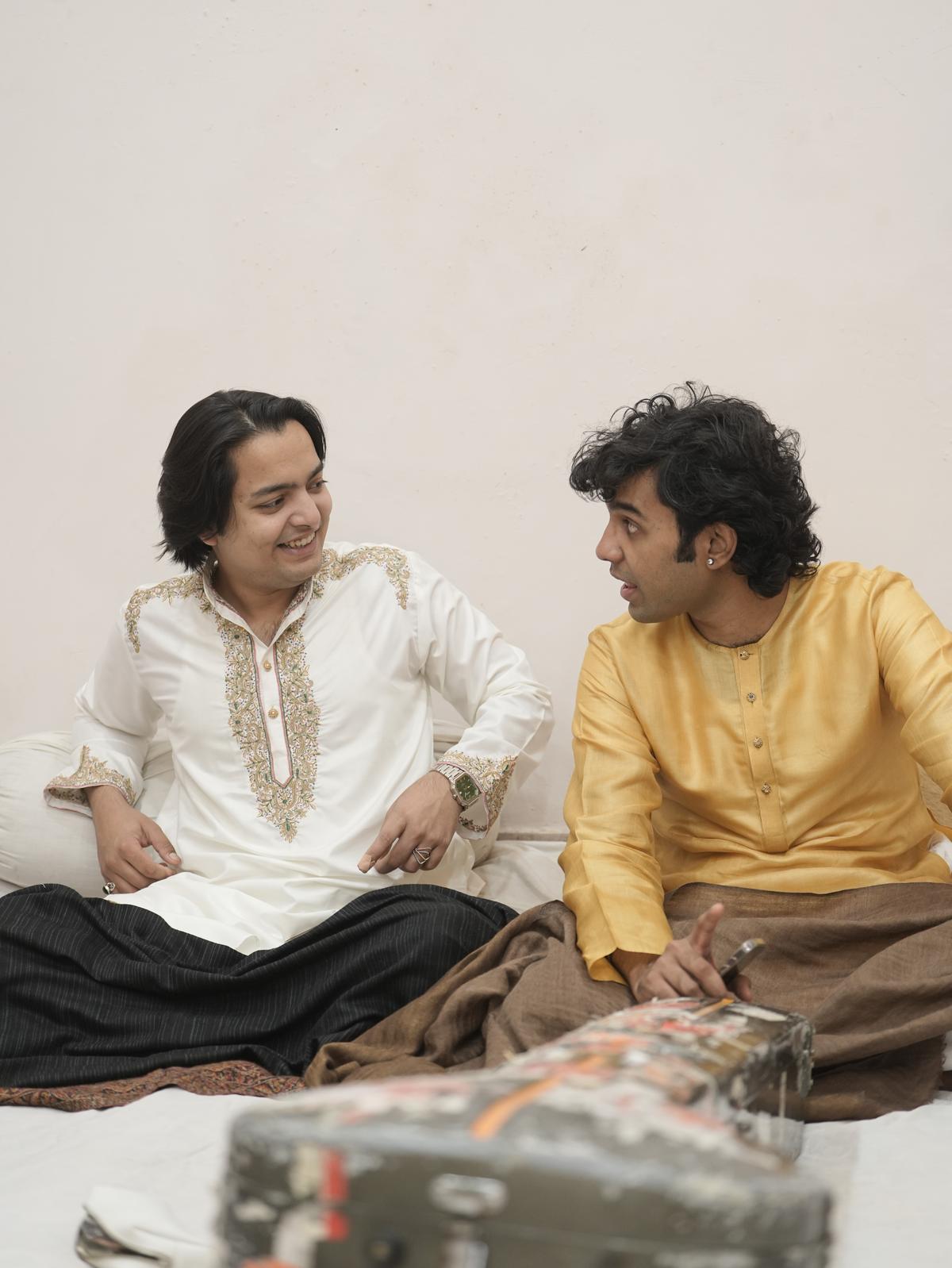
Mehtab Ali Niazi and Ishaan Ghosh during a post-concert conversation
| Photo Credit:
Ravi Deo Mishra
The festival closes on a euphoric note with Pt. Sajan Mishra’s (of the iconic Rajan–Sajan Mishra duo) haazri. It is nearly 6.30 a.m. when he takes the stage, and the audience has been waiting to hear the son of the soil. Born and raised in Benaras, the brothers made their debut in 1968 at this very Samaroh. Accompanied by son Swaransh on vocal support, Pt Sajan Mishra demonstrates how taalim (training) and tehzeeb (values) can preserve music in its most purest and pious form. At every turn of phrase, and with each rise and fall of note, the crowd responds with chants of ‘Har Har Mahadev’. As the summer sun grows brighter, the veteran casually pulls out his coolers from a bag, slips them on, and continues with a series of requests from the audience.

The Sankat Mochan temple in Benaras.
| Photo Credit:
Special Arrangement
Once Pt. Sajan Mishra gets off the stage, he is surrounded by a huge number of admirers. “It’s a blessing to be connected to this city. Yeh prem ki nagari hai (this is a city of love). Since the time of the Vedas, it has been the capital of culture and literature. But the city’s music truly began in kirtans, and then evolved under the influence of folk traditions. It became the only gharana where vocal, instrumental and dance forms co‑exist. Unfortunately, over time it came to be associated only with thumris and Kathak. My brother Rajan and I strove hard to revive its khayal tradition and present to the world its most treasured works,” says the Delhi-based Pt. Sajan Mishra, choosing to sit since he had not slept the night before due to the early-morning concert. “Age can be a deterrent when keeping to a tight schedule, but I would like to keep flowing resiliently like the Ganga,” he says with a glint in his eyes.
Published – May 08, 2026 10:00 am IST