





From music videos to a live Urdu Blues double album, Sameer expands his canvas
| Photo Credit: Special Arrangement
Mumbai based writer, performer and film-music composer-producer — Sameer Rahat — recently released an Urdu-electronica EP titled Roz~marra, a poetic project, where Urdu poetry meets contemporary electronica. “The term, rozmarra means daily routine or the ordinary. But Urdu has always had this profundity for ordinary things. It renders the quotidian many-folded, weighted with something you can’t quite name,” says Rahat.
The songs were written over a decade with the last one just three months ago. The album was mainly recorded and produced in about 18 months, while Rahat shuttled between India and Europe — through cities, hotels, green rooms and kitchens — and what emerged was a record shaped like a single day. “The arc is quite dramatic, but also, it’s just life, simple and repetitive.”
Musically, it’s a departure from Rahat’s previous album, Aamad, which was largely acoustic-organic, slow-burning and cinematic in its sound. “This one is more electronic and mid-tempo. But the Urdu lyrics and poetry stays exactly where it has always been — at the centre, bearing the weight. The sound changed. The character and instinct didn’t,” shares Rahat.
The album opens with an ode to dawn, ‘Ye subah’ and moves on ‘Kashmakash’ – a restlessness that lingers even when life seems ostensibly fine. “Vocal synths, a deep driving bass and an irresistible groove at its core — the morning it describes holds both contentment and displacement in the same breath,” he says. ‘Kaisa din’ carries the weight of the afternoon and the feel of an ordinary day.
The title track, co-written with Ditty, imagines the heart as a small town, where faces are printed like daily advertisements on its walls. “Somewhere in that noise, someone you once knew becomes a stranger and the song quietly asks why we never reach out again. A gospel-like choir arrives to reinforce that central question, as if the everyday itself needs to be properly understood.”
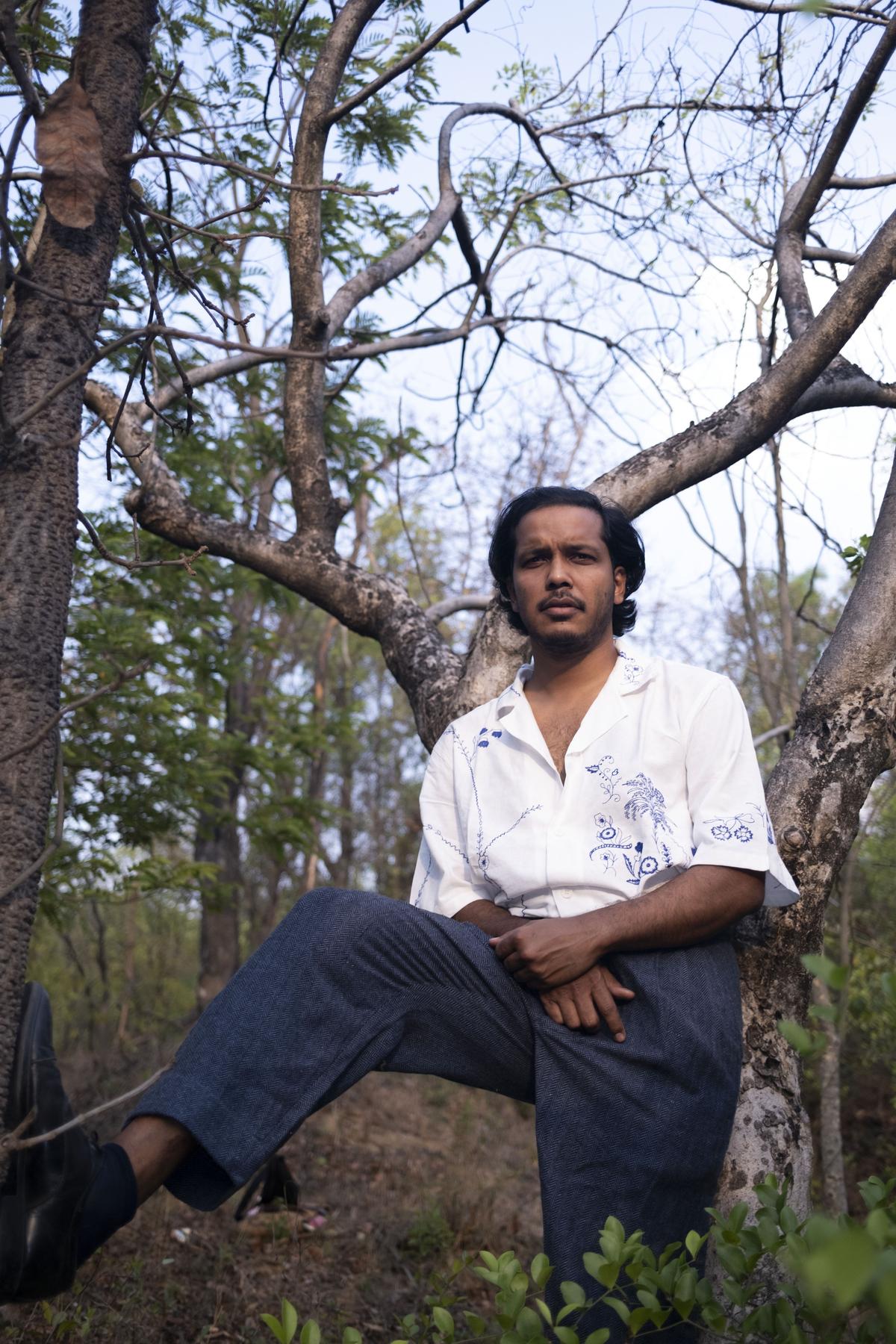
He founded a prog rock-band, Joshish, at the age of 16
| Photo Credit:
Special Arrangement
The son of the legendary Urdu poet Rahat Indori and the force behind Urdu Blues, Rahat grew up in a home shaped by language. Both his parents, Anjum Rehbar and Rahat Indori, were poets, which meant mushairas happened regularly. “I was watching both of them hold rooms of thousands of people with a single sher before I understood what any of it meant. That kind of early education doesn’t leave you,” he recalls. Music came slightly later and through a different door entirely — records, then guitars, and a prog-rock-band called Joshish that he founded at 16, where he wrote almost everything in Urdu. “The language had already moved in; the music simply followed,” he says.
His most ambitious record by far is his upcoming full-length album, Purana. It’s about how the past moves through you, reshapes you and ultimately becomes you. Itfeels like the beginning of a new sonic space; a new voice emerging from a familiar place. “If Aamad was the arrival and Roz-marra the daily motion in between, Purana is memory.”
For Rahat, the live practice never really stops. “Performance has always been the backbone of everything. It’s where the songs first find their breath — in front of people, in real rooms. I perform in different settings depending on the night: sometimes solo, sometimes with a full seven-piece ensemble with horns and choir. Each version tells a different part of the same story.”
Rahat continues to compose for film and television while also writing lyrics for other composers. He has begun directing videos and now plans to put together a live Urdu Blues double album with some of the finest blues musicians in the world.
Published – May 25, 2026 07:06 pm IST