



R Rathnavelu, one of India’s reputed cinematographers, is disarmingly warm during this interview at Hyderabad’s Annapurna Studios Annexe. He has been finalising the post production for director Buchi Babu Sana’s Telugu film Peddi, starring Ram Charan and Janhvi Kapoor, releasing on June 4. Expectations ride high on the film but Rathnavelu remains unfazed. “We have worked for nearly two years. Peddi is a mainstream commercial film that is also deeply emotional. I try to raise the bar with each of my films, and Peddi has been creatively satisfying,” says Rathnavelu, or Randy as he is referred to in film circles.
He has been a cinematographer for more than three decades. For the unversed, he was drawn to cinema after watching director Mani Ratnam and cinematographer PC Sreeram’s early films. After graduating in physics, Rathnavelu enrolled in the Madras Film Institute and later assisted cinematographer Rajiv Menon for Mani Ratnam’s Bombay.

Before discussing Peddi, I ask him how he has managed to keep his work relevant over the years. He says with a smile, “Some of my peers might wind down with a drink after shooting, but I prefer reading or watching films. I do it for the love of cinema, not merely because I want to stay up to date.”
Rathnavelu’s association with Buchi Babu Sana began when the latter was in the writing team of director Sukumar’s 1-Nenokkadine and Rangasthalam, but the offer for Peddi came from Ram Charan. Rathnavelu recalls, “Charan called and said he wanted me for this film. Buchi Babu visited me in Chennai for a story narration and I was impressed. I choose a film only if I like the script. If I feel otherwise, I express my opinion. Rajinikanth sir appreciated me once when I told him upfront that I did not like an idea.”
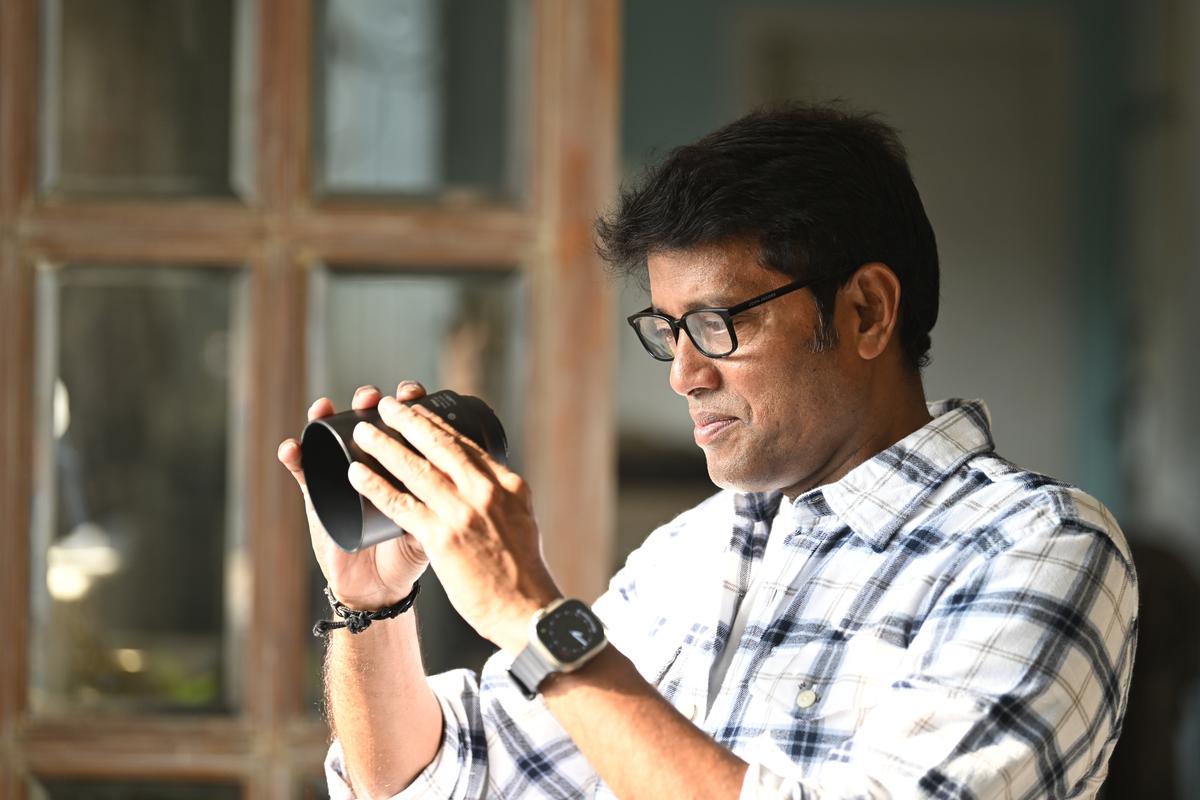
Cinematographer R Rathnavelu
| Photo Credit:
Special Arrangement
Vintage frames
Rathnavelu wanted to give Peddi a distinct look, veering away from the brown tone of Rangasthalam. “Peddi narrates the protagonist’s journey and his transformation through different stages. He works at a sugarcane factory near Vizianagaram and hails from a community that fights for its identity. I wanted a realistic texture for this story set in the 1980s and 90s. I decided to shoot one portion using film negative, and give a vintage look to the other portions shot on digital cameras to maintain some synergy.”
Rathnavelu’s last work on film was Rajinikanth’sEndhiran (Robot), directed by Shankar. For Peddi, Eastman Kodak film cans were imported. “For my team that is mostly familiar with digital, working with film was a new experience. Shooting on film calls for planning and discipline on the sets since you cannot waste film reel. Ram Charan rehearsed and we went to shoot. The winding sound of the film made Charan nostalgic.”
The choice of shooting on film, Rathnavelu explains, was to achieve a grainy texture in contrast to the sharp, clinical digital frames. “The audience will see nearly 15 minutes of footage shot on film.” There were challenges with processing the footage, since only Film Lab in Mumbai now processes film negative.
Rathnavelu adds that he used Vintage Cooke lenses for some portions. “I want to transport the audience to the ‘80s. In addition to costumes, lighting and locations, the blemishes and texture that these lenses provide also helps. The flare makes the edges appear softer while the centre of the frame is sharper.”
Rathnavelu points out a few recent Hollywood films including The Brutalist, Marty Supremeand One Battle After Anotherhave been shot on film. “The storytelling feels more organic and immersive.”

Sports and drama
In Peddi, Ram Charan plays “a crossover athlete”, adept at cricket and wrestling. Rathnavelu reveals that two cricket matches — one during the day and another filmed under floodlights — will be among the highlights. “These visuals will differ from the wrestling portions, for which I used bodylighting techniques to highlight Charan’s muscular physique. Each phase will look distinct but transition seamlessly. I like the visuals to convey the emotional crux of the story. That dictates the choice of cameras, lens and lights.”
In his first breakthrough film, Sethu (Tamil) starring Vikram, Rathnavelu depicted the portions in an asylum with a tinge of green. Soon after, in director Bala’s Nanda, he used a wide angle lens for close-ups of Suriya, who was attempting a rugged character for the first time.
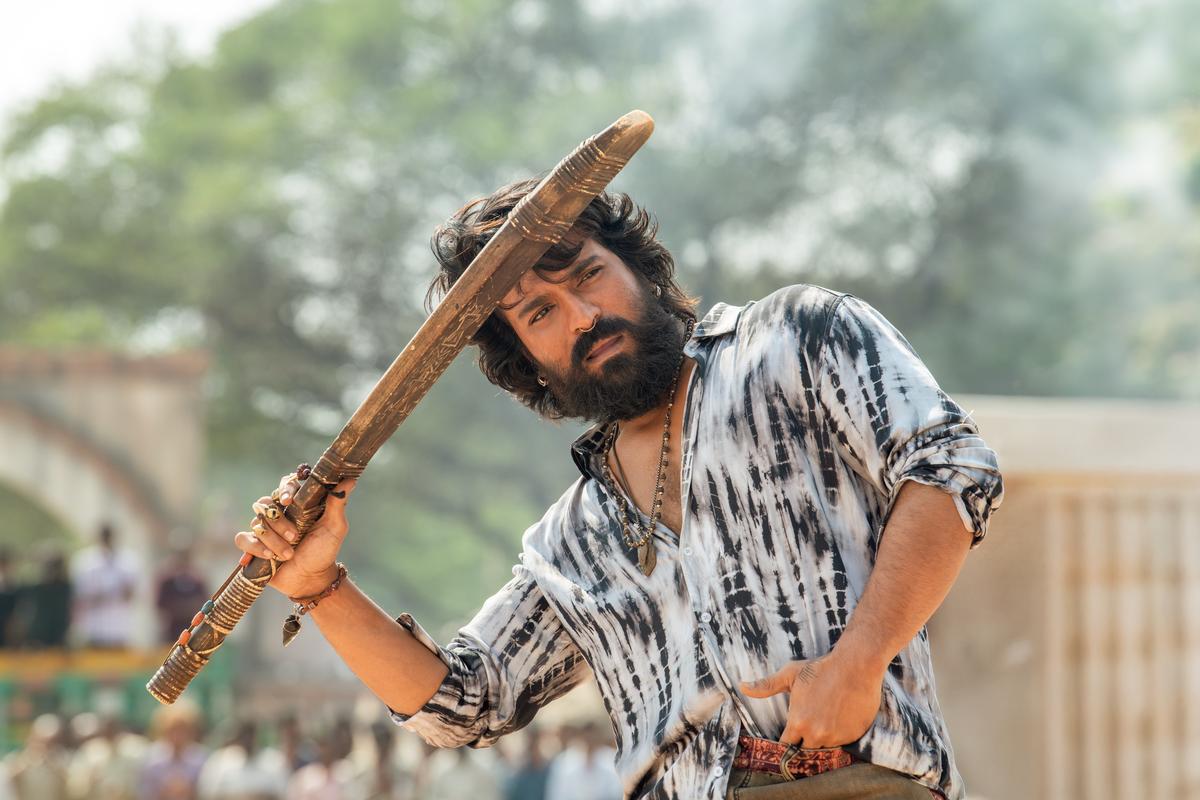
Ram Charan is a crossover athlete in the film
| Photo Credit:
Special Arrangement
The lensing captured the grittiness of the character and won appreciation from cinematographer PC Sreeram. “I wanted to move away from the backlit, glossy frames that PC sir and Santhosh Sivan were known for. The experiment worked.”
Rathnavelu’s work in Sethu and Nanda paved the way for his first collaboration with director Sukumar, who debuted with Arya (2004) starring Allu Arjun. “Suku comes from an academic background and his writing style was new; I sensed the potential to complement it with visuals,” Rathnavelu recalls. The duo then collaborated for Jagadam, whichremains a favourite among aspiring technicians and filmmakers, even though it was not a commercial success. “Suku and I were ambitious, wanting to change Telugu cinema. I used Super 35 cameras to capture the emotions portrayed by Ram.”
Did you know?
For the 2018 film Mahanati, director Nag Ashwin and cinematographer Dani Sanchez-Lopez shot some portions on Super 16mm film to give the 1980s portions a distinct visual texture.
When the duo teamed up again for 1-Nenokkadine, the psychological thriller starring Mahesh Babu, the visuals delineated the real from the illusion. “It was a huge compliment when cinematographer Ravi K Chandran told me it looked like a Hollywood film.” 1-Nenokkadine had a lacklustre box office run but gained following with time. Rathnavelu adds, “I have a huge fan following in Telugu because of that film. An unconventional choice was to introduce Mahesh through a silhouette, and visually convey how he is traumatised by memories of the past.”

Crafted to appear realistic
Returning to Peddi, Rathnavelu discloses that the film was shot over 180 days. Though the story is centered in Vizianagaram and later in Delhi, some portions were also filmed near sugarcane fields and factories of Mysuru.
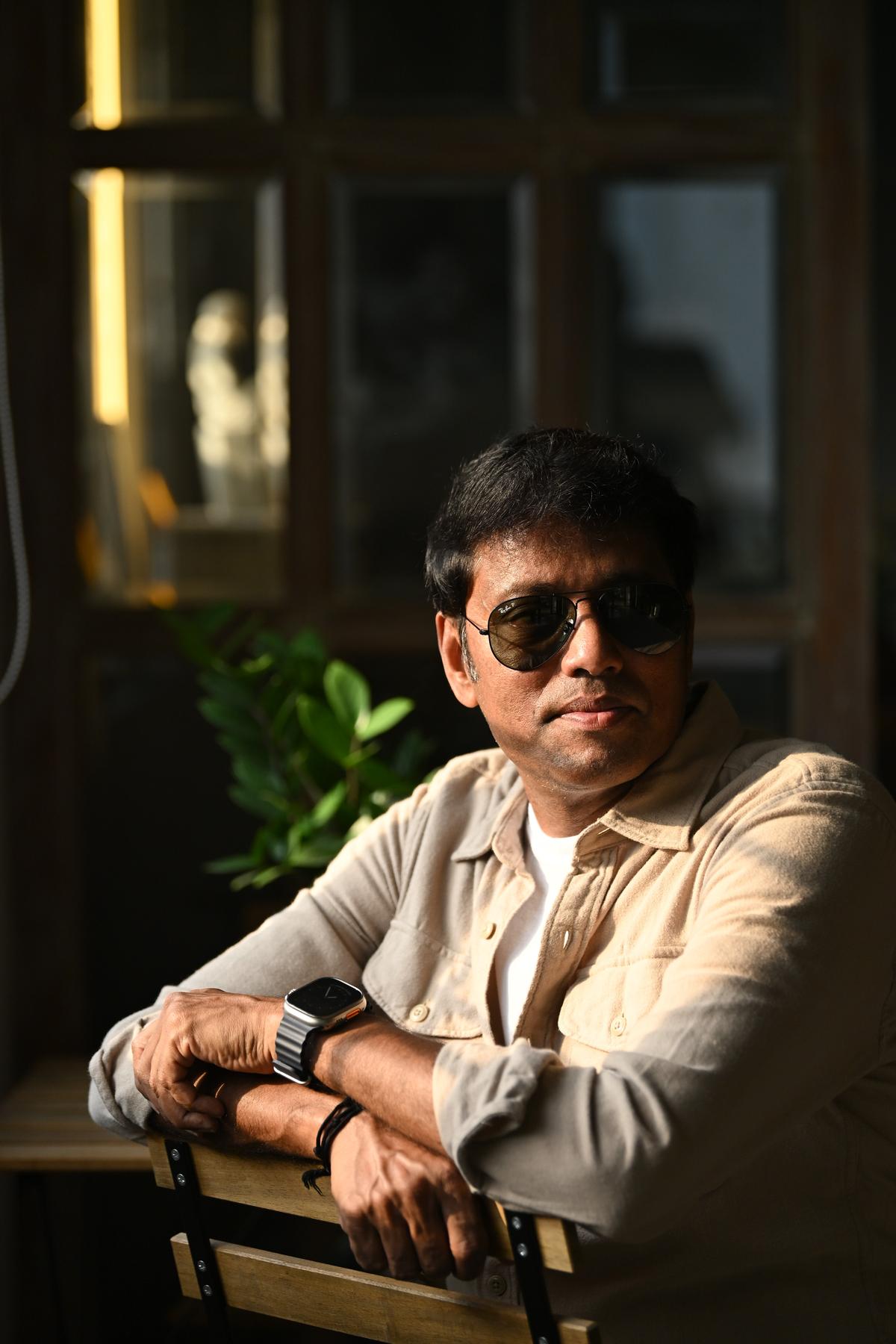
R Rathnavelu
| Photo Credit:
Special Arrangement
“The audience will not be able to tell the difference. During Rangasthalam, we filmed considerable portions near Godavari but it was tough for the unit. For some sequences, our location was cut off from the main city. Sukumar, Ram Charan, the producer and I stayed in makeshift rooms and a dormitory was constructed for the crew. Whenever we needed a large crowd, junior artistes had to travel from Hyderabad. Later we cheated to keep the cost down. We filmed the ‘Entha sakkagunnave’ song on the banks of Godavari but a few other scenes were shot on a set near Bhooth Bangla area in Jubilee Hills, Hyderabad. I had footage of the landscape, and art director Ramakrishna planned the set to be in sync with the film’s terrain.”
Post Peddi, Rathnavelu is yet to decide his next move. He works on one film at a time and has also written a script recently. He has nurtured directorial dreams for nearly a decade, but cinematography commitments have kept him occupied.
“Suriya and I had once decided to work together. Later there was an offer from Kamal (Haasan) sir to direct, but I could not take it up. Hopefully I can direct soon.”
Published – May 26, 2026 03:36 pm IST

