





Athidhi, the 2007 Telugu film starring Mahesh Babu and Amrita Rao in the lead, is scheduled for re-release in theatres on May 29, to mark yesteryear actor Krishna’s birth anniversary on May 31. The film directed by Surender Reddy has been digitally restored and remastered at Prasad Corp.
Athidi is the latest in the long list of older films to be digitally restored and remastered for a theatrical re-release. In recent years, Prasad Corp has worked on several films, including Telugu hits such as Murari, Athadu, Gabbar Singh, Mass and Indra.
Abhishek Prasad, chief technology officer of Prasad Corp, attributes the growing interest in digitising and restoring older films to the renewed revenue stream through digital streaming and theatrical re-releases.
“Earlier, monetisation options for a film were limited to theatrical release and television satellite rights. Digital viewership growing manifold opened up new revenue opportunities,” says Abhishek.

Some of the earlier Telugu films restored by Prasad Corp.
| Photo Credit:
Special Arrangement
Post lockdowns, when the audience was still reluctant to return to theatres, bringing back older films helped kindle nostalgia-driven interest, sometimes driven by fan clubs. It also encouraged a generation that had grown up watching these films to relive those memories with the younger generation. This was evident in how family audiences visited theatres to soak in the humour of director Vijaya Bhaskar’s 2002 hit Manmadhudu, featuring Nagarjuna Akkineni and Sonali Bendre, during its re-release. It was similar during the re-release of Chiranjeevi-starrer Indra and Jagadeka Veerudu Athiloka Sundari, which co-starred Sridevi.
Classics with a new look
Prasad Corp has also restored some of director-producer Vidhu Vinod Chopra’s Hindi films such as Parineeta, 3 Idiots, 1942 – A Love Story and Munnabhai MBBS.
Restoration efforts have also been taken up by studios that have extensive post production facilities. For instance, Ram Gopal Varma’s Shiva was restored at Annapurna Studios, Hyderabad, and re-released last year.
All this helped to address a long-standing concern in film circles about preserving older titles. While some negatives have been carefully stored in airconditioned environs, several have been reportedly missing or lying unattended in cans in warm, humid rooms. “If the original camera negative is in a cold storage facility, it can last for hundreds of years,” says Prasad.
He reveals that Prasad Laboratories, being a forerunner in film processing and post production for decades, stored copies of films it had worked on at their facilities in different cities across India. “Our repository is huge, I cannot put a number on it,” says Abhishek.

Most of their archives are now at the cold storage facilities set up by the National Film Archives of India (NFAI) and Film Heritage Foundation (FHF), after obtaining the consent of film producers. In the last few years, the National Film Development Corporation (NFDC) along with NFAI and FHF have also been digitising older films, some of which have been showcased at international film festivals.
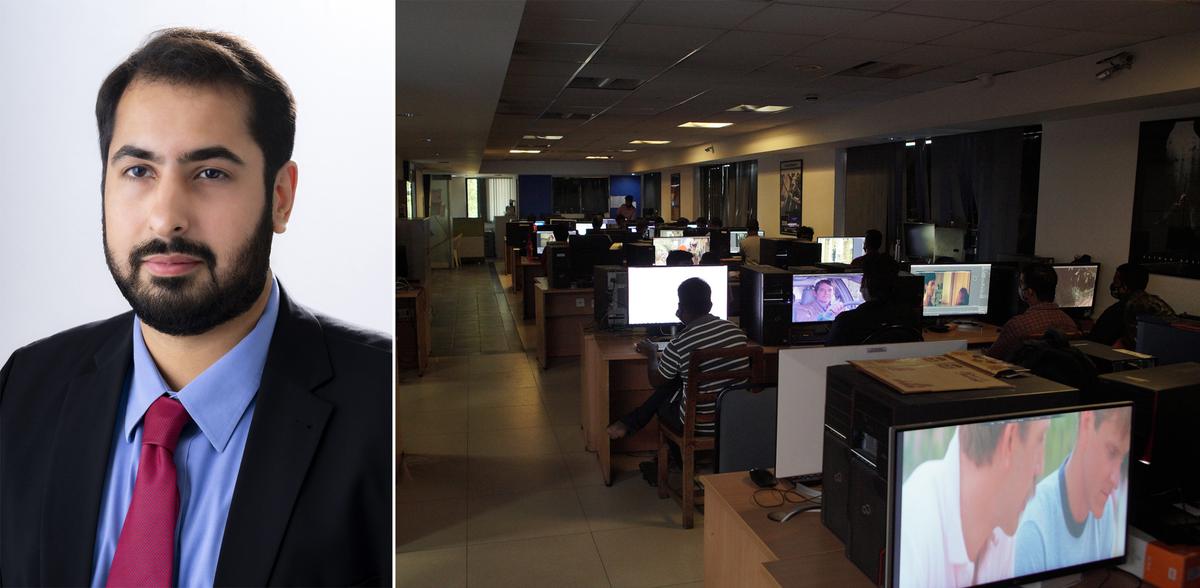
Abhishek Prasad; the restoration wing
| Photo Credit:
Special Arrangement
Film Heritage Foundation, founded by Shivendra Singh Dungarpur, has screened digitally restored titles such as Manipuri film Ishanou, Malayalam film Thamp, Hindi film Manthan, Satyajit Ray’s Aranyer Din Ratri, at Cannes Film Festival’s Cannes Classics section. The Malayalam film Amma Ariyanis a part of this year’s Cannes Classics section.
While these restoration projects emerge from a cultural standpoint, Abhishek adds that the commercial possibilities have also fuelled the interest in restoration.
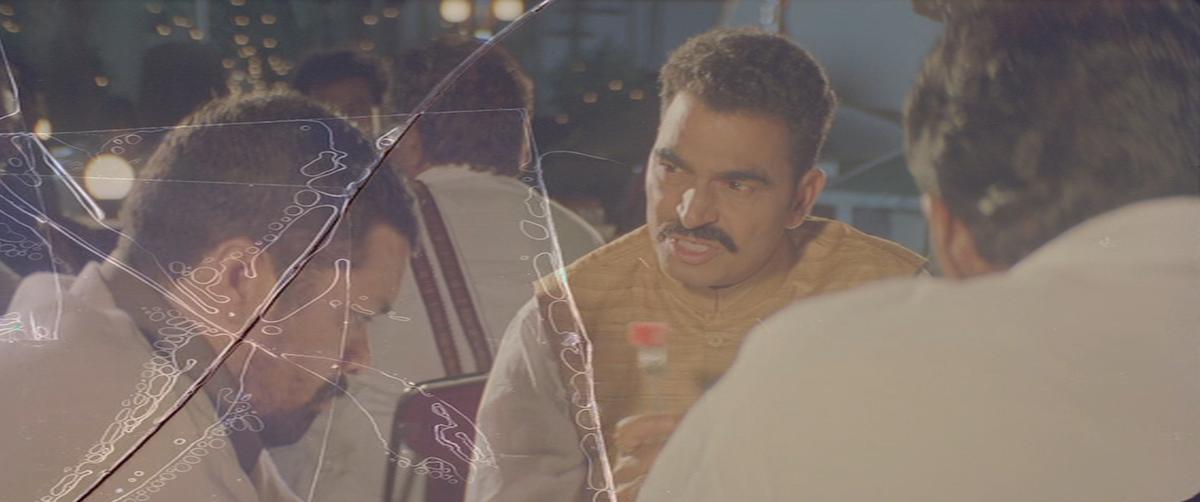
A frame from ‘Athadu’ before restoration
| Photo Credit:
Prasad Corp
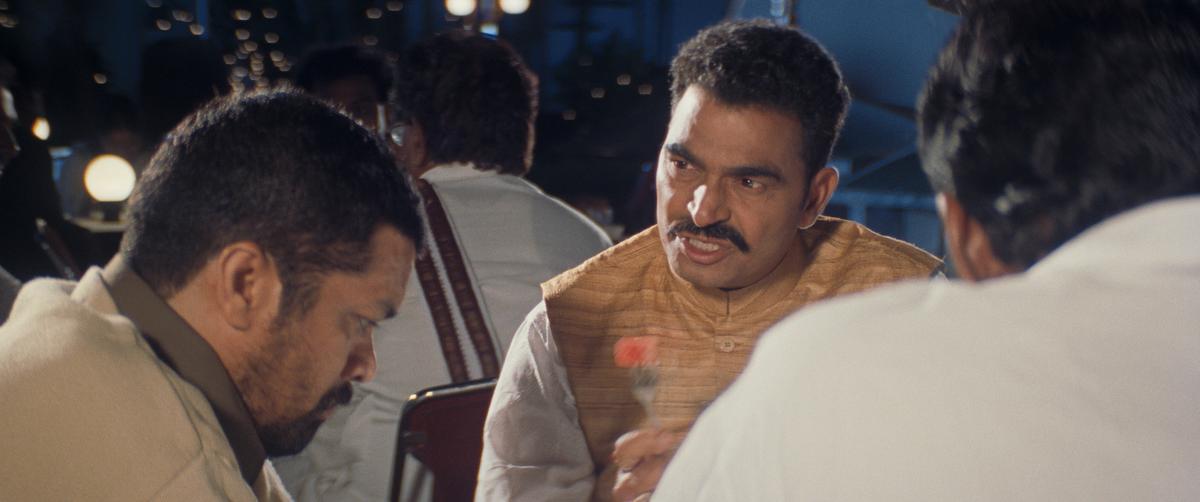
The frame from ‘Athadu’ after restoration
| Photo Credit:
Prasad Corp
Along with upgraded storage facilities, Abhishek says the technology that aids digital restoration is also getting better. “Old camera negatives can now be cleaned, restored and digitally scanned in resolutions up to 14K. When the original camera negative, which we refer to as OCN, is unavailable, we work on prints.”

Jagadeka Veerudu Athiloka Sundari stands as an example for a film that did not have its negatives; prints were sourced from several exhibitors and worked upon for restoration. Abhishek adds, “We urge filmmakers who approach us for restoration to scan their restored films in 14K resolution, even though a 4K version is sufficient for today’s television projection systems. Scanning in higher resolution helps to future proof it for another 10 to 15 years.”
The restoration process follows a typical workflow. The negative is inspected frame by frame for physical defects and damage caused by dust and oil stains, before an ultrasound cleaning. “If there is chemical decay, a process of chemical restoration is carried out in the restoration laboratory we set up along with NFAI. Once the negative is fit enough to be scanned, the digitisation process is carried out.”
Then, the raw data of audio and video are worked upon. AI tools are used to restore the audio and video. “If the negative is of good quality, this process takes a couple of weeks. If the film requires more work and the producer is short of time, up to 300 people work on it. It can take 1000 to 2000 man hours,” Abhishek explains. The audio restoration often involves conversion of mono or a 5.1 soundtrack to suit today’s Dolby Atmos standards.
Filmmakers and cinematographers weigh in on remastering, finalising the colours and contrasts. Abhishek says while some filmmakers want the film to resemble the original version, some want to tweak it to make it appealing to the contemporary audience.
Talking about the soon-to-released Athidhi, Abhishek says the quality of the original negative was “not the best we have seen, but not the worst either,” and adds, “a lot of care went into the final product by the film’s team and their creative call was to make a few changes to suit the present times.”
Published – May 21, 2026 08:00 am IST


