




One of my favourite books growing up was Shel Silverstein’s The Giving Tree. The deceptively gentle tale of a boy growing up alongside a tree proposed a radical idea about companionship — that a tree can observe a human life across decades and offer a wordless kind of devotion that evolves with our needs. The peculiar little book seemed to understand that the flora around us often occupy the role of silent witnesses to our lives with a patience no human relationship can quite match. Watching Hungarian filmmaker Ildikó Enyedi’s Silent Friend, I found myself thinking about Silverstein again. A fellow storyteller from Hungarian soil, Enyedi builds an entire feature around that same intergenerational intimacy between humans and plants, imagining a tree as a quiet companion that absorbs anxieties, curiosities and desires without judgement.

Premiering in competition at the Venice Film Festival before travelling the international circuit, Silent Friend eventually reached Delhi through the 7th edition of the Habitat International Film Festival, where I caught it in a packed Stein auditorium. The film is a triptych that unfolds across more than a century around a single ginkgo tree in the botanical gardens of Philipps University of Marburg, Germany. Each era introduces a new protagonist whose life drifts into orbit around the tree. The cast moves between generations and continents: Tony Leung plays a visiting neuroscientist stranded in Germany during the pandemic, Luna Wedler appears as a pioneering woman student at the university navigating academic hostility in the early 20th century, and Enzo Brumm portrays a shy ‘70s literature student amidst his romantic awakening. Léa Seydoux, too, appears in a small yet pivotal role as a botanist researching plant communication. Enyedi, whose earlier films include the Golden Bear winner On Body and Soul and the maritime romantic drama The Story of My Wife, approaches the material with the same fascination for unseen emotional ecosystems that has defined her oevre.
Silent Friend (German, English, Cantonese)
Director: Ildikó Enyedi
Cast: Tony Leung Chiu-wai, Luna Wedler, Enzo Brumm, Marlene Burow, Lea Seydoux, Sylvester Groth
Runtime: 147 minutes
Storyline: At a German university’s botanical garden, an old ginkgo tree serves as the silent witness, linking characters who seek meaning
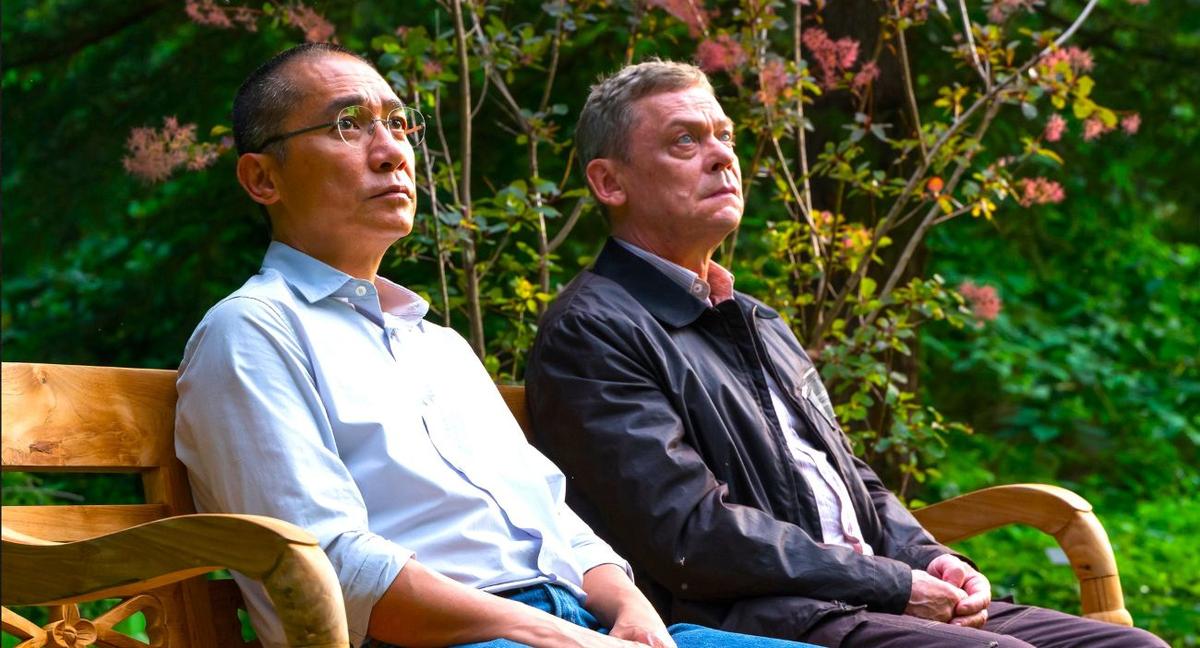
The present-day strand belongs to Tony Wong, played by Leung with a melancholic grace that transforms routine gestures into subtler drama. Wong arrives in Marburg to study infant brain activity, only to find his research halted when COVID empties the campus and strands him in near total isolation. The film introduces him wandering through the university as a solitary figure whose curiosity gradually drifts toward the ginkgo tree standing outside the laboratory buildings. Wong begins measuring the tree’s micro-movements through sensors while corresponding online with Seydoux’s French researcher, who studies plant communication. A telling portrait of intellectual loneliness shaped by curiosity emerges through Leung’s performance. Wong searches for signals of awareness in the tree because the search itself offers companionship, and Leung’s restrained physicality conveys the ache of a mind trying to converse with something that cannot answer.
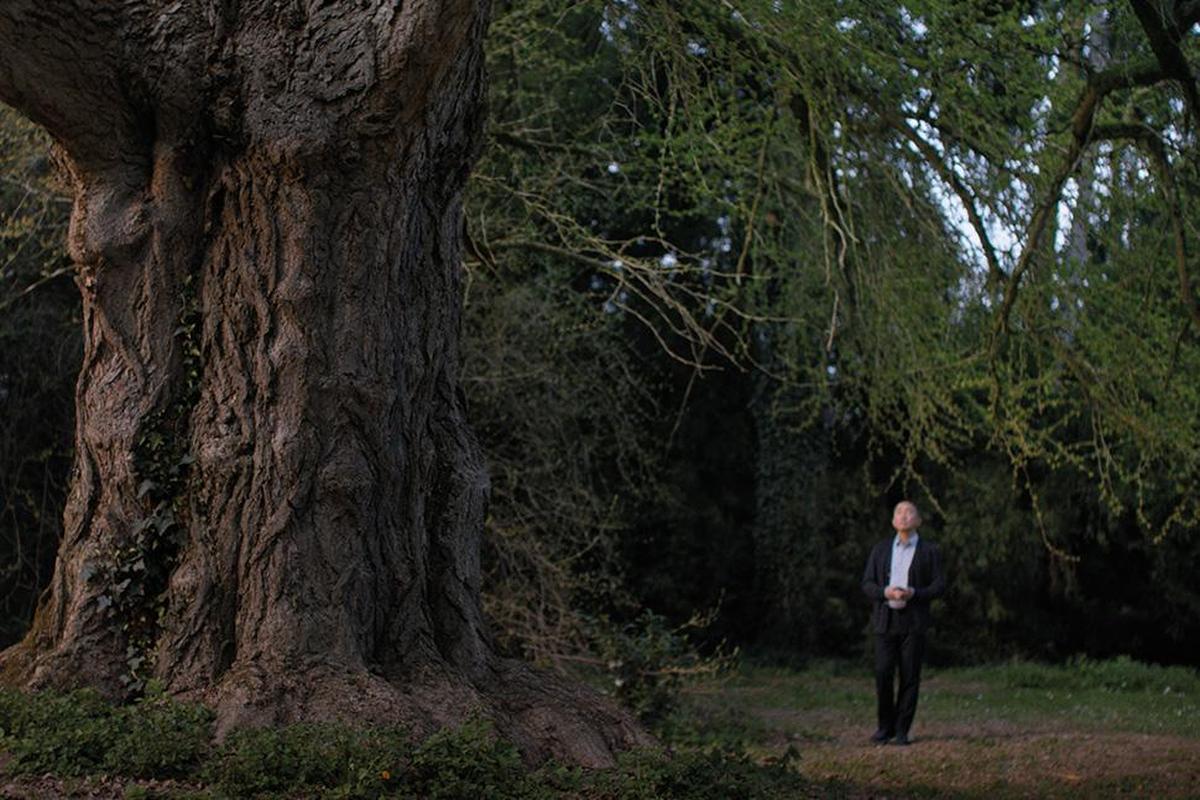
A still from ‘Silent Friend’
| Photo Credit:
Pandora Film
One of the film’s most memorable passages arrives early when Wong delivers a lecture on human attention and perception to a small university audience. The lecture explores how consciousness filters reality through selective focus, proposing that entire dimensions of existence remain invisible because human perception has never evolved to register them. Sitting in the auditorium while this lecture unfolded created a curious mirror effect because I found myself contemplating the same limits of perception that Wong describes, as part of the audience. Enyedi frames the sequence with a calm clarity, allowing the philosophical ideas to emerge through accessible language and visual illustrations, and the scene carries the pleasures of attending a truly inspired lecture where the act of thinking becomes its own form of storytelling.

The film then travels backwards to 1908, where Luna Wedler’s Grete enters the university as its first woman science student. Enyedi presents this era in crisp black-and-white cinematography that evokes early 20th century photography while also reinforcing the rigid intellectual climate Grete must navigate. Her introduction is through a tense university interview where a panel of male chauvinist professors attempts to humiliate her with questions about plant reproduction that quickly slide into invasive speculation about female sexuality. Wedler plays the scene with a clenched fist, answering each question calmly while exposing the intellectual insecurity beneath the professors’ authority.
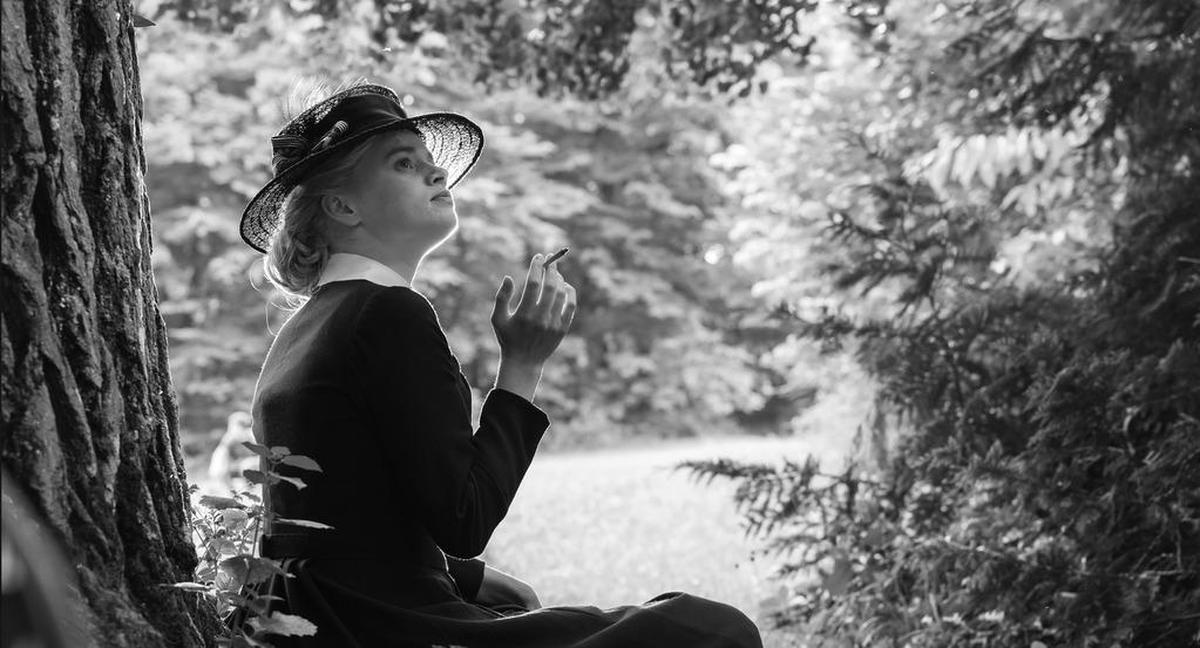
A still from ‘Silent Friend’
| Photo Credit:
Pandora Film
Grete’s struggle continues when gossip about her chastity forces her from her lodgings, leaving her to moonlight as an assistant to a local photographer whose enthusiasm for the mechanics and artistry of early photography borders on evangelical. The revelation for Grete comes through the act of looking itself. Behind the camera, she transforms various plants and vegetation from academic specimens into subjects of fascination, as her frames isolate their stems, textures and petals with an almost sensual clarity. Enyedi treats photography as liberation for her. The camera grants Grete authority over observation in a world that repeatedly questions her intellect, allowing her curiosity to move freely while the image itself becomes proof of what she sees.
The 1972 storyline introduces Enzo Brumm’s Hannes, a farm boy studying literature at the university who feels socially out of step with his more politically assertive classmates. His quiet temperament draws the attention of Gundula, a botany student whose experimental apparatus measures the reactions of a geranium placed beside her window. Their flirtations unfold through playful teasing and shared curiosity until Gundula leaves town briefly and entrusts Hannes with maintaining the experiment. The favour evolves into something more personal as Hannes begins observing the geranium with a mix of scientific attention and emotional projection. Brumm captures the awkward tenderness of discovered intimacy, treating the plant with a bashful devotion that echoes his feelings for Gundula in absentia.

Across these three narratives, Enyedi constructs a meditation on humanity’s long entanglement with the botanical world. The ever-present ginkgo tree bears witness to intellectual change, observing Grete’s struggle for academic recognition, Hannes’s tentative curiosity, and Wong’s technological experiments in the 21st century. The film frequently reflects on the vulnerability of scientific discovery, which repeatedly encounters scepticism and institutional resistance before new ideas settle into accepted knowledge. Grete’s confrontation with misogyny, Seydoux’s enthusiasm, and the persistent presence of female plants and trees also establish a dialogue about gender within intellectual spaces. Each storyline suggests that knowledge grows through observation, patience and openness to forms of life that human culture has historically overlooked.
But what really sneaks up on you in Silent Friend is how unexpectedly erotic the entire enterprise becomes once Enyedi lets her thesis run wild, and each arc nudges forward a mischievous sensuality pulsing beneath it by degrees. Grete escapes the leering scrutiny of the men around her by turning her gaze toward plants, where the camera allows her to study curves, textures and reproductive mysteries without anyone policing the questions she asks. Hannes channels his infatuation with Gundula into an affectionate attentiveness toward her geranium, watching it with the absorbed delight of a young lover.
A still from ‘Silent Friend’
| Photo Credit:
Pandora Film
Wong becomes the logical endpoint of the peculiar ecosystem Enyedi cultivates across her three timelines. When pandemic isolation leaves him with only the tree (and a curmudgeonly gardener) for company, his growing fascination with plant consciousness gradually mutates into what can only be described as a sapiosexual fascination, before drifting into something even more euphoric once his experiments start triggering psychedelic sensory responses from the tree. Leung plays the entire arc with that familiar yearning that once defined In the Mood for Love (except this time the object of devotion happens to be a 200-year-old ginkgo rather than Maggie Cheung), which produces the baffling image of a grown man conducting the most sincere and tender courtships with a tree imaginable.

I first heard about Silent Friend when Luca Guadagnino reportedly called it his favourite film of 2025, and watching it now clarifies that endorsement with embarrassing speed. Enyedi has created one of the year’s most eccentric cinematic seductions — a piece of arboreal erotica that would leave your local trees blushing through their leaves.
Silent Friend premiered in Delhi at the Habitat International Film Festival (HIFF), hosted at the India Habitat Centre (IHC).
Published – March 15, 2026 08:19 pm IST