





Despite its immense contribution to poetry and lyricism, the Qutb Shahi dynasty, which ruled the Golconda Sultanate from 1518 to 1687, is significantly less celebrated and depicted in cinema than the Mughals. Mohammad Ali Baig, a pioneering figure in heritage theatre, has been breathing new life into the history, folklore, and secular ethos of Sultan Muhammad Quli Qutb Shah, the founder of Hyderabad, and his legacy. Baig’s latest venture is Chand Tara, a feature film on the legend of Taramati and Sultan Abdullah Qutb Shah, the grandson of Quli Qutb Shah, who reigned from 1626 to 1672, and captures the luminous bond that he shared with singer Taramati.
Baig holds their legend as much more than a quaint regional story or a standard fairy-tale romance. “It is a window into the highly sophisticated, syncretic, and artistic world of the 17th-century Deccan,” says the actor-director who has just returned from Cannes, where the “poetic” trailer and poster of the film were released at the festival at the National Film Development Corporation-managed Bharat Pavilion to an “overwhelming response.”

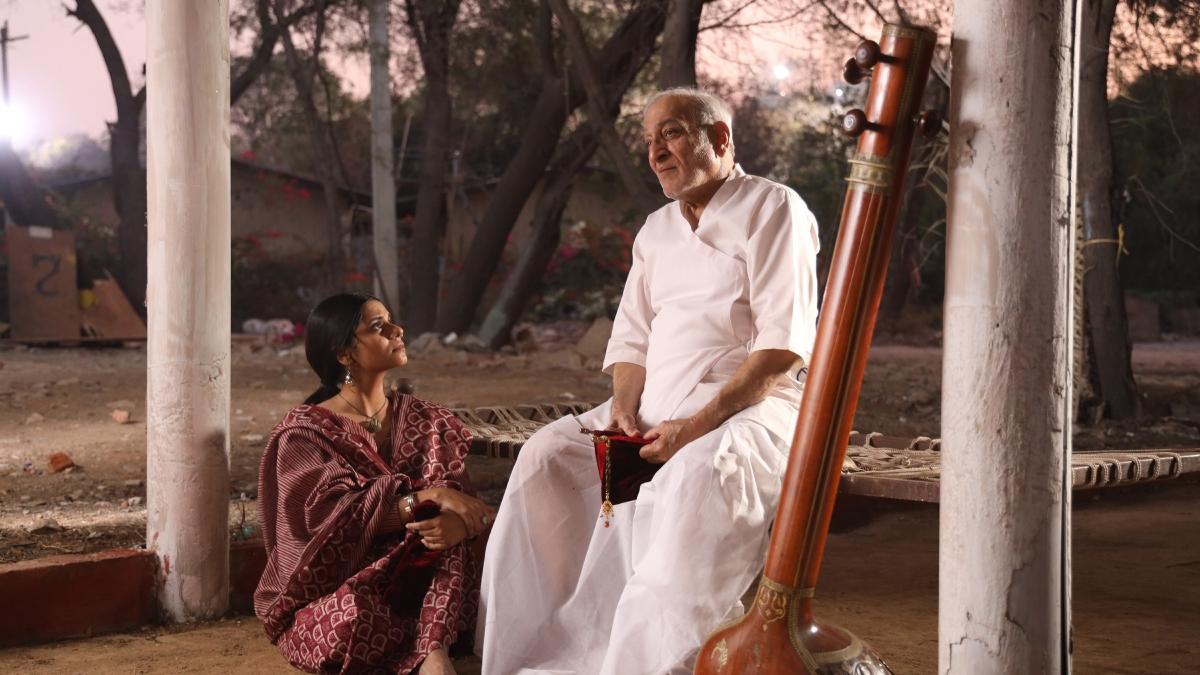
Ranjana Srivastava and Mohan Agashe in the film
| Photo Credit:
Special Arrangement
The catalyst for the film was rooted in Baig’s first theatre production, Taramati, which he staged at the historic Taramati Baradari in Hyderabad. “The monument is a testimony to the artist’s stature. It was built in her memory by Sultan Abdullah Qutb Shah, a connoisseur of arts and grandson of Sultan Quli Qutb Shah, the first Sahib-e-Diwan poet of Urdu, which is an ultimate symbol of literary prestige.”
Inspired by his mother Begum Razia Baig, the actor-director says, “Most of my work in theatre is woman-oriented as I believe that the hero doesn’t have to be from the male gender. My experience says that women, with their dignity, strength, and calmness, can change things around. Taramati did the same with the worship of her art. Through her grit and determination, she turned a mama’s boy into an able administrator.”
Baig says very little information is available about Taramati except that Premamati, whom she considered a sister figure, was a dancer in Sultan Abdullah’s court. “It is a historical fact that Taramati lived in that era, and she is buried in the private necropolis of the Qutb Shahi tombs, which is a heritage site today.” It is also true, he adds, that Sultan Abdullah Shah was a patron of the arts.
“It is said he gave the whole village of Kuchipudi to dancers and artists. We have fictionalised their story a bit. It is not known whether she was her begum, consort, or court singer, but we do understand that she resisted being a court singer because she believed her art was her worship. That a monument built by the king of that period stands in memory of a singer who was neither his queen nor a consort also tells a story. It is not like the Taj Mahal. It means she was a singer of great repute and respect. That’s very inspiring.”

When stripped of modern romanticisation, the story, Baig feels, reveals fascinating truths about early Medieval Indian geopolitics, gender dynamics, music, and architecture. Reflecting on the conjectures about their relationship, the actor-director says it is not a mushy love story. “Taramati and Sultan Abdullah met at a stage of their lives when they were mature enough to understand that they may not have a future together. Taramati resists going to the Sultan’s court and refuses his calls, but when they meet, she realises that he is a cultured man who loves the arts as much as she does. She falls for him, but this bond is beyond romance. It is a very mature, spiritual, and intellectual love story.”
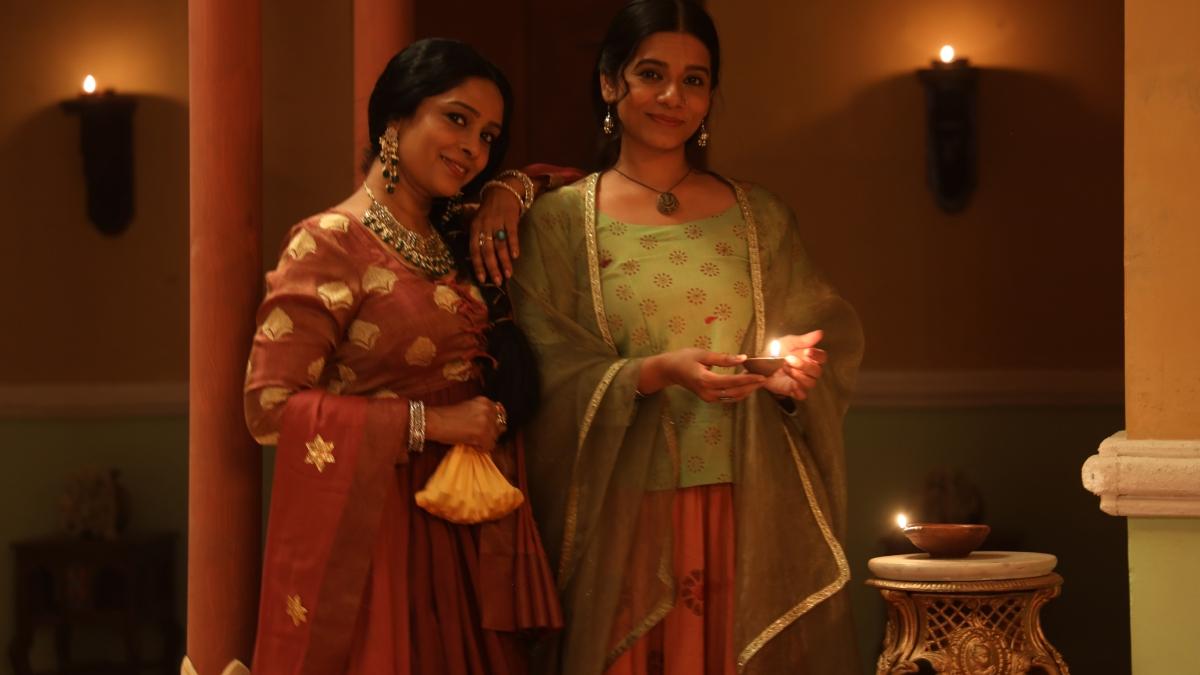
Reshma Shetty and Ranjana Srivastava in the film
| Photo Credit:
Special Arrangement
The highlight of the music is the recreation of Piya Baaj Pyaala (Without my beloved, I cannot live a single moment), a popular nazm (poem) by Sultan Quli Qutb Shah that is part of Deccani folklore. “It has been used several times before, but rarely in the right context. It is about the longing one feels for the beloved. I have used it where Sultan Abdullah sends this nazm through Premamati after Taramati refuses to go to the Darbar. I think composer Karthik Raja has composed it beautifully, and singer Vasundhara Das has done justice to it,” says Baig, who has also written lyrics of a couple of songs.
With talent drawn from across the country, Baig says Chand Tara is truly a pan-Indian film. With voice-over by Anupam Kher, the film features seasoned actors and singers such as Mohan Agashe, Masood Akhtar, and Lucky Ali, while the talented theatre actor Ranjana Srivastava plays the lead role of Taramati. “I don’t believe in auditions and screentests and would rather go by my professional instinct. I needed an actor with a command of language and performance skills, and someone trained in a classical dance form. Madhu Swaminathan, who played the part on stage for years, fitted the role perfectly. For the film, I needed a younger actress with the same skill set. (Veteran actor) Anjjan Srivastav sahib and I share a fond relationship, and I had known Ranjana through him. Well-versed in Hindi and Urdu, she has done a commendable job.”

On playing Sultan Abdullah, Baig avers, the prince had more to him than “shikar and shayari,” which makes it fascinating to portray. “Every prince is not a spoilt brat. They have their own baggage. Abdullah also had a painful side to him. He lost his father when he was 12. When he was born, astrologers told his mother that he should not meet his father face-to-face for 12 years. It so happened that a few weeks before he turned 12, he saw his father, who passed away a few weeks later. Abdullah lived with a sense of guilt. There is a touching scene in which he tells Taramati that his childhood was buried beneath the throne. His responsible side comes to the fore when Taramati transforms him from a prince to an able administrator. He took on the Mughals with great determination.”
Known for deep research into the period, Baig underlines that, having grown up watching his father (theatre legend) Qadir Ali Baig’s production, most of the research material was available at home, and it comes naturally to him. “I am particular about the instruments and popular ragas in that era. Not every Muslim king wore an angarkha and pearls. There was a difference between anagarkha with a band at the chest and one with a band at the waist. And Mughal arches are different from Qutb Shahi arches and Rajput arches.”
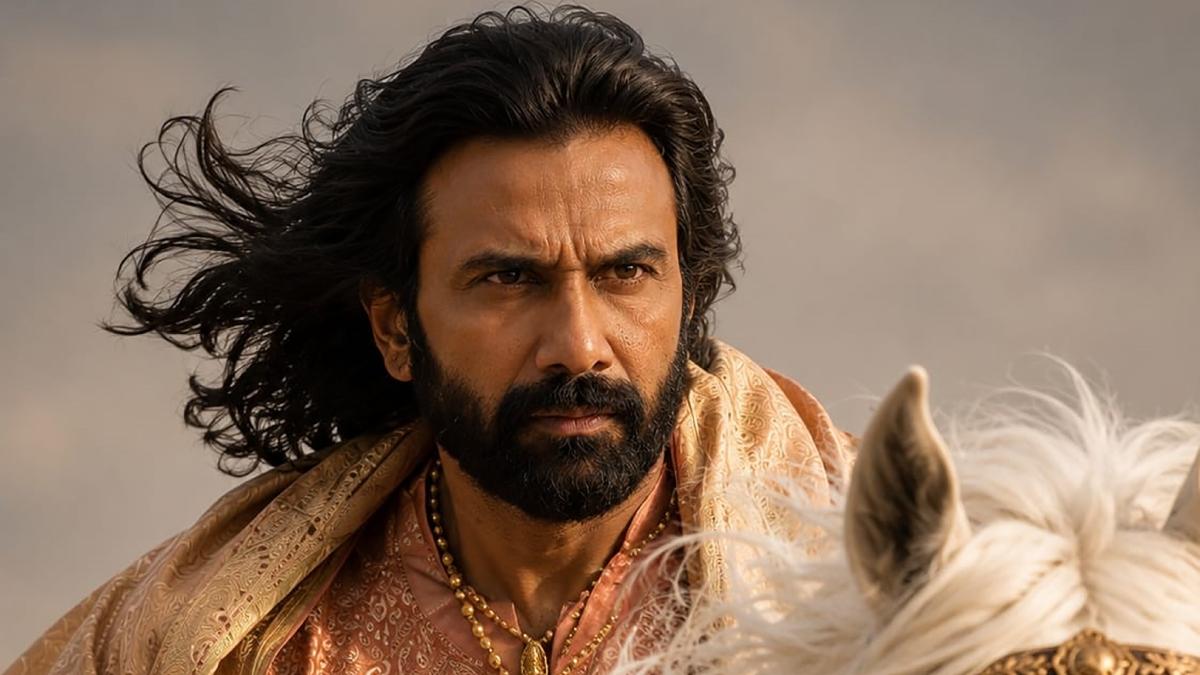
A still from the film
| Photo Credit:
Special Arrangement
These days, the past is often seen through the prism of the present. Baig agrees he is aware of the times we live in. “I am not trying to make a political statement, nor is my theatre. It is an attempt to present the history and heritage of Hyderabad during the Qutub Shahi and Asif Jahi eras, something I know firsthand because my family has witnessed it. I am neither glorifying anyone with rosy eyes nor am I demonising anyone for an agenda.”
Published – May 26, 2026 05:25 pm IST

