




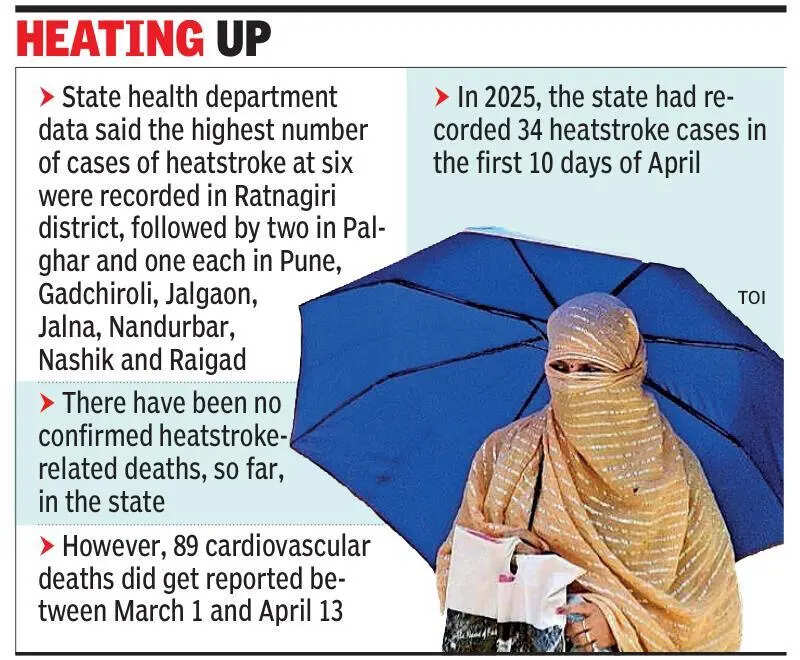
Pune: The increasing maximum temperatures have led to 15 heatstroke-related cases between March 1 and April 13 in Maharashtra, leaving doctors and residents concerned.State health department data said the highest number of cases at six were recorded in Ratnagiri district, followed by two in Palghar and one each in Pune, Gadchiroli, Jalgaon, Jalna, Nandurbar, Nashik and Raigad. There have been no confirmed heatstroke-related deaths, so far, in the state. However, 89 cardiovascular deaths did get reported in the same period.In 2025, the state had recorded 34 heatstroke cases in the first 10 days of April.Although data showed low numbers of deaths and confirmed cases this year, 2.7 lakh patients on record have undergone treatment for heat-related symptoms and complications in all districts. The highest number of affected patients were from Mumbai at 49,000, followed by Thane at 40,000, Nagpur at 23,000 and Pune at over 21,000.Joint director of state health services Dr Sandeep Sangale said, “We have instructed all district health officers to ensure that every primary health centre is equipped with a cold room and that medicines are in stock. All medical officers have been trained for diagnosis and clinical management of any patient reporting symptoms related to heatstrokes.”The India Meteorological Department has said temperatures would cross 40° Celsius in different districts and the situation would likely remain the same over the coming days.Consultant interventional cardiologist, head of department cardiology, Noble Hospital and Research CentreDr Sujit Sawadatkar said, “Extreme heat is not just discomfort, it is a physiological stress test. Recently, I treated a 52-year-old diabetic hypertensive field supervisor, who developed dehydration-induced hypotension and acute kidney injury after prolonged sun exposure. His ECG changes mimicked cardiac ischemia.“Consultant in endocrinology at Jupiter Hospital Dr Swati Goray said, “Extreme heat can affect people with diabetes in several ways. High temperatures can cause dehydration and this may raise blood sugar levels, increasing the risk of fatigue, dizziness or exhaustion. Heat may also change how insulin works in the body. It can damage insulin and glucose meters or test strips if kept exposed to high temperatures. People with diabetes should drink plenty of water, check their blood sugar more often, keep insulin and testing supplies in a cool place, avoid direct sun exposure during peak heat and seek medical advice if they feel unwell.“Consultant in internal medicine at Surya Mother and Child Super Speciality Hospital Dr Abhishek Mehendale said basic precautions like avoiding peak afternoon exposure, regular hydration, wearing light clothes, rest breaks and seeking urgent care for confusion, fainting or reduced urination helps stay safe in extreme heat.Mehendale said, “Preventive care must be proactive and include strict hydration, electrolyte balance, medication timing review, avoiding peak heat hours and early symptom recognition like dizziness or reduced urination. Protection from heat is a clinical priority now and not seasonal advice. Heat can worsen dehydration, strain the heart and kidneys and raise the risk of heat exhaustion or heatstroke in people with diabetes, cardiovascular disease or kidney illness.“