




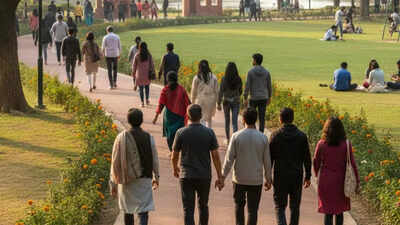
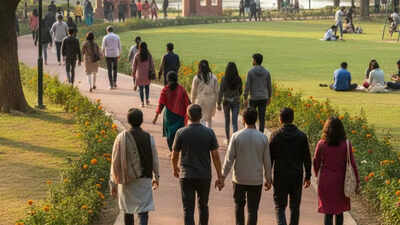
NEW DELHI: An activity both powerful and resilient, walking together has become Delhi’s way of healing, connecting, and celebrating community. As varied and evolving as the city itself, these walks embrace multiple forms while holding onto the capital’s culturally layered character.Every winter and spring, when the sun is softer, Delhi steps out to walk. It moves through rugged brick-red sandstone ruins (bathed in sunlight or draped in mist), cluttered lanes, and wide boulevards — not because the city is untouched by pain, but because it never lets its wounds define it.Even after incidents like the recent bombing near Red Fort in Old Delhi, and the AQI menace in winter, people gather at dawn and dusk to move through the city on foot. Walking becomes a quiet act of reclaiming space, refusing fear, and staying connected to the stories that survive every change or even shock.
The platter is diverse – take your pick!
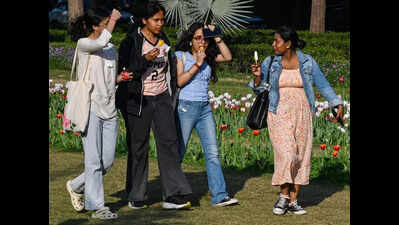
Variety is the name of the game and walking lovers are spoilt for choice. Walking enthusiast Harshit Sharma, 28, who has participated in over 500 walks, says, “While I have experienced walks in many cities of the country, Delhi has a small window of walking season (November to March) — when the sun is not oppressive. So, despite the aggressive pollution in winter, I attended a food and culture walk in my N95 mask. Other walkers I know did the same.”Manisha Kalra, 30, founder of City Girls Who Walk Delhi (CGWWD), says that as urban routines continue to evolve, women’s collectives are emerging as safe and supportive spaces, helping many navigate both wellness and urban loneliness. “I have been hosting free-of-cost walks on weekends since 2023, and women of all age groups look forward to it.” Kalra’s initiative offered a new lease of life to Kolkata-based Joitree, 30, an interior designer living and working in Delhi. “I don’t have many friends here; these walks give me a chance to spend time with other women. It’s low-effort and pleasant — the weather, the architecture, and the mix of ages make it enjoyable. I like that it’s a ‘no agenda’ activity; you just flow along, and the conversation is open. It’s also a break from social media, and interacting with older women has helped me understand my mother better.”Joitree’s experience reflects a broader trend: what used to be scattered heritage outings has now grown into thoughtfully designed walks catering to diverse interests — history trails, queer-led heritage walks, Yamuna bank mornings, art district tours, poetry strolls, photography walks, partition trails, and women-only walks. Instagram pages advertise them, and WhatsApp groups fill up within hours.Sohail Hashmi, with his history professor persona, invites walkers on Instagram to explore forts and heritage sites, narrating stories with flair and finesse. Mystery lovers devouring subtle spooky details from William Dalrymple’s ‘City of Djinns’ seek walks that take them to haunted trails where strangers bond over a mix of history, folklore, and storytelling.Food lovers are courted by Delhi Food Walks, one of the oldest structured walks in the city. The founder, Anubhav Sapra, 42, explains that interest in this culture has grown significantly in the past few years. “I hear of a new walk every 15 days. Back then (when we started in 2011), there wasn’t much variety. The ‘walking platter’ we offer has nine guides who know deeply about food and its history — narrating stories during Old Delhi breakfast and Paharganj street food tours, Lajpat Nagar’s Afghani cuisine walk, central Delhi’s Punjabi delicacies tours, and more. These walks attract food lovers who savour their nihari and parathas while learning the stories behind them.”
Passion or business?
Behind these curated walks lies significant effort — researching stories, planning routes, securing permissions, managing crowds, and ensuring safety. Some organisers, like Sachn Bansal, 46, founder of India City Walks (ICW), are veterans. Born out of love for Delhi’s heritage, Bansal’s tours now span old Delhi walking tours, forest and ecology walks, rickshaw tours, baoli walks, and tawaif history walks.“Delhi was overflowing with memory, but no one was stitching it together in a way that respected the city’s emotional and human layers. The idea was to listen deeply. Today, my tours are about revival, context, and human belonging,” he says.Bansal adds that walkers now crave authenticity, not itineraries. “People are walking not just to ‘see’ Delhi, but to understand it. The audience has grown reflective, curious, and emotionally connected. Earlier, walkers were mainly diplomats, heritage enthusiasts, and researchers. Now, they include everyone from architects studying baolis to students seeking meaning and long-term residents rediscovering their neighbourhoods.”Kalra’s non-business model, by contrast, gives women a safe space to connect, bridging generations. Harmeet Kaur Sahni, 58, a fitness enthusiast splitting time between Canada and Delhi, says, “I chanced upon this group on Instagram and saw a Purana Qila walk scheduled the next day. I got up in the morning, wore my walking shoes, and reached the venue. I loved every moment. Now it’s a part of my life.”
Urban activism & LGBT walks
A dash of activism is what Batool Ali, 35, offers through Delhi Queer Heritage Walks. “I started these tours in March 2022 out of frustration at not being visible enough. Queer history in South Asia is rich but overlooked. During walks, I share historical anecdotes of queer figures, supported by archive research. Foreign tourists often say they’re jealous of India’s vast queer history compared to the West.”These queer-framed heritage and food walks are small but active and growing. In 2022, fewer than 500 people participated; by 2025, it was around 2,634 people. Ali emphasises safety: “Queer and trans people need to feel safe. Many join hoping to meet like-minded people. The walks offer pride, connection, and even a chance to meet potential dating partners.”It’s interesting how the number of organisers and walkers has grown, allowing people to rediscover Delhi on their own terms. College students seeking low-key weekend plans, solo women seeking safety in numbers, migrants exploring the city’s textures, corporate workers finding comfort among monuments, and the queer community connecting with ‘their history’ — all converge. Most walks end with strangers chatting like long-lost friends over chai-coffee, breakfast, shared social media reels, photographs, and memories of the city they made during the walk.Walks are now a key part of Delhi’s cultural ecosystem. Some are free, others cost approx. Rs 700–1,000 for a 2-hour tour. Niche, highly curated walks can go up to Rs 4,000 for 3–4 hours or more.“Delhi people gravitate toward experiences that combine architecture, memory, and continuity. The city teaches you humility; you do not interpret the city; you allow the city to interpret you.”- Sachn Bansal