





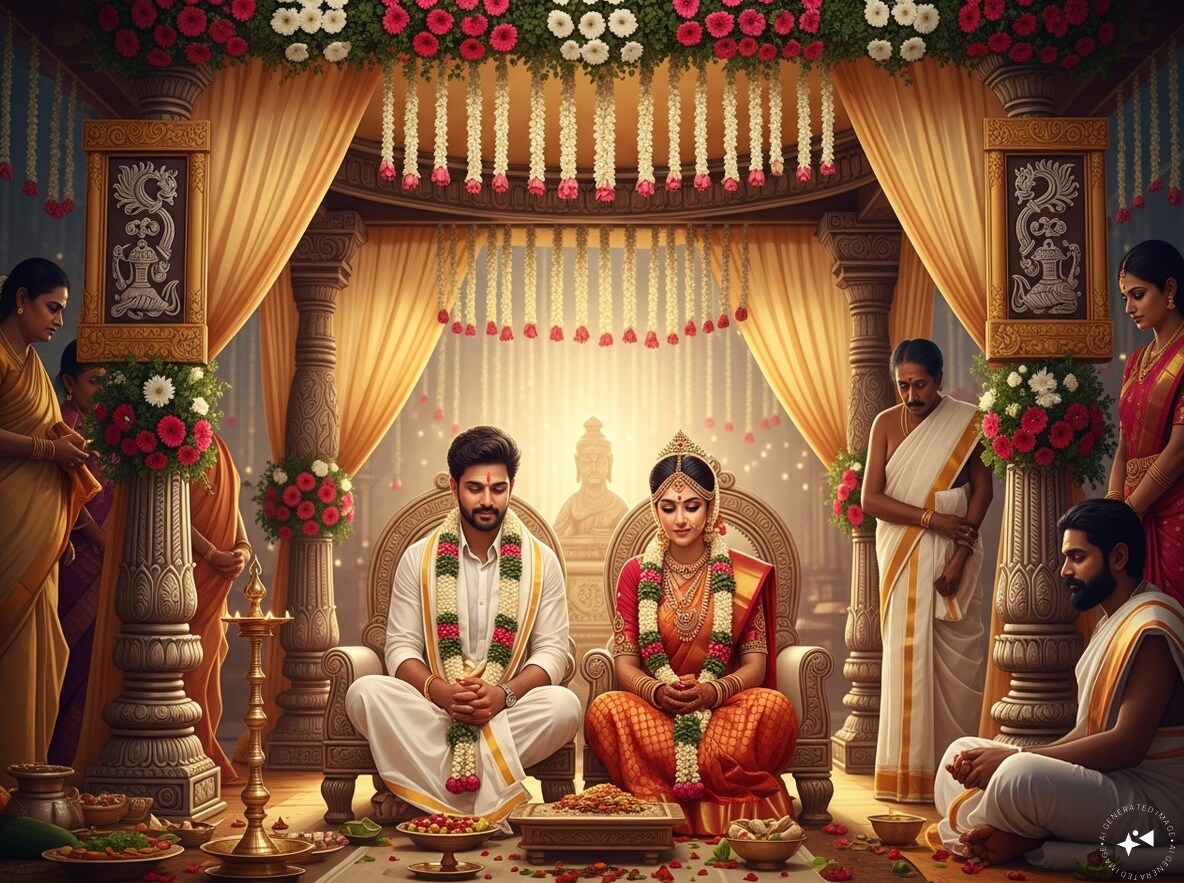
A familiar image from traditional Hindu weddings has once again captured public curiosity, the bride seated to the groom’s right as sacred mantras resonate around them. While the practice is so deeply ingrained in Sanatana Dharma that few pause to question it, astrologers and scholars say the placement carries layers of symbolic meaning rooted in centuries-old texts. (News18 Tamil)
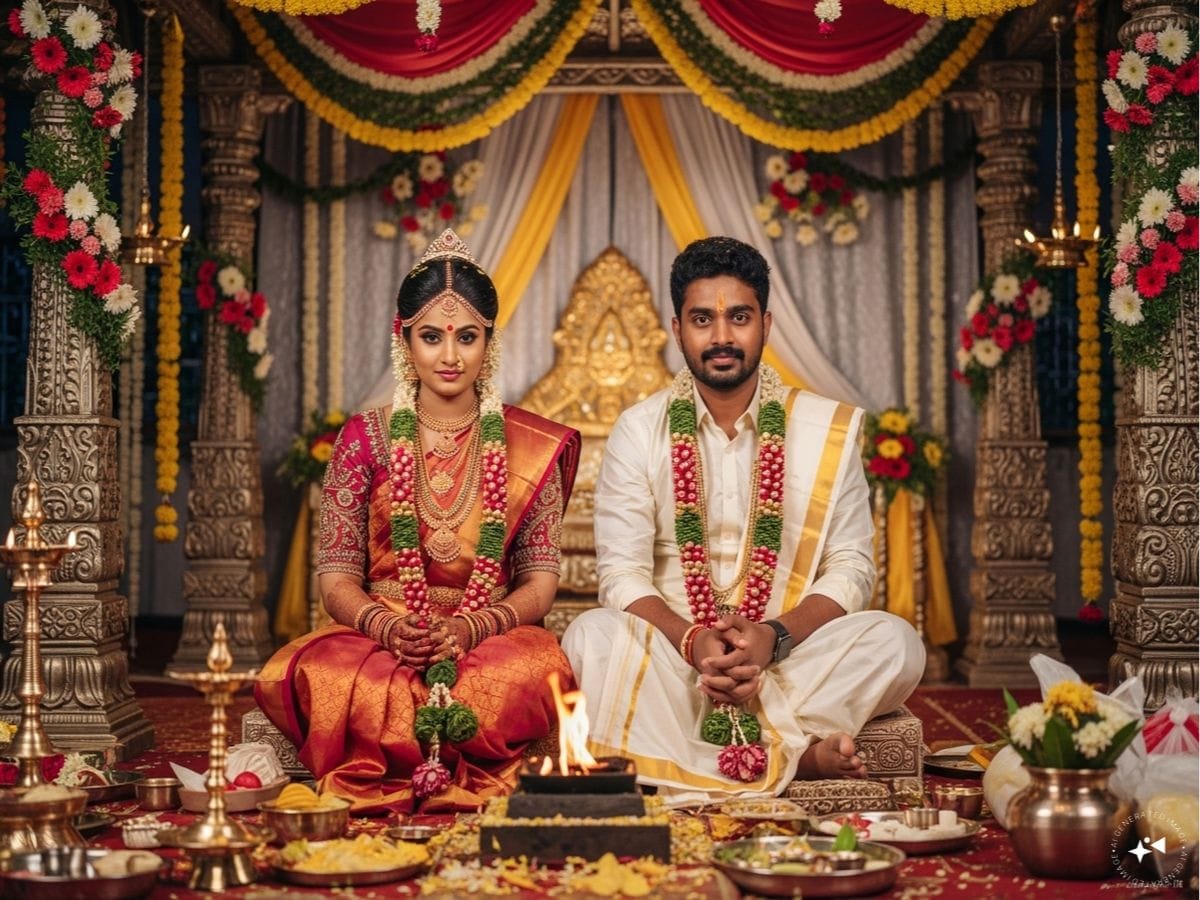
Hindu marriage rites draw heavily from Vedic traditions, which treat the union not merely as a social contract but as a spiritual alignment of two energies. Within this framework, the wife is often referred to as Vamangini, the one who occupies the auspicious space to the husband’s left, a position considered close to his heart. During the wedding, however, she is seated on his right, a gesture scholars interpret as invoking divine harmony and balance at the moment the couple formalises their bond. (News18 Tamil)
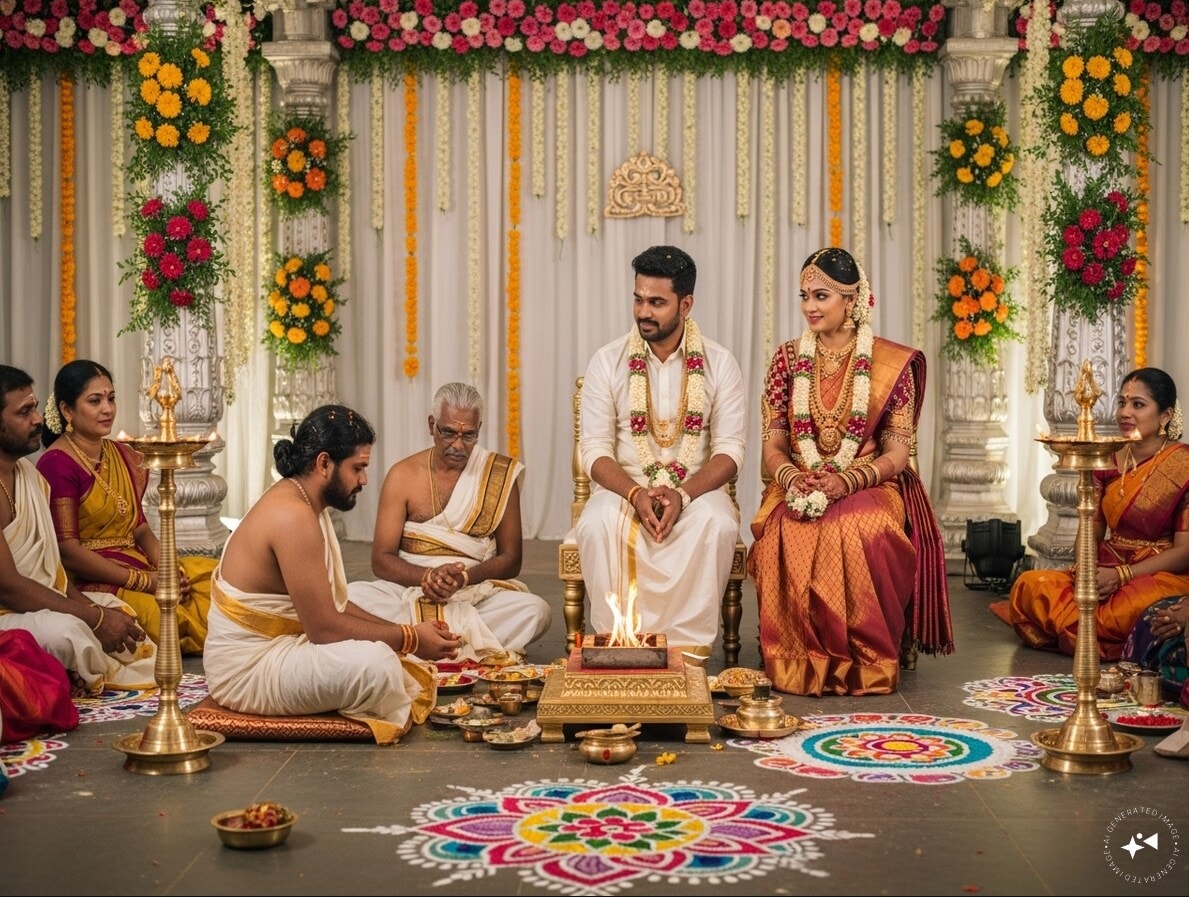
Astrological interpretations also enter the picture. Many practitioners point out that the bride’s heart, located towards the left, symbolically draws her closer to her partner, strengthening emotional and spiritual intimacy. Several experts cite the example of Goddess Lakshmi, who is depicted seated to the right of Lord Vishnu in classical iconography, a placement believed to signify prosperity and the blossoming of fortune in married life. The bride’s position beside the groom, they argue, echoes this cosmic arrangement. (News18 Tamil)
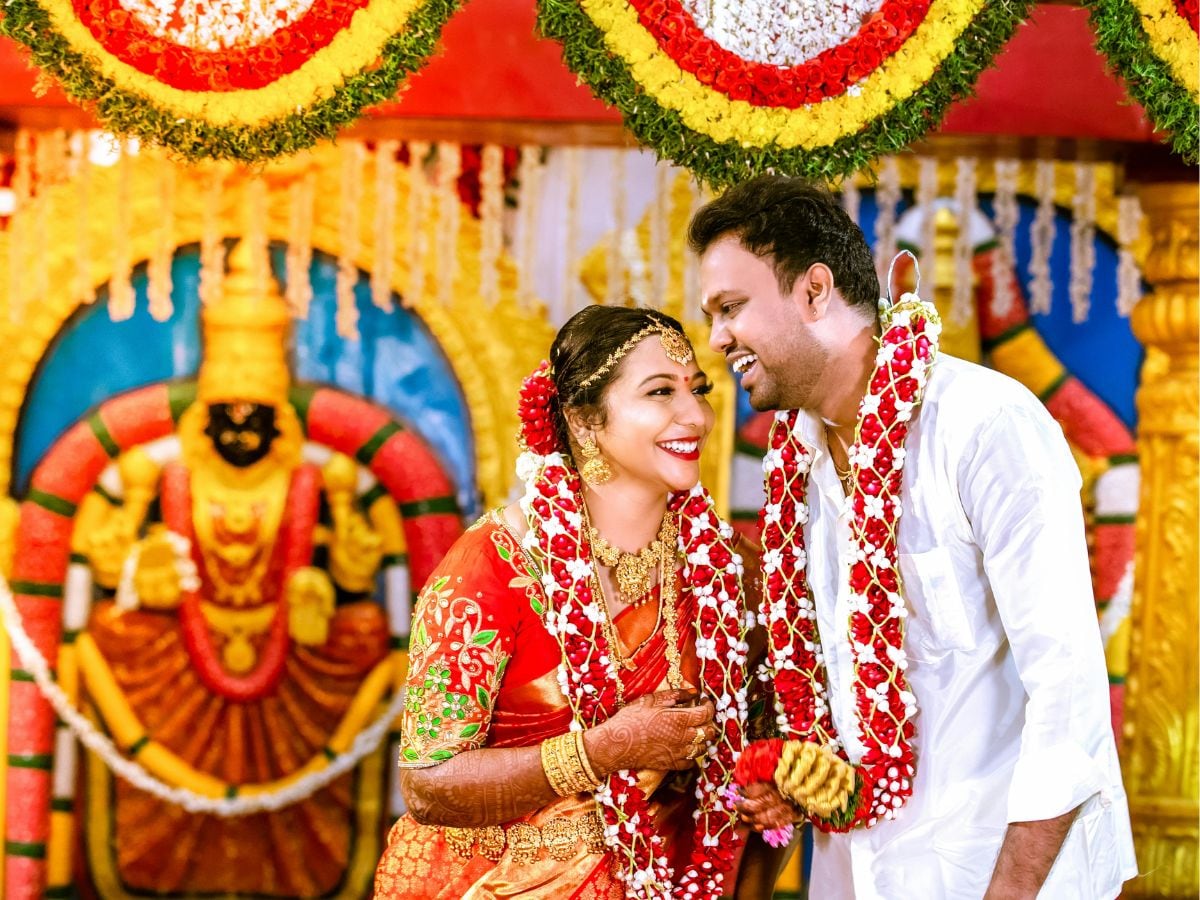
The motif extends further into Hindu philosophy. The dual form of Ardhanareeswara, where Shiva and Shakti are portrayed as inseparable halves of a single entity, reinforces the idea of complementary energies completing one another. Ritual placement during marriage is often explained as a living reflection of this timeless union. (News18 Tamil)
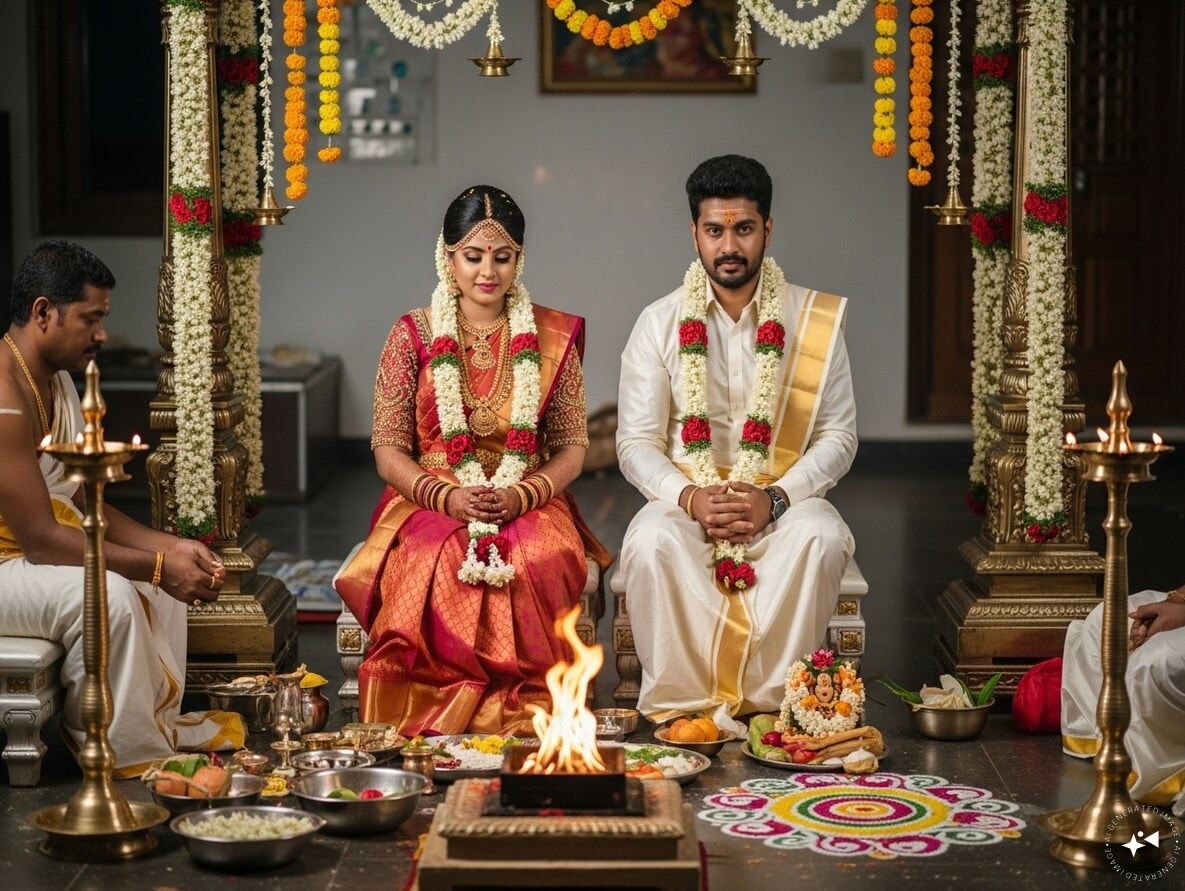
According to certain pandits, the moment the bride takes her place on the groom’s right is considered particularly auspicious for the household she is entering. The gesture, they claim, invites good fortune and enhances the couple’s prospects for prosperity, a belief that keeps the tradition firmly alive even in contemporary ceremonies. (News18 Tamil)
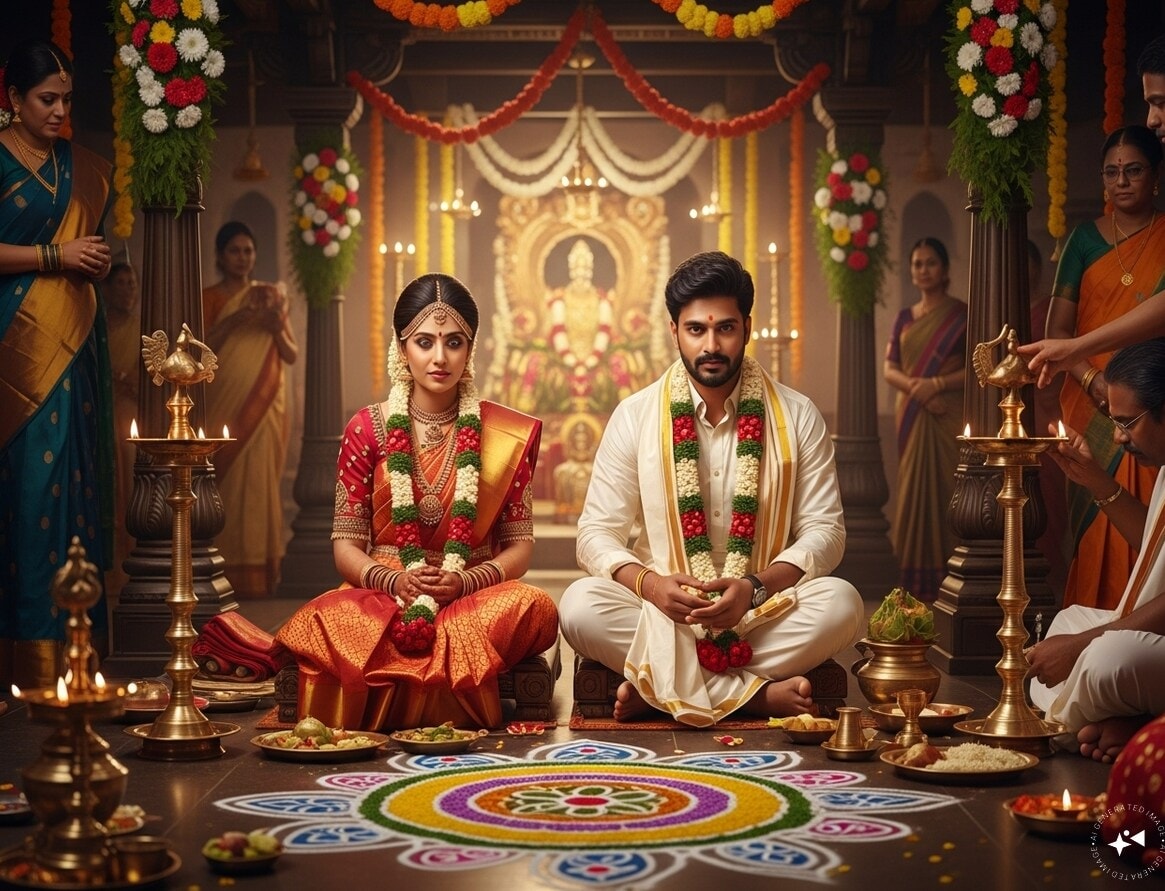
As with many customs that travel across generations, interpretations vary, and not all scholars agree on the literal origins of the practice. The explanations widely circulated today are drawn largely from popular astrological commentary and cultural interpretations available online. News18 has noted that these claims remain unverified and rest mainly on traditional belief systems rather than documented historical evidence. (News18 Tamil)