





The US Supreme Court ruled that President Donald Trump cannot legally use emergency powers under the International Emergency Economic Powers Act (IEEPA) to impose tariffs. The decision blocks part of his trade strategy but does not end his trade war.The ruling mainly affects “reciprocal tariffs,” which Trump announced last April in the Rose Garden. These tariffs had raised average rates to about 15%, but the court’s decision could cut that by more than half.
Other tariffs, such as sector-specific levies on steel, pharmaceuticals, and autos under trade deals like the UK agreement, remain in place. Overall, the average tariff rate is still above 6%, about three times higher than at the start of 2025.For importers, the immediate impact may be limited. Many have already adapted supply chains to avoid heavily tariffed countries like China, or absorbed extra costs themselves. Last year, tariff revenues reached $240 billion, helping soften the effect on US households.
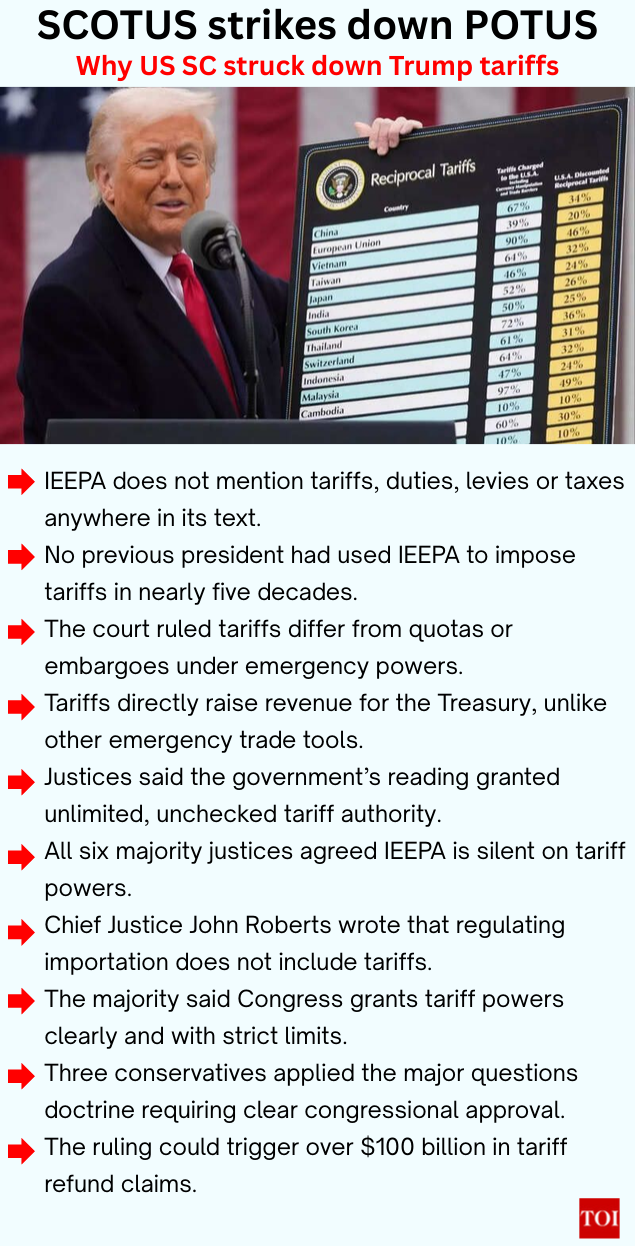
Trump responds with new tariffs
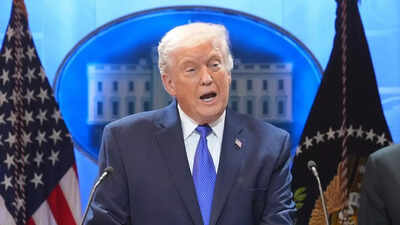
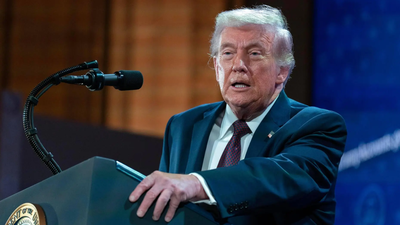
Despite the ruling, Trump is pressing ahead. Hours after the decision, he announced a 10% global tariff and further investigations into unfair trade practices using the Trade Act of 1974. “We have other ways, numerous other ways,” he said. “While I am sure that they did not mean to do so, the Supreme Court’s decision today made a president’s ability to both regulate trade and impose tariffs more powerful and more crystal clear, rather than less.”US treasury secretary Scott Bessent said the new measures are expected to “result in virtually unchanged tariff revenue in 2026.” However, these legal routes are more complex, with caps on tariff amounts and durations, and procedural steps such as investigations and hearings. Section 122 of the Trade Act allows tariffs of up to 15% for 150 days to address “fundamental international payments problems,” while other sections require investigations to determine if tariffs are needed for national security or to correct unfair trade practices.
Impact on importers and global trade
Donald Trump acknowledged that the new process takes longer. “The process takes a little more time, but the end result is going to get us more money,” he said. On existing trade deals, he added: “Many of them stand. Some of them won’t, and they’ll be replaced with the other tariffs.”Smaller US importers face ongoing uncertainty. Last year’s tariffs pushed companies to shift supply chains, benefiting countries like Thailand and Vietnam, while China remained strong due to IT hardware imports.
Will tariffs be paid back?
The ruling also raises questions about whether the US will have to refund tariffs already collected. Economist Erin McLaughlin, as quoted by The Guardian, said that “many studies show that US firms have paid 90% of that,” often passing costs on to consumers. Trump dismissed the idea of refunds: “It’s not [being] discussed. We’ll end up being in court for the next five years.”
What’s next?
The Supreme Court ruling removes one tool from Trump’s arsenal, but his broader trade strategy remains. The administration now faces a more complicated legal path to enforce tariffs, which may take time and involve investigations. Meanwhile, global trading partners may continue to seek more stable alliances, shifting supply chains and trade flows in response to ongoing uncertainty.