





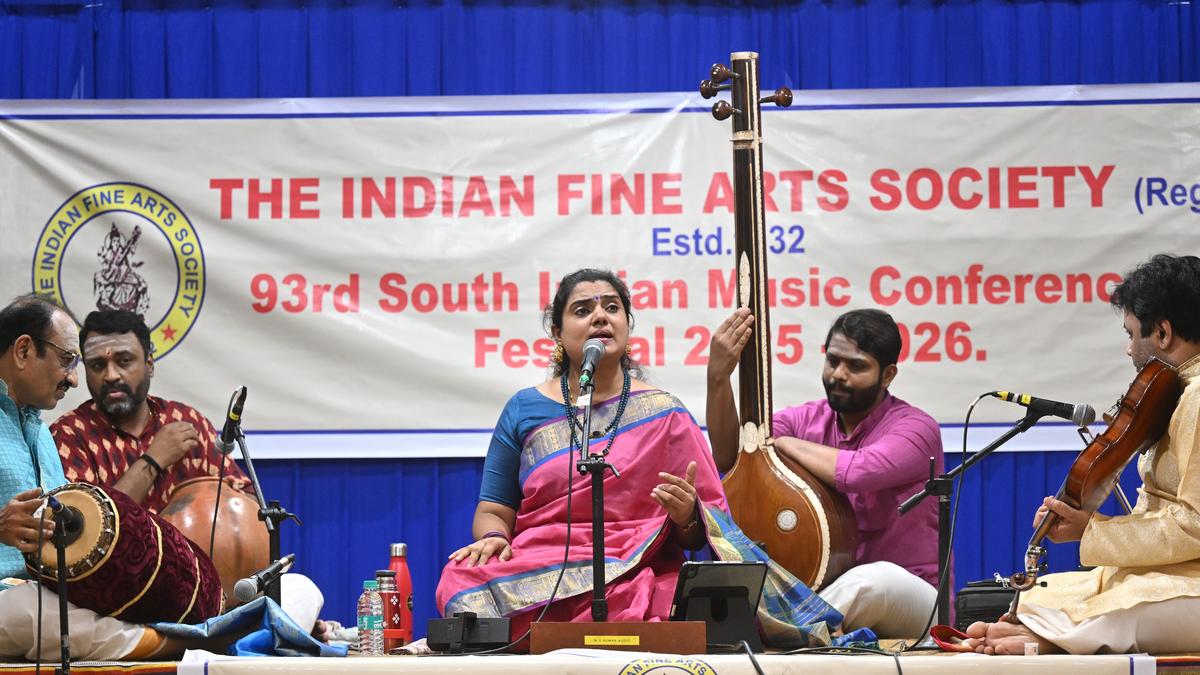
Vidya Kalyanaraman with Papanasam Kumar (mridangam); H. Prasanna (ghatam) and B. Ananthakrishnan (violin)
| Photo Credit: M. Srinath
The emergence of talents like Vidya Kalyanaraman augurs well for the performance scene of the next generation. It is a double delight that she embraces the time-tested musical values, as was evidenced in her concert.
‘Gajavadana karuna sadana’ in Sriranjani was sprightly in a brisk kalapramana with a volley of sangathis. Sriranjani kritis are rarely sung without some swaras and Vidya did not alter that. The alapana of Varali was sedate and delivered with ease, but the focus seemed to be on stringing all familiar phrases. Alapanas are meant to incorporate some ‘aha’ moments, which Vidya will come to realise.
‘Seshachala nayakam’ had all the tenets of classicism that the master composition demands and Vidya’s niraval at ‘Aravinda padma nayanam’ was engaging, especially in higher octaves.
Violinist B. Ananthakrishnan raised his game during this phase with pleasing articulation and raga bhava. A piece with a somewhat elaborate alapana and niraval could go without the mandatory swaras but the urge to sing them seems palpable these days.
Vidya affirmed her primacy for the Trinity with ‘Marivere gati’ (Syama Sastri, Ananda Bhairavi, Misra Chapu) and ‘Naada loludai’ (Tyagaraja, Kalyana Vasantham, Adi). The latter had some sprightly swara passages, largely adhering to raga lakshana without the drum-beat effects. Such preferences underline a musician’s core choices.
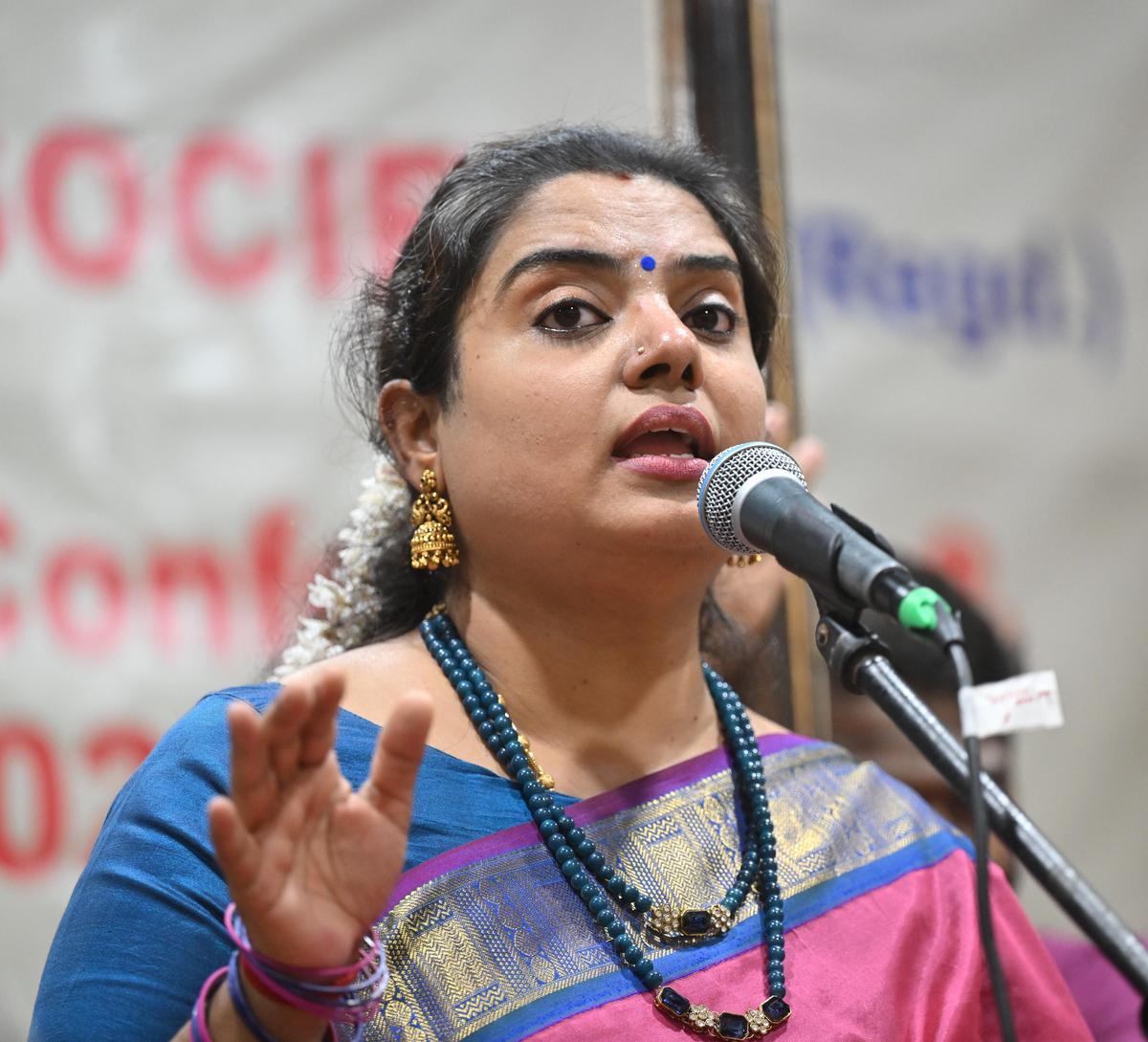
Mohanam raga was the mainstay of the concert.
| Photo Credit:
M. Srinath
Mohanam was Vidya’s mainstay at the concert. While she had been a bit tentative until this point, the raga sketches were calm, enjoyable and had a good progression. Roller-coaster sangathis were kept in proportion. The raga has an inherent attraction and the musician’s role is just to visit the peaks and valleys without heroism, as Vidya demonstrated. Ananthakrishnan’s response had similar fundamentals.
‘Kapali’ of Papanasam Sivan is a colossal kriti in Mohanam, laced with vivid portrayal of the Lord and several tempo combinations. Vidya’s patantara is good and bereft of unpolished flights. There were a ton of swaras at the end, including a kuraippu and korvais, with ga, pa, sa, ri, ga as the overarching theme. The whole piece, engaging as it was, robbed Vidya of valuable time for some pensive pieces at the end.
‘Krishna nee begane baro’ (Yamuna Kalyani) was soulfully rendered as Vidya’s soft voice lends itself to such pieces. Papanasam Kumar and H. Prasanna (ghatam) supported the multi-tala programme with good anticipation of the sangathis.
The two-hour concert featured only one niraval and four swaras. That underscores the tilt in the balance away from spontaneous expression to an audience-friendly diet of orchestrated swaras and more swaras, even by artistes with a classical bent. If you take away the swara segments, many concerts may shrink to a half.
Published – January 02, 2026 11:48 am IST