






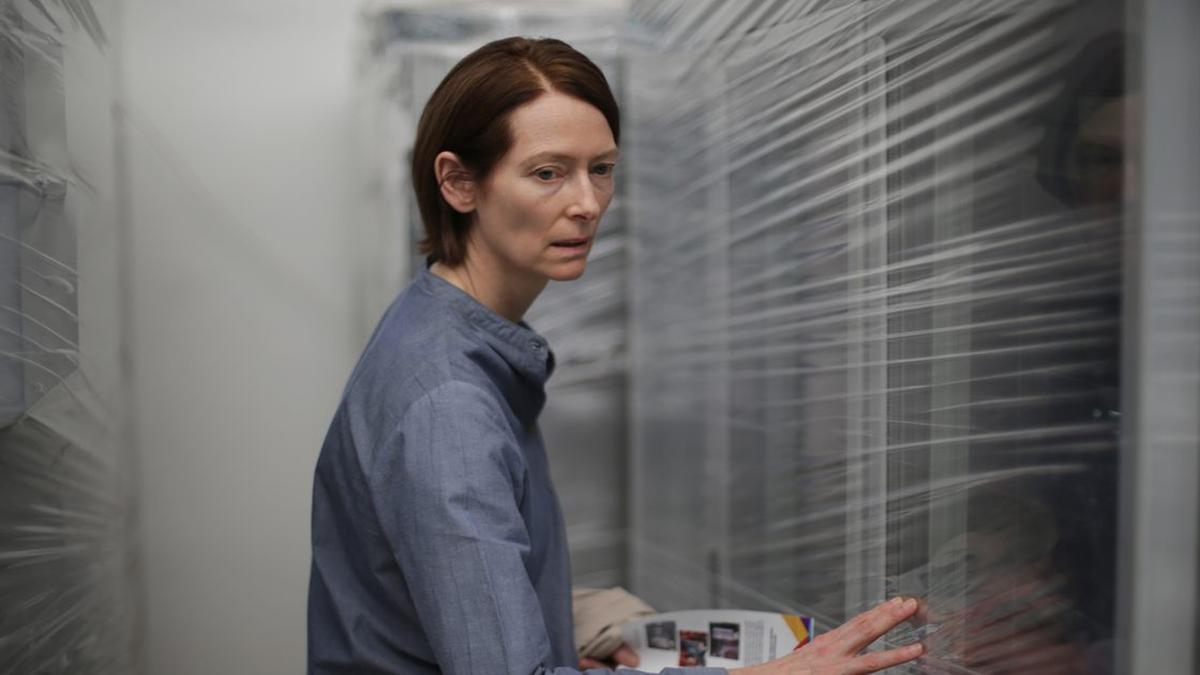
A still from Apichatpong Weerasethakul’s Memoria
| Photo Credit: Special Arrangement
The 17th edition of the Bengaluru International Film Festival (BIFFes) is screening classics by Apichatpong Weerasethakul. The Thai film director and producer is known for his unusual approach to capturing the moving image.
Popularly known as Joe or Pong, Apichatpong is known for his body of visual work which is stunning and often showcased at retrospectives and special film festival sections. “Apichatpong was not in a position to visit Bengaluru, as he is busy with his next venture Jengira’s Magnificent Dream, with filming scheduled to begin in Sri Lanka in February 2026,” says Murali PB, artistic director BIFFes. According to sources, the film is inspired by Arthur C Clarke’s 1979 novel The Fountains of Paradise and a Thai woman’s pilgrimage to Sri Lanka.
According to Rahul S Desai, a member of the BIFFEs executive team which curated Apichatpong films for this edition, the filmmaker seems guided by Buddhist philosophies of rebirth, self-transformation, and personhood, which reflect in his work. “Apichatpong’s vast body of work stands as a testament to both the transcendental power of the moving image and the intimacy between humans and their landscape,” says Rahul.
Besides being a poetic filmmaker, Pong has made over 50 powerful and meaningful short films, that are surprisingly disorganised in comparison to his feature films. Many of them shot on digital cameras, seem to allow the director more freedom to explore radical approaches to stylisation.
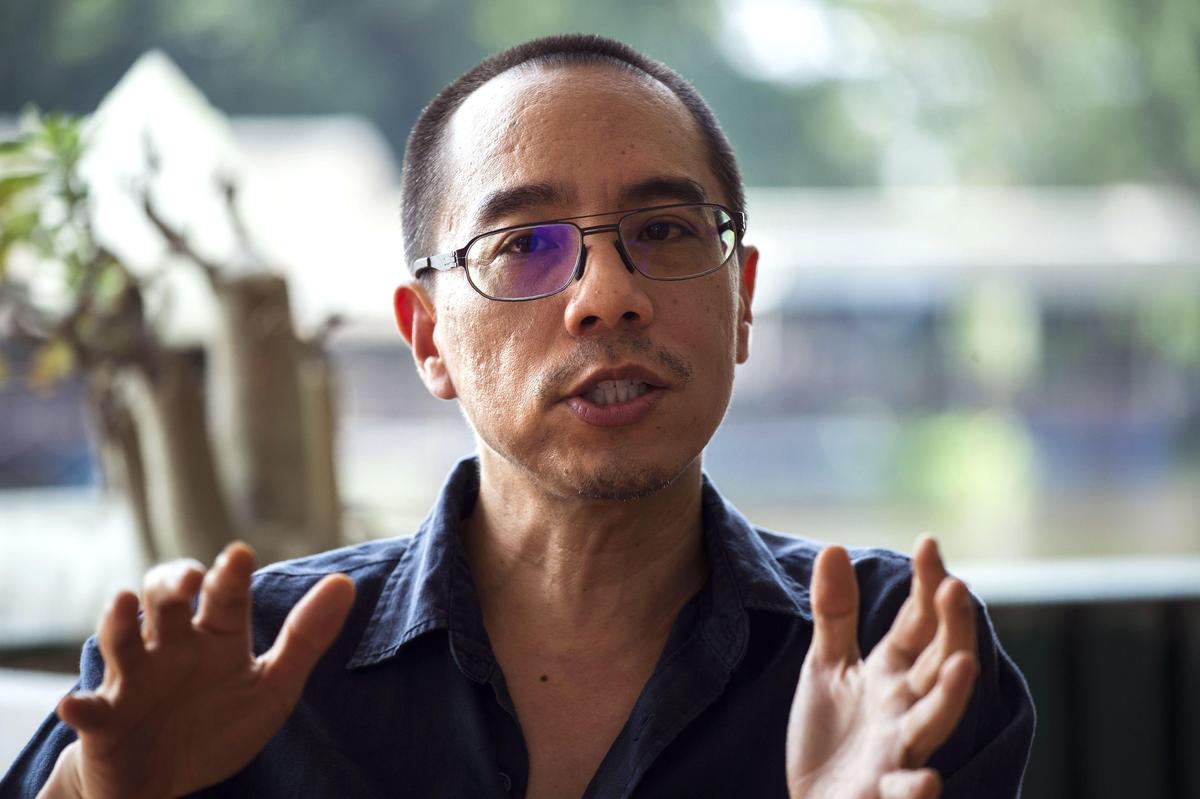
Apichatpong Weerasethakul
| Photo Credit:
ROMEO GACAD
Apart from film making, Apichatpong has engaged in installation, theatre, and performance pieces as well.
Anand Varadaraj, artistic director of the Bangalore International Short Film Festival, producer and actor, characterises Apichatpong’s films as “slow‑burn films”. “Apichatpong Weerasethakul uses his short films to challenge conventional cinematic structures, immersing the audience in a ‘sensorial experience’ that blurs the boundaries between reality, memory and the supernatural. His films encourage mindful, active watching by employing glacial pacing and static frames, forcing viewers to find personal meaning within the interplay of light and shadow”.
For many Indian filmmakers, especially those working in independent and experimental spaces, Apichatpong is a quiet hero. At the 15th International Festival of Kerala (IFFK-2010) in Thiruvanantapuram, Apithatpong was on the festival jury; the event also showcased a retrospective of his work. Other members of the jury comprised filmmakers Maria Novaro, Julie Dash, Yashuhito Hariki and Indian writer and photographer Sooni Taraporvala.
In a recent interview, Anurag Kashyap praised Pong’s fearlessness and called him as a major voice in global independent cinema, adding he refused to cater to impatience. Apichatpong’s work is often likened to that of Amit Dutta, writer and filmmaker, considered one of the most significant contemporary practitioners of experimental cinema. Both their films are slow and meditative, with a shared interest in image, memory and intuitive form.
Published – January 29, 2026 10:34 am IST
