




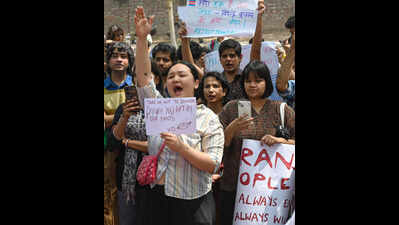
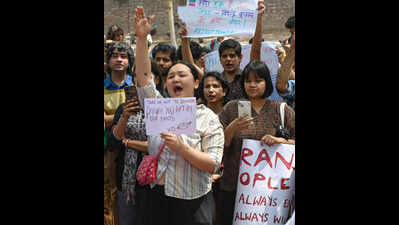
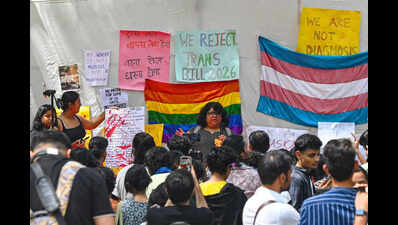
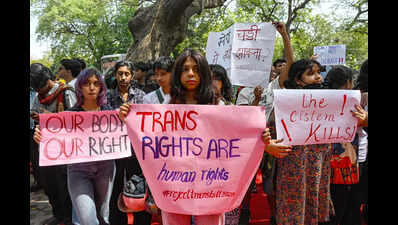
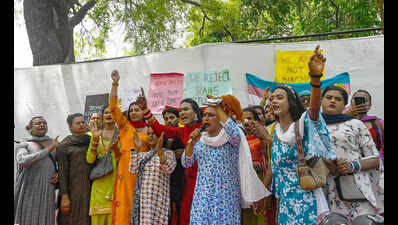
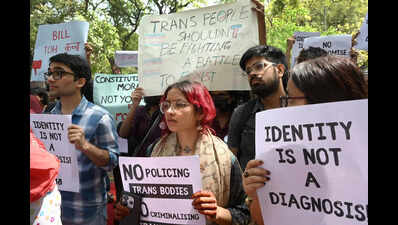
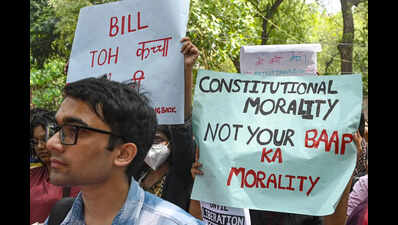
New Delhi: In school, Pratyay (29), a transwoman and research scholar, learned what it meant to be punished for not fitting in. In an all-boys school in West Bengal, she was once locked in a toilet for nearly three hours by her peers. When she complained, she was told it was because she was “too feminine.”Years later, in 2019, teaching English and social science in a govt school, the pressure to conform continued. “I had to dress like a male. My manager didn’t know,” she says. Acceptance came only in the classroom. “They were very supportive. With them, I felt seen.”“Sex is not gender, and gender is not just biology,” she adds. That same year, after the Transgender Persons (Protection of Rights) Act, 2019, she got official recognition. “After 2019, I got my ID as a transgender person. But whether it will remain valid, I have no clue.”“That law helped us spread awareness, feel included in society, schools, and jobs. Now it feels like all of that could go. My identity is in the hands of the govt,” she says.Pratyay is among thousands of transgender persons in India facing uncertainty , now that the Transgender Persons (Protection of Rights) Amendment Bill, 2026, has been passed in Parliament.Twelve years ago, Supreme Court, in the landmark NALSA v. Union of India judgment, recognised transgender identity and affirmed that self-determination of gender is central to personal autonomy. The Bill, passed on March 25, redefines “transgender person,” raising fears that it could undermine the right to self-identification.. This has raised concerns in the community.Opposing the amended law, students, activists and members of the transgender community gathered at Jantar Mantar. Sitting cross-legged on a bright red carpet under the harsh March sun, they carefully traced bold red letters across chart paper: “TRANS PEOPLE HAVE ALWAYS EXISTED AND ALWAYS WILL.” Around them, half-finished posters read “We are not a diagnosis” and “Dignity, not scrutiny.” The protest grew through the deliberate act of asserting identities that many fear the law is trying to erase. Within hours, the space became a sea of colour and resistance.Prerna (27), a queer PhD scholar at Ambedkar University, uses the term “queer” both to describe herself and to push back against the idea of being “normal”. Her work in sexuality education is deeply personal. She moved out after the CAA-NRC protests, seeking space to be herself. “It was during the protests that I realised my parents and aligned with different sides politically.” While things are slowly improving, coming out still feels daunting. “You grow up feeling something about you needs fixing,” she says, a belief she continues to unlearn.For her, the concerns also revolve around livelihoods. “If the Bill criminalises those who affirm excluded transgender identities, it will affect education and jobs. This is my livelihood too.”Some protesters came from outside Delhi. Ponnu IMA, a trans non-binary social worker from Kerala, said: “We travelled with crowdfunding from people who couldn’t make it. It’s not just about living with dignity anymore. With this Bill, I become illegal. My ID is invalid. I have a JRF, and it could all be wasted because it denies my identity, which is my right.”Mona (37), a transwoman from Badarpur, was forced to leave home at 15 for expressing herself through makeup and dressing up. “I was thrown out because of my identity,” she says. Life outside was uncertain. Getting an Aadhaar card was difficult, and safety on the streets was never guaranteed. With limited options, she turned to begging and sex work. Today, she works with an NGO. “We are just here for justice,” she says,. “Right now, police cannot stop us, but who knows they start criminalising us after the bill.”