






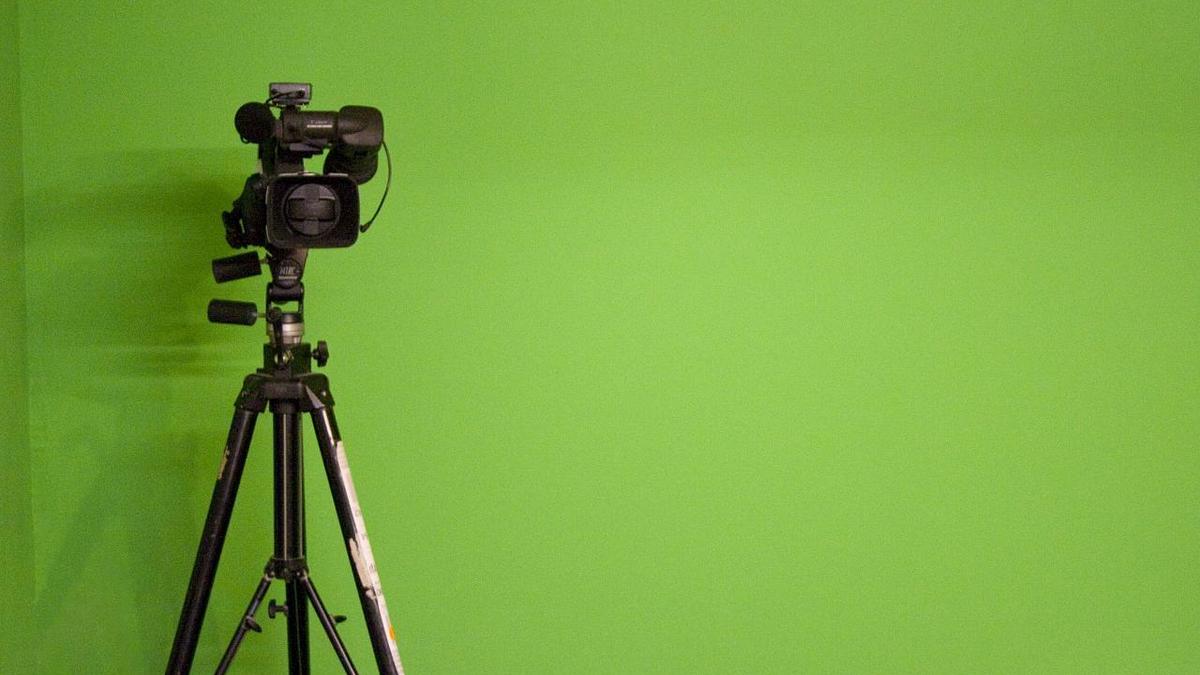
A typical green screen.
| Photo Credit: FLICKR
Chroma keying — or green screen technology — essentially involves filming subjects in front of a bright-coloured background (usually green), and then using video editing software to digitally remove that colour and place something else in there in post-production.
The set-up
The way chroma keying works is rather simple. A subject is filmed against a uniform green or blue background. Then, in the post-production process, the editing team uses a specific software to identify that colour and make it transparent. A new background is placed in that transparent area. However, getting the editing to look neat takes a lot of precise lighting to avoid shadows and colour spills.
Before the green
Prior to using matte backgrounds for putting elements in post-production, double exposure was used in the late 19th Century and early 20th Century. Double exposure is essentially the superimposition of two or more exposures (identical or otherwise) to create a single image (check image). This was done using black draping where a green screen would be used today.
Double exposure was quickly replaced by blue background in the 1930s. This method was pioneered and developed by RKO Radio Pictures. It was earlier used to make transitions, like the windshield wiper transition in the movie ‘Flying Down to Rio’ (1933). But, the first proper use of bluescreen was in the making of a scene of a genie escaping the bottle in ‘The Thief of Bagdad’ (1940), which won the Academy Award for Best Special Effects.
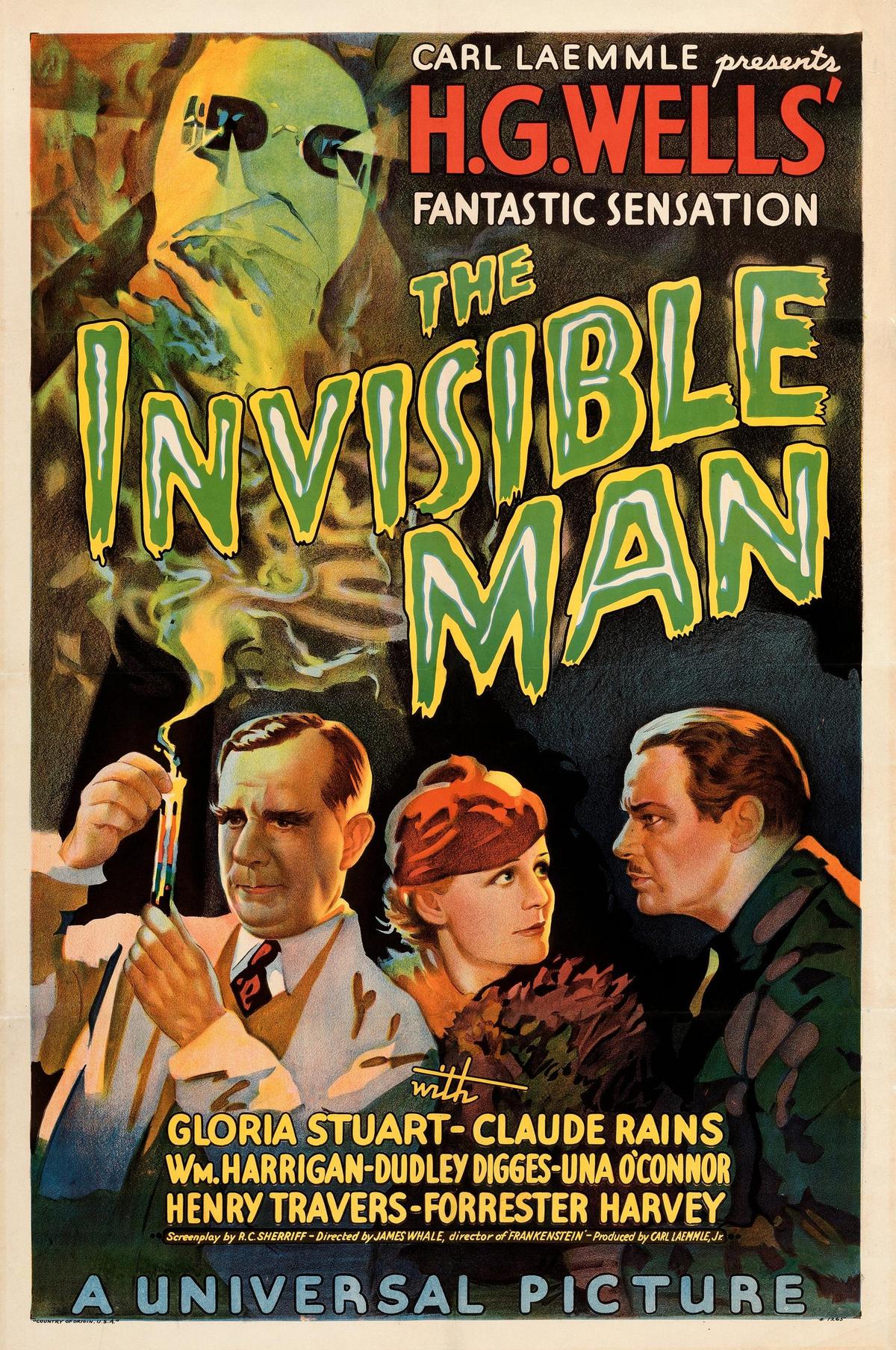
Motion Poster for the Invisible Man (1933). Unlike most films of its time, the makers use a black velvet backdrop for the invisible effect.
| Photo Credit:
WIKIMEDIA COMMONS
The term ‘chroma key’ was what the Radio Corporation of America called the process. To explain the etymology, the word “chroma” comes from the Greek word chrôma meaning ‘colour’, and ‘key’, which refers to a keying process that isolates or removes specific colours.
Blue screen transitioned to green in the 1990s, when digital cameras came into the scene (literally), and with their Bayer sensors (sensors that capture colour via a red-green-green-blue filter grid that software interpolates into full images), could capture the colour green better as it was less common in the wardrobe.
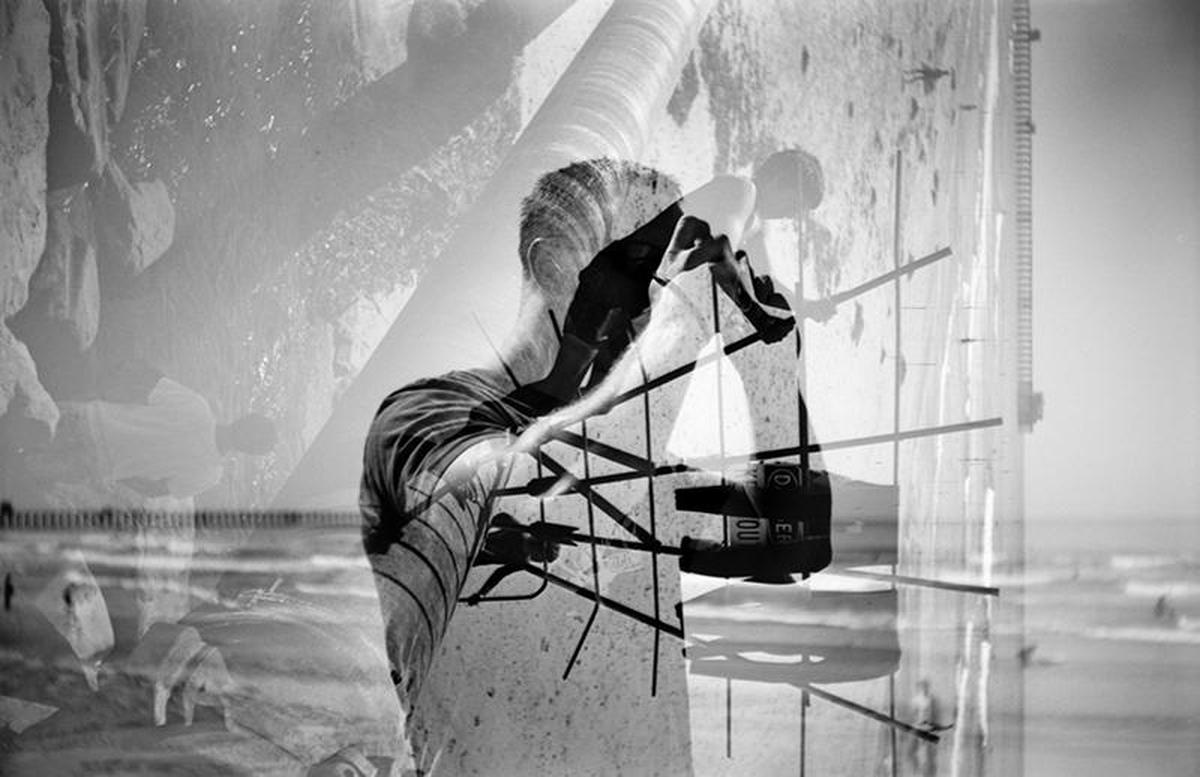
This is what double exposure looks like.
| Photo Credit:
Brian Auer/FLICKR
Applications
So, where is green screen technology used? We commonly see it used in films involving visual effects (like semi-animated or superhero films), television virtual studios, and live streaming. It is also used in television news, particularly in weather forecasts, or election day broadcasts.
And why do filmmakers love using it? Well, it gives them the freedom to play around with the scene and use the imagination to the fullest. It is also cost and time-effective as a lot of time and money is saved in just creating the backdrop than going somewhere with the needed backdrop.
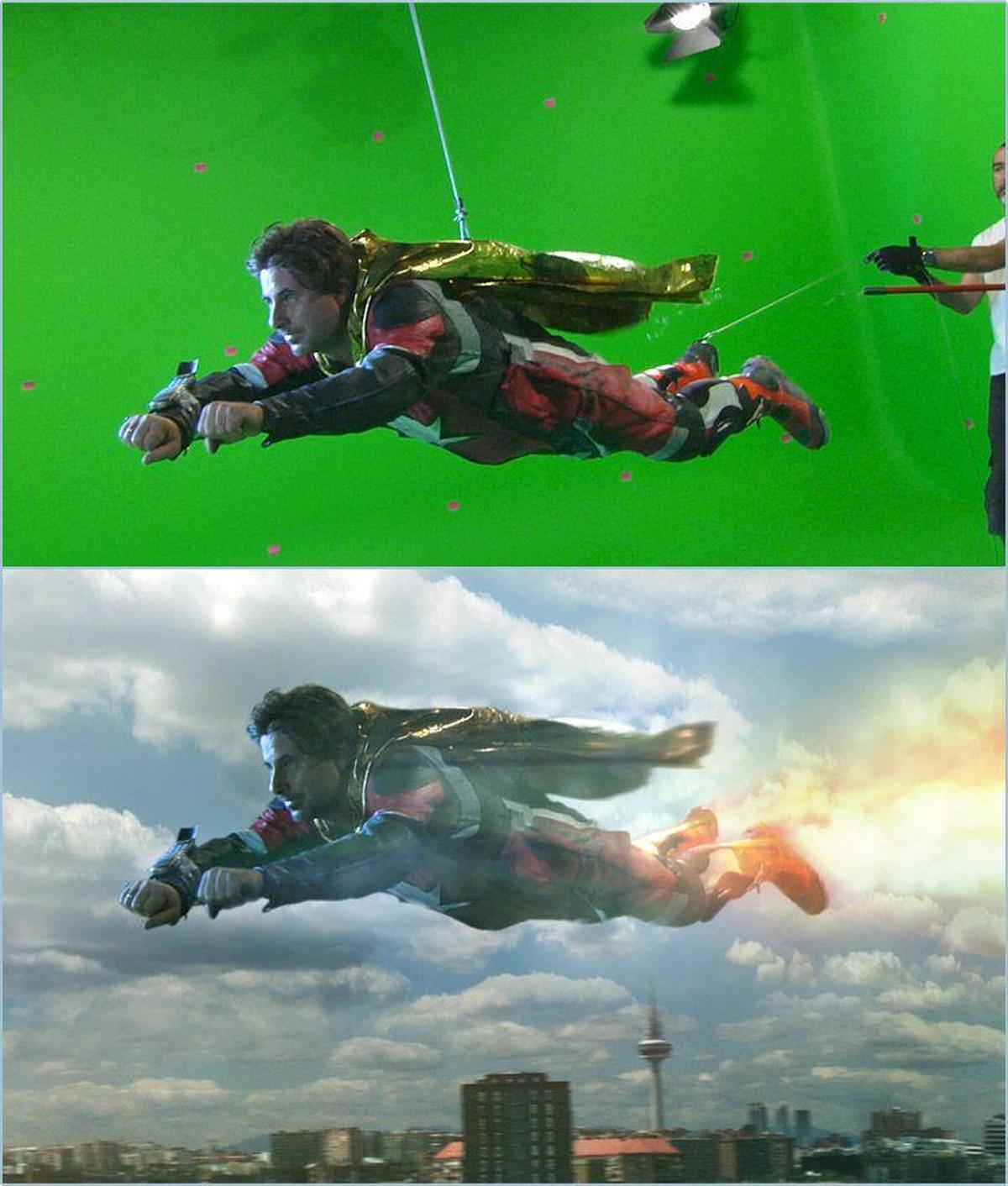
Green screen being used in a superhero movie.
| Photo Credit:
SPECIAL ARRANGEMENT
Chroma keying may look like magic, but it is just applied colour science and technology. By removing one colour to replace it with something else, you can blend worlds in film, or even create them. This technique proves that some good filmmaking takes a plain green screen and some imagination.
Published – January 19, 2026 04:39 pm IST