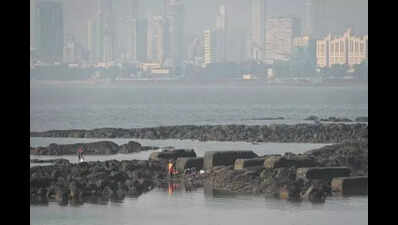





Mumbai: In a development that could ease immediate concerns over energy shipments, at least one India-bound crude tanker has safely crossed the Strait of Hormuz, offering tentative relief to the shipping and energy trade amid escalating tensions in West Asia.Sources said two Indian tankers, ‘Pushpak’ and ‘Parimal’, were allowed to pass after diplomatic talks over safe passage for energy cargo. It may be mentioned that an India-bound crude tanker, Shenlong Suezmax, that crossed the war-hit strait has already reached Mumbai at MbPA’s Jawahar Dweep. It is captained by an Indian national.Shenlong Suezmax, carrying approximately 135,335 metric tonnes (or roughly 1 million barrels) of crude oil, had departed from the Saudi port on March 1 and reached Mumbai, becoming the first India-destined vessel to safely navigate the strategic waterway to reach the Indian shores amid the intense fighting in the Gulf.Though there is no official confirmation that the Indian captain activated the “dark mode” and navigated the ship towards Mumbai from the “blocked” Strait of Hormuz by switching off automatic identification system tracking (a radio-based system used by the maritime industry to monitor and track vessel movements in real time), a source told TOI, “GPS signals are pretty erratic in the Strait. In a war-like situation, the AIS tracking system is switched off.”The source also informed that “another ship is also on its way to Mumbai”. As per some reports, the second oil vessel may land in Mumbai on Saturday.As far as the latest attacks on ships are concerned, though sources have confirmed that a Thai cargo vessel was hit by projectiles with crew missing, it is not confirmed that one of the ships hit was Indian-flagged. Sources said insurance and war-risk premiums for ships have surged due to attacks and mines in the strait putting burden on pricing. Reports say dozens of Indian oil and LPG tankers are waiting near Hormuz amid the conflict.Industry sources said the latest vessel’s passage through the Strait of Hormuz indicates that maritime movement through the strategic waterway may not be completely halted, though the situation remains volatile. The Strait of Hormuz, which handles nearly a fifth of global oil trade, has seen heightened security risks following missile and drone attacks on merchant ships in the region.Shipping officials said several vessels have come under attack in recent days, with Indian crew members among the casualties on merchant ships operating near Gulf shipping lanes. Sources said dozens of oil and LPG tankers linked to Indian trade are waiting near Gulf waters amid uncertainty over safe passage.The tensions have also driven global crude prices above $100 per barrel amid fears of prolonged disruption to one of the world’s most critical energy corridors. For India, which imports most of its crude and a substantial portion of LPG from West Asia, any sustained disruption could affect shipping schedules, freight costs and fuel availability.The uncertainty follows earlier disruptions across the Red Sea and the Bab al-Mandab Strait, which forced several container lines to divert vessels through the longer Cape of Good Hope route.Sunil Vaswani, executive director of the Container Shipping Lines Association (India), said two Indian ships are currently on their way and the industry hopes they reach safely. Shipping lines have handled similar crises before, he said, though rerouting adds 10–15 days to voyage time and increases operational costs.Exporters say the disruption is already causing congestion at Indian ports as containers pile up amid cancelled sailings, though ports are managing refrigerated cargo to prevent spoilage.Meanwhile, Union petroleum minister Hardeep Singh Puri told Parliament that India has diversified energy sourcing and is importing gas from countries such as the US and Canada, insisting there is no need for panic over LPG availability.However, LPG dealers have questioned the claim. Kerosene dealer Kedar Chandak said shipments from North America take about 45 days to reach India compared with 10–12 days from West Asia. With India producing only around 40% of its gas needs, he warned that delays could worsen if tensions continue.Shipping and energy officials said the tanker’s safe passage offers some hope, but the coming days will determine whether Gulf trade stabilises or faces prolonged disruption.(Inputs by Surendra Singh)