






The Scorpions have lived long enough to hear their own music soundtrack the fall of the Berlin Wall, before settling into the texture of a newly unified Germany. The proximity to a turning point could have fixed them in place as a band tied to a single era, yet their trajectory keeps extending outward as they carry the same core sound for listeners who are drawn in from decades apart. But as they prepare to return to India after nearly 20 years, the question that frames the pioneering septagenarian German hard rockers hardly feels existential.

Formed in 1965 in Hanover by guitarist Rudolf Schenker, the Scorpions have outlived almost every peer they emerged alongside, moving from the psychedelic fringes of late-60s European rock into the polished classic hard rock that defined the 1980s, and in the process becoming one of Germany’s most globally successful musical exports, with a catalogue that includes hits like ‘Rock You Like a Hurricane,’ ‘Still Loving You,’ and the immortalised, ‘Wind of Change’.
Today, the band still revolves around Rudolf, 77, whose presence has anchored every phase of its evolution, alongside vocalist Klaus Meine, also 77, who joined in 1969 and became the group’s defining voice, and guitarist Matthias Jabs, 70, who entered in 1978 and helped shape the melodic, radio-facing sound that carried them into their commercial peak. Their return to India for their four-city Coming Home Tour, comes within the larger frame of a 60-year career that has stretched across vinyl, MTV, and streaming, each phase absorbed without fully displacing the one before.
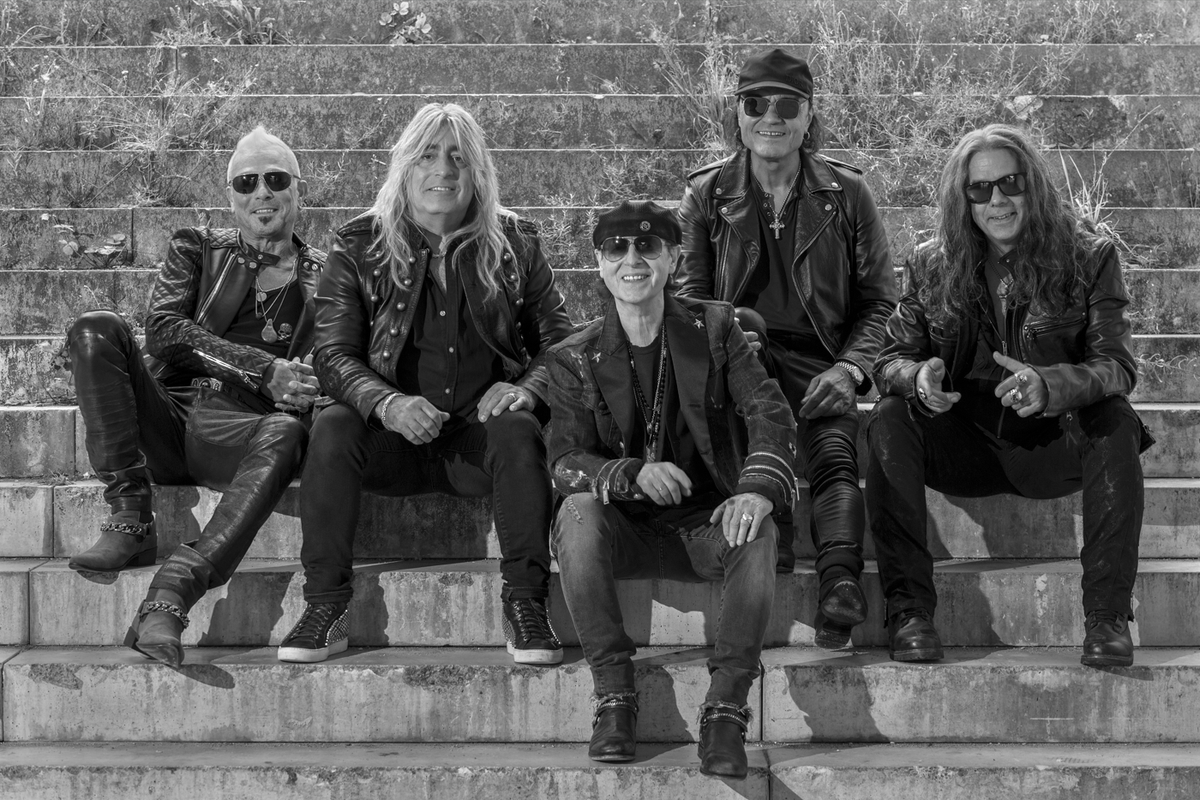
(L-R) Rudolf Schenker, Mikkey Dee, Klaus Meine, Matthias Jabs and Paweł Mąciwoda of the Scorpions
| Photo Credit:
Special Arrangement
“It’s almost 20 years ago,” Klaus exclaims. “We’re very excited to come back to figure out there might be a whole new generation of Scorpions fans out there.” He recalls their previous visit through flashes. “In Bangalore, during the soundcheck, there were millions of birds in the air,” he reminsces. “Shillong was also very special and now we have a chance to play for Indian fans across all these cities again.”
The band’s endurance has often been explained through platinum records, global tours and chart placements, yet Rudolf describes it as a kind of lived continuity. “To go on stage is exciting, and after all these years it remains exciting because the crowd, the kids are changing. We have three generations in front of us,” he explains, “and it’s great to see how these three generations come together and build one.”

That sense of convergence reflects how the band’s audience includes listeners who first encountered them on cassette, others who grew up with MTV rotations, and now a younger cohort who took recommendations from their parents seriously. “Music is a strong power which can bring people together without saying anything,” Rudolf says. “The vibration of music brings them together, and that’s why we’re still doing it and why we’re still enjoying it, because that’s what we always see when we look them in the eyes,” he adds.
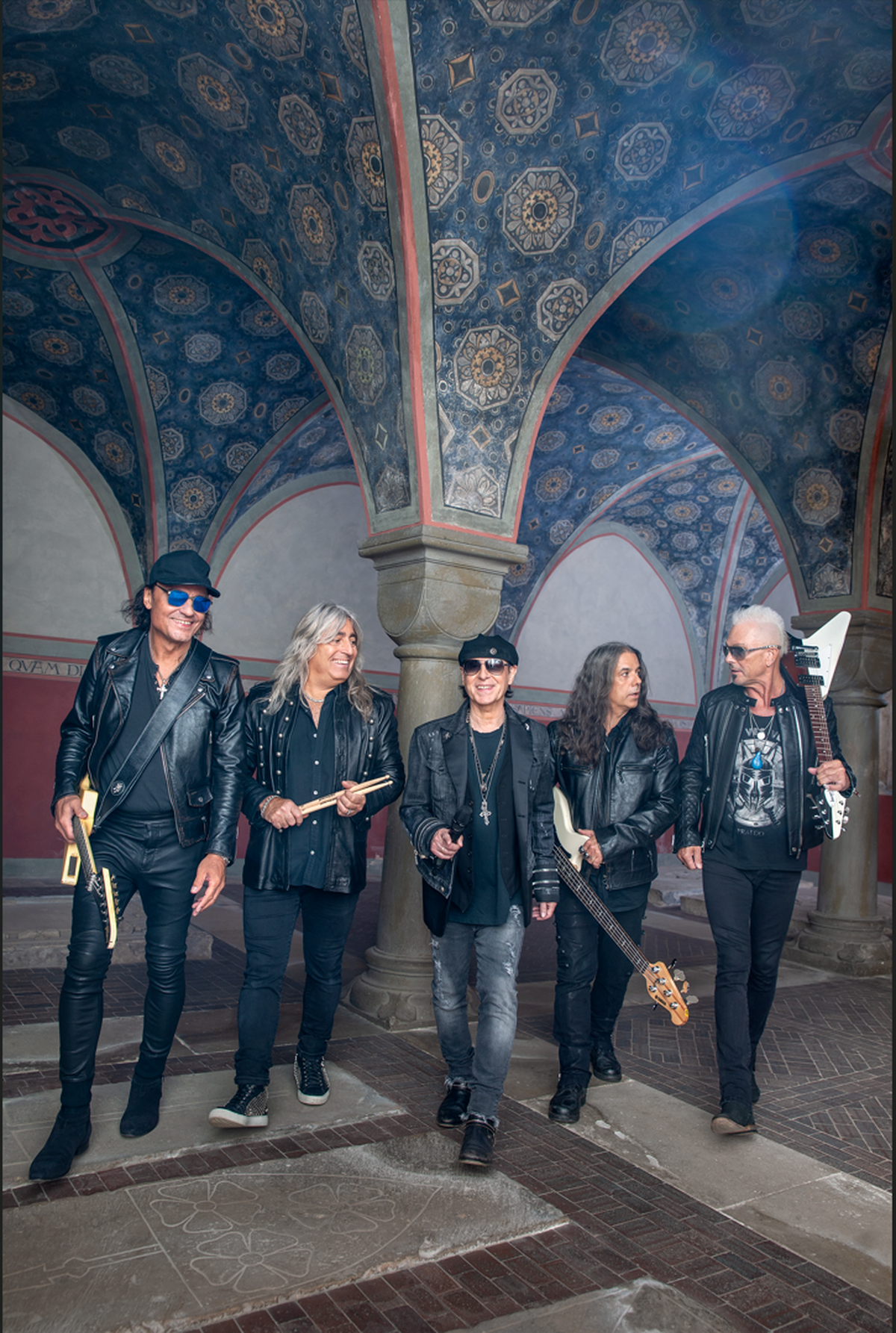
(L-R) Matthias Jabs, Mikkey Dee, Klaus Meine, Paweł Mąciwoda and Rudolf Schenker of the Scorpions
| Photo Credit:
Special Arrangement
The Scorpions’ emergence from West Germany carried a specific historical charge. In the decades following the Second World War, German bands seeking international recognition faced both practical and symbolic barriers, and the decision to write and perform in English became a crucial step in crossing those borders. “When we came into a foreign country for the first time,” Rudolf recalls, “we immediately felt a great understanding of what we were playing, more so than our home country”. That reception sharpened the message they wanted to carry in post-war Germany. “We wanted to show that another generation has come up here in Germany,” he says, “not with tanks, but with guitars, bringing love, peace and rock and roll.”

By the late 1970s and into the 1980s, those messages aligned with a broader shift in rock music, as the genre expanded into arenas and global circuits, and bands like the Scorpions, alongside contemporaries such as Judas Priest and AC/DC, translated heavy riffs into something more melodic and widely accessible. Their run of albums from Lovedrive (1979) through Love at First Sting (1984) established a template of sound that could carry both the aggression of hard rock and the emotional pull of ballads.
“The music we play has the quality of being classical music one day,” Matthias says. “Today, the music scene is divided into so many different styles, but ‘80s rock had the quality of reaching out to almost everybody. We are glad to have been a major part of the ‘80s music movement” he adds. The arrival of MTV added more layers of popularity as the era of music videos extended the life of each track beyond the stage and the radio. “Those were fun days,” Matthias says, recalling the shift. “It was a new dimension of performing your music in front of cameras. Some were funny, some were serious, every band had its own idea.”
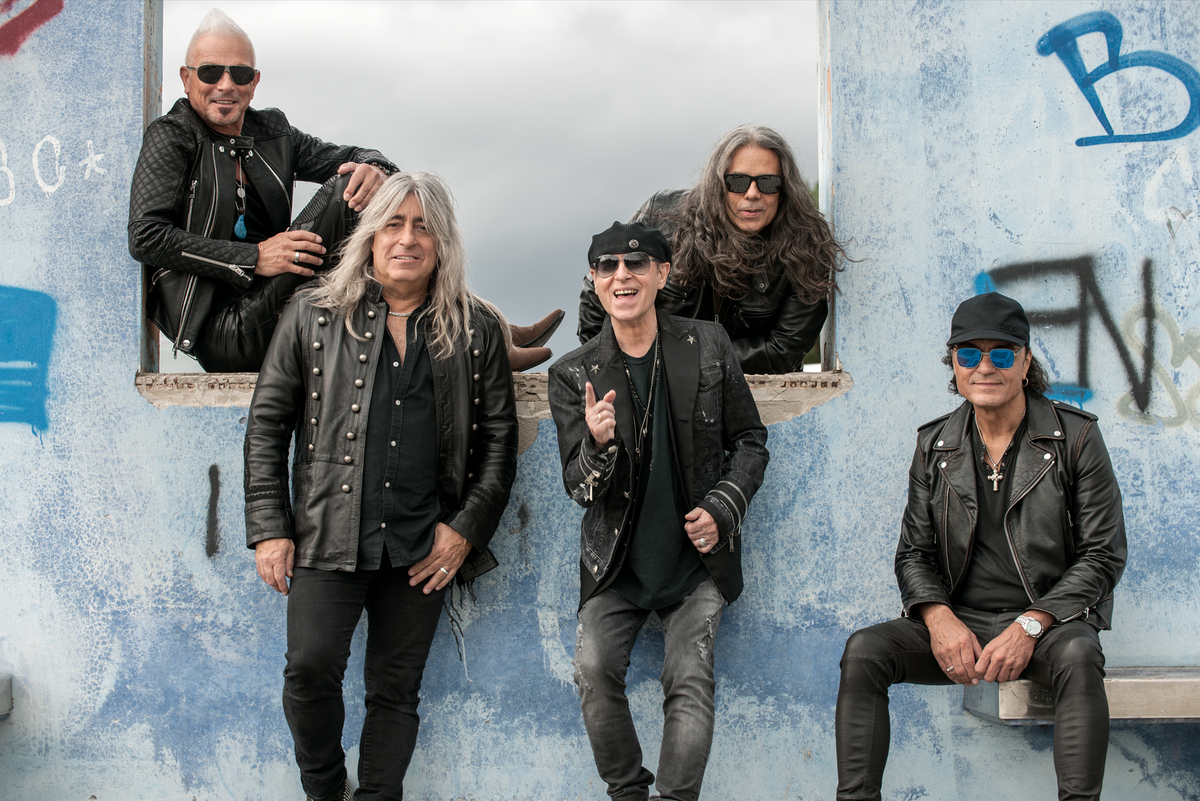
(L-R) Rudolf Schenker, Mikkey Dee, Klaus Meine, Paweł Mąciwoda and Matthias Jabs of the Scorpions
| Photo Credit:
Special Arrangement
Their catalogue also contains songs that took longer to find their place, and Rudolf returns to “Still Loving You” as an example of their patience paying off. “It was not so easy at that time to present it to the band,” he says, describing its initial reception as uncertain. “If you don’t have the right words on top of a great melody, it makes no sense,” but when the stars finally did align, the response was immediate, “the song came out… and it was number one.”

Though the one song that continues to define the band’s relationship to history is unquestionably ‘Wind of Change’, written by Klaus following the band’s visit to the Soviet Union at the height of perestroika, with the Cold War slowly loosening its grip and the Berlin Wall on the verge of falling. The song has since taken on a life that extends beyond its original context, often invoked as an anthem of political transformation. “It’s still a song that came from the heart,” Klaus says. “It’s reaching out to people around the world, different cultures, no borders. We all believe there can be a better world. Music can make a change, it’s like food for the soul. I’m sure it will be the same in India.”
Scorpions is touring India for the Coming Home Tour, produced and promoted by BookMyShow Live, featuring concerts in Shillong (April 21), Delhi-NCR (April 24), Bengaluru (April 26), and Mumbai (April 30).
Published – March 25, 2026 12:48 pm IST


