




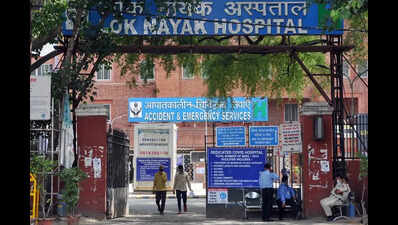
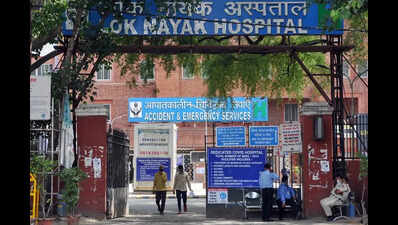
New Delhi: When a young mother reached the paediatric OPD at Lok Nayak Hospital with her one-year-old child suspected to be suffering from a congenital hearing disorder, doctors told her an MRI was critical and urgent. Without it, the child risked permanent hearing and speech loss. The window for intervention was narrow — ideally within the first two years of the child’s life. However, the hospital told her she could get the scan done there only three years later.Doctors eventually advised her to get it done at a private diagnostic centre at her own cost because she did not qualify to avail herself of the benefits of Delhi Arogya Kosh scheme. The case, which a senior paediatrician shared with TOI, is far from an exception at Delhi govt hospitals and is symptomatic of a deepening diagnostic crisis at such hospitals, where even accessing basic radiology services is an ordeal. Yet the situation at LNJP is better than at over a dozen other facilities like Guru Teg Bahadur, DDU, Ambedkar and Lal Bahadur Shastri hospitals where even critical patients in emergency wards have to get their MRIs, and in some cases even CT scans, done from private centres since most of these hospitals lack these facilities.This crisis recently drew a sharp reaction from Delhi High Court, which questioned govt’s claims that the city’s diagnostic needs were being met through empanelled private centres. “Imagine not having basic MRI and radiology services in govt hospitals,” a special bench of Justices Prathiba M Singh and Manmeet P S Arora observed orally. “This means no MRI or CT scan is happening at these govt hospitals.” In its Jan 12 order, the court also flagged the lack of clarity on whether the Arogya Kosh scheme was even continuing, directing govt to file a status report.TOI made multiple attempts to contact top Delhi health department officials, including special secretaries, regarding the issue. Yet no one replied.Currently, only three MRI machines are operational across the Delhi govt hospitals — at LNJP, G B Pant and Indira Gandhi Hospital. Of these, LNJP remains the most accessible referral centre, handling a massive load of patients, not just from across Delhi but also from neighbouring states. Other major Delhi govt hospitals like Guru Teg Bahadur, Ambedkar and DDU do not have a single MRI machine, while smaller centres like Lal Bahadur Shastri Hospital also lack CT scan facilities.For OPD patients, the wait for an MRI at LNJP ranges from a year to three years. Even patients who have been admitted wait for several days or weeks, unless their cases are deemed life threatening. When it comes to CT scans, OPD patients often have to wait up to six months, while ultrasound appointments can stretch from one to two months. Emergency cases are prioritised, doctors at these hospitals say, but even then, access to the tests depends on the availability of the machines, staffing roster and the time of day. “One MRI machine can handle only 20 to 25 scans a day. But the demand is much higher,” said a senior doctor at LNJP. “We are constantly firefighting.” The hospital administration said preference is given to urgent cases, but even patients who have been admitted must obtain appointments for CT scan, ultrasound and MRI. In June 2025, state health dept said it would start diagnostic services, CT scans and MRIs at all its govt hospitals on a PPP basis at a subsidised rate. However, no progress has been made so far. Delhi Arogya Kosh was designed as a fallback to address this lacuna, allowing economically weaker section (EWS) patients who live in the city to undergo scans at the empanelled private centres when govt facilities cannot provide timely dates. In practice, doctors and patients describe this process as lengthy, paperwork-heavy and slow, often taking three to four days even for urgent cases. OPD patients must first obtain an MRI date from the hospital, then approach the radiology appointment desk, followed by approval from a nodal officer — a process that frequently collapses midway due to missing documents or lack of awareness on the part of those accompanying the patients.“There is no provision for emergency MRI under the Arogya Kosh scheme,” said a resident doctor. “So, by the time approvals to get one done at the empanelled centres come through, the clinical window is often gone.”Those who are not eligible under the scheme, are non-EWS patients or lack documents to prove they live in Delhi, have little choice but to pay from their pockets or wait. Doctors also pointed out that scans done at the empanelled private centres through this scheme are often of low quality, requiring a retake. “These centres are minting money. We often need to call them up to obtain further details. It’s a lengthy and tedious process. Scans done at hospitals are of much better quality or I would simply walk up to the radiology dept and speak to my colleague in case of queries,” said an ENT surgeon from a hospital, which lacks an MRI machine. The crisis is more acute in facilities that lack diagnostic infrastructure altogether. GTB, one of Delhi’s largest govt hospitals and attached to University College of Medical Sciences, does not have an MRI machine, despite running a postgraduate radiology programme. According to its radiology dept, the hospital refers around 2,400 MRI cases annually through the scheme, most of which doctors say could have been handled in-house. “We have a strong neurology and neurosurgery dept, but we can’t even do MRIs,” a senior doctor said. “Is intervention possible without imaging?” GTB’s burden is compounded by neighbouring facilities like Lal Bahadur Shastri Hospital lacking a CT scanner, forcing patients with head injuries to be referred to this hospital — a delay doctors say is often fatal. “Stroke guidelines mandate intervention within six hours,” a radiologist said. “But how is this possible without imaging?” At GTB, a single CT scanner installed in 2012 handles 130 to 160 cases a day. The hospital performed over 30,000 such scans in 2024, up from 26,000 the previous year. Ultrasound services rely on ageing equipment, with several machines more than a decade old. MRI, the doctors say, remains the most glaring gap. While a CT scan takes just under a minute, an MRI can take 15 to 30 minutes, limiting throughput to 35 to 50 cases a day at best complicating the problem.Health officials said additional MRI and CT machines, including a second MRI machine at LNJP and new CT scanners at G B Pant Hospital, are in the pipeline. Indira Gandhi Hospital operates MRI services under a public-private partnership model, they pointed out. “The services are improving. We are getting one more MRI machine very soon, and a 256-slice CT machine will be installed within two to three months, which will reduce the burden on the lone functional machine,” said senior officials at LNJP, adding that emergency patients can get their MRIs done the same day or next day. However, for doctors and patients navigating this system, this talk of relief in the future barely masks a stressful present.“Residents are not learning, and patients are not being diagnosed on time,” a senior radiology resident at GTB said. “We live in the capital. An MRI machine is not a luxury.”A resident at Ambedkar Hospital said, “There is no MRI machine here, which is a big problem. There is a CT machine, but it is overburdened. The shortage of staff in the radiology department is another issue.” So, until capacity matches up to the demand, Delhi’s govt hospitals will continue to lean heavily on private diagnostic centres, forcing thousands of poor patients to wait and hope or cough up cash.