





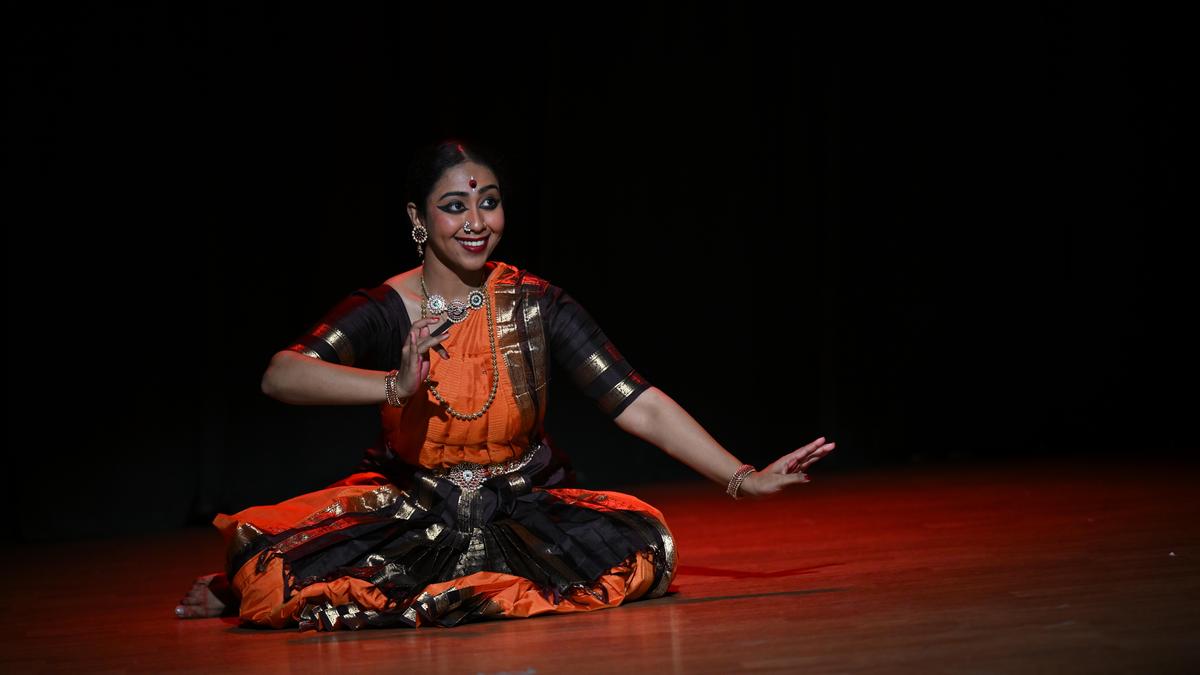
Sahana Selvaganesh at the annual Jharna festival.
| Photo Credit: Srinath M.
Tied: The Weaver’s Loom — a thematic Bharatanatyam production by Sahana Selvaganesh — was a blend of classical vocabulary and contemporary storytelling. The narrative followed a woman in a marriage marked by infidelity and domestic abuse. Forced to leave while pregnant, she raises her child independently. Layered on this was the metaphor of the weaver’s loom — drawing on the imagery from India’s handloom traditions. The performance was at Jharna festival, organised by Bharata Kalanjali.
The presentation referenced weaving through poetry, music and choreography. It included Kabir’s poems alongside newly composed Sanskrit and Tamil pieces. Though thoughtfully chosen and musically vibrant, the weaving metaphor and the protagonist’s journey did not integrate seamlessly, at times moving on parallel tracks rather than reinforcing each other dramaturgically.
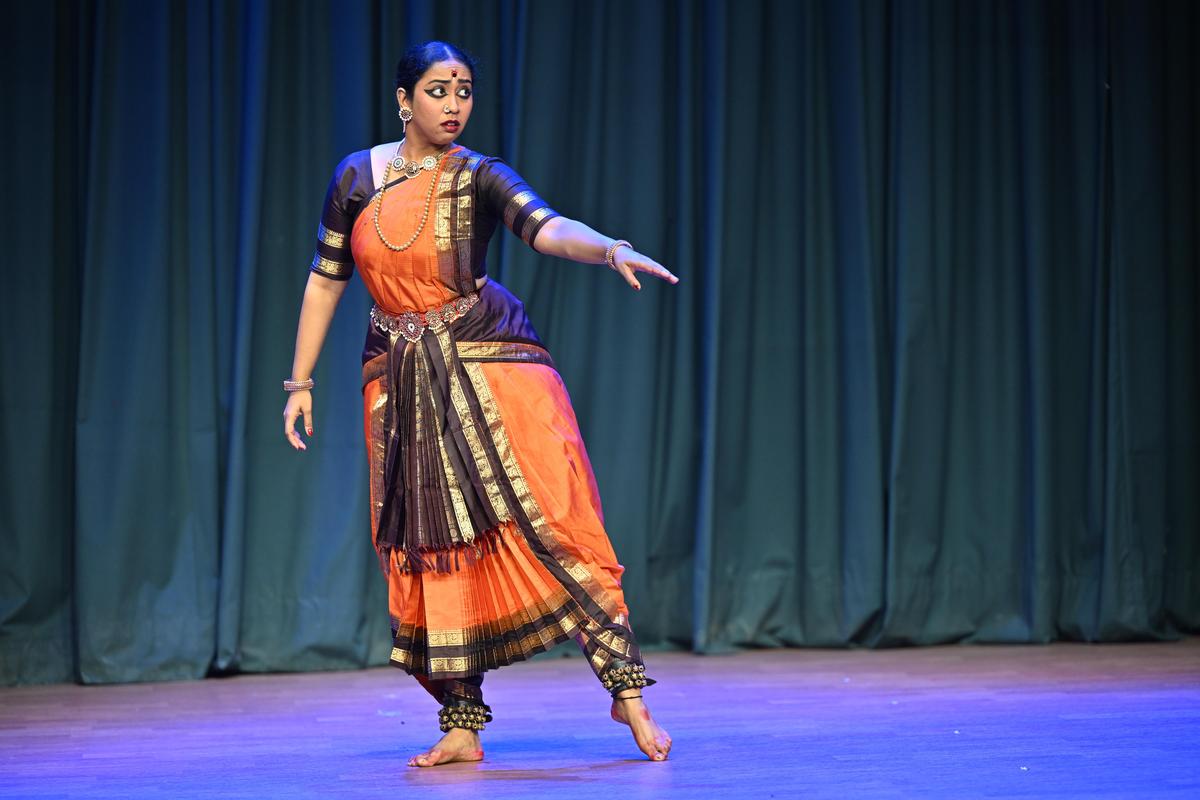
The choreography also included Kabir’s poems alongside newly-composed Sanskrit and Tamil pieces.
| Photo Credit:
Srinath M.
An innovative aspect was the use of props. A cloth figure, representing the husband was adorned with silk-thread jewellery. As the story progressed, the dancer removed each ornament and wore them to symbolise the stages of marital struggle, before discarding them to mark the end of the relationship — adding an experimental, theatrical dimension.
However, the balance between the classical Bharatanatyam structure and contemporary expression was not struck. In places, adherence to classical vocabulary and musical format seemed to limit the expressive weight demanded by the modern theme. A slight recalibration may have allowed the avant-garde elements to resonate more strongly.
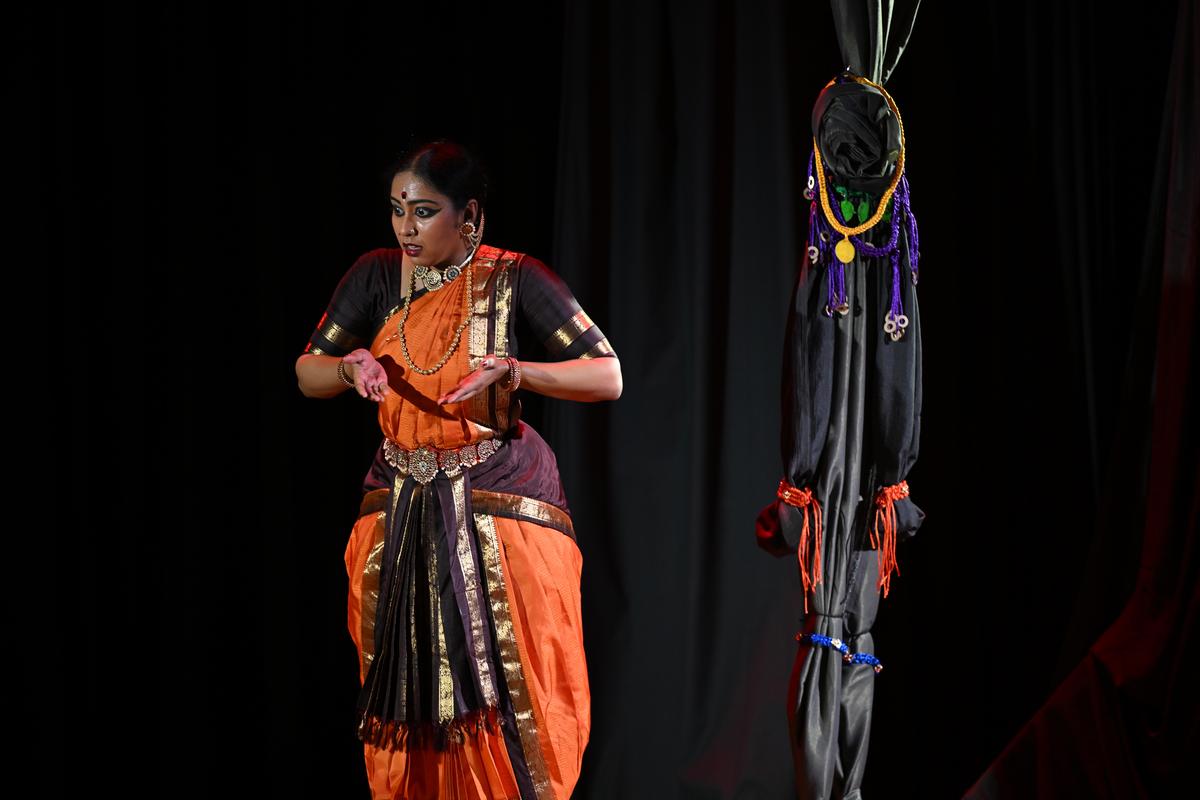
Innovative props and weaving motifs shape Sahana Selvaganesh’s latest production at the annual Jharna festival.
| Photo Credit:
Srinath M.
A particularly robust section depicted the weaving process itself. The dancer demonstrated a clear understanding of the craft, translating its physicality into convincing movement within the Bharatanatyam framework. These passages were among the most aesthetically satisfying. T.V. Sukanya’s imaginative violin and sensitive tuning of the compositions, along with Uma Sathyanarayanan’s assured vocal support, contributed significantly to the presentation’s effectiveness.
Within its one-hour span, the production attempted to encompass multiple aspects of the protagonist’s journey — betrayal, abuse, abandonment, pregnancy, resilience and self-reliance. This structuring, however, meant that many emotional states appeared only briefly, as the narrative moved swiftly from one episode to another. Consequently, the intensity felt somewhat diffused. A more sustained focus on select turning points might have enabled a stronger emotional connection and deepened the work’s impact.
Overall, the work was ambitious, musically and conceptually rich, with moments of striking creativity. The thematic intention was potent and socially relevant.
Published – February 27, 2026 03:17 pm IST
