




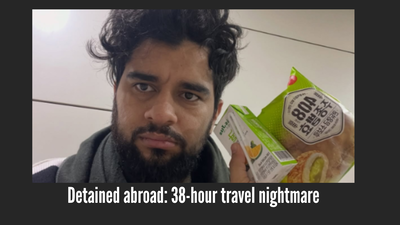
An international holiday that began with excitement ended in controversy after Indian YouTuber Sachin Awasthi alleged he was detained for nearly 38 hours during a trip involving South Korea and China.Sharing his experience through Instagram and a detailed YouTube video, Awasthi claimed that what was meant to be a relaxing getaway turned into an emotionally draining ordeal involving denial of entry, detention-like conditions and an expensive forced return.
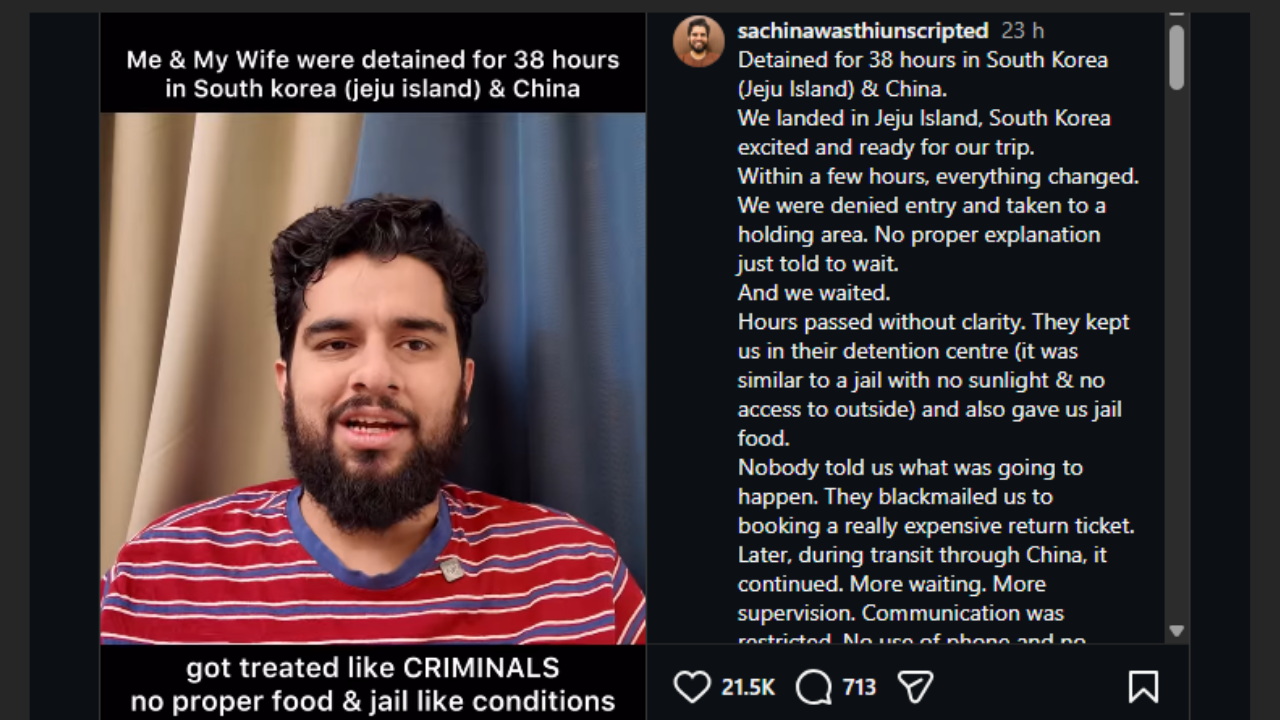
@Sachinawasthiunscripted/Instagram
What happened in Jeju Island?
According to his account, he and his wife landed on Jeju Island, and within hours, however, immigration authorities allegedly denied them entry and escorted them to a holding area. He stated that no detailed explanation was provided at the time. Instead, they were reportedly asked to wait, a wait that stretched for hours. Awasthi described being kept in what he likened to a detention centre with no sunlight or outside access. He also said they were provided basic meals and were not informed clearly about the next steps. In his statement, he alleged that they were pressured into booking an expensive return ticket, claiming the cost was nearly ten times higher than standard fares. By the time they were informed they would be sent back, he said they were mentally exhausted and chose not to contest the decision further. Read more: Watch: The viral wildlife moment in Gir National Park when a lioness challenges a male
Transit complications in China
The situation, he claimed, did not improve during transit through China. Awasthi alleged continued supervision, restricted communication and limited access to food and water. He further stated that phone usage was not permitted and that restroom visits were monitored. By the end of what he describes as a 38-hour ordeal spanning both locations, he said the primary concern was simply returning home safely. He adds, “I’m not sharing this for sympathy or drama. Immigration decisions are their authority. But they did not have any right to treat us like CRIMINALS.Travel looks glamorous online. But sometimes, things change in a few hours and test you emotionally in ways you never expect.
Immigration authority and entry rules
Immigration experts note that every country retains full authority over entry decisions, even when travellers hold valid visas or meet general entry requirements. Sometimes visa approvals get blocked due to unclear travel plans. If someone shows shaky proof for where they are headed, issues might arise. Uncertainty around where to stay during their trip can also slow things down. Questions about why the person wants to enter the country may raise red flags too. Paperwork that seems incomplete often draws closer scrutiny. Sometimes rules change, but getting into South Korea – especially areas like Jeju Island – isn’t easy; they keep things tight there. In contrast, moving through China has its own shifts based not just on visas but who you are and which airport you hit. Visa experts have since recommended Indian nationals to verify entry requirements for countries that have special visa requirements. They recommend that all necessary documents, including hard copies of return tickets, accommodation, financial, and travel insurance documents, be carried despite the fact that some countries are visa-free or visa on arrival under certain conditions.Read more: Entry into Himachal to get costlier from April 1 with revised toll rates; check entry points and new charges
Online reaction
Awasthi’s video has triggered debate online, with some viewers expressing sympathy and concern over alleged treatment, while others pointed out that immigration officers operate under national laws and security frameworks. In his post, Awasthi said he was not seeking sympathy and acknowledged that immigration authorities have the right to deny entry. However, he criticised what he described as the manner of treatment, stating that travellers should not be made to feel like criminals during administrative processes. The incident has reignited broader conversations about the unpredictability of international travel. While social media often highlights the glamorous side of globetrotting, incidents like this also show how quickly plans can change at border checkpoints, particularly in jurisdictions with strict or complex entry policies. As the debate continues, it needs to be emphasised that those planning international trips should stay updated on visa requirements, transit visas, and entry requirements, especially when it involves multiple countries or regions that have special administrative status.