



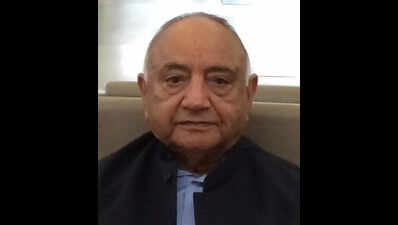
New Delhi: Prof Jagdev Singh Guleria, one of India’s most respected physicians and a towering figure in bedside medicine, passed away on Jan 22, marking the end of an era defined by clinical brilliance, ethical clarity and deep compassion. A former dean and professor at the All India Institute of Medical Sciences, he belonged to a generation of doctors for whom medicine began not with tests, but with listening.Awarded the Padma Shri in 2003, Prof Guleria was widely regarded as a “doctor’s doctor”—the one colleagues turned to when cases were complex and decisions carried weight. His influence extended far beyond AIIMS, shaping medical practice and training across the country. “He was an incomparable clinician—astute, sharp and remarkably reliable,” said Prof Nikhil Tandon, head of endocrinology at AIIMS. “He led by example. Just watching him examine a patient taught you how medicine should be practised.” Though trained as a general physician with expertise in cardiology, he resisted over-specialisation. Colleagues said he treated patients as whole individuals, guided by clinical insight and empathy. “Today, doctors see organs. He saw people,” said Dr Rajeev Kumar, professor of urology at AIIMS, adding, “He could diagnose with minimal investigations.” That empathy was most visible at the bedside. A former patient’s spouse recalled being in her final trimester of pregnancy when Prof Guleria diagnosed her husband with advanced spinal tuberculosis. “He was gentle while breaking the news,” she said. “He told me, ‘If I can’t, God can. Keep the faith.’ Those words worked like a miracle.” She remembered him staying positive, often using humour—like a healing balm—in difficult moments. Recalling his teaching style, Prof Tandon said his ward rounds felt more like mentorship than instruction. Prof Guleria would ask one defining question: “Did you do everything possible—and beyond—for the patient?” If unsure, residents were sent back to reassess. Errors were corrected privately. “He was forgiving, but exacting,” colleagues recalled. “If you were sincere, he stood by you.” As chair of the AIIMS ethics committee, his priority was unwavering, Prof Tandon added: Would this harm the patient? Only after that assurance would anything else follow. Dr Navin Dang, founder of Dr Dang’s Lab, recalled his family trusted no physician but Prof Guleria. “My father took me across the city by bus just to see him,” he said, adding, “He never ordered unnecessary tests. His hands made the diagnosis.” Even late in life, Prof Guleria continued reading medical literature, urging younger doctors to stay curious. “Medicine is never-ending,” he often said. “Never hesitate to say, ‘I don’t know.'” Colleagues said his greatest legacy lay not only in the patients he treated but in the generations of doctors he trained, many now leading institutions across India. His two sons, both doctors, continue that tradition. In an age defined by technology and protocols, Prof JS Guleria stood for something enduring: medicine as a moral practice, rooted in judgement, humility and care. His passing leaves not just memories, but a standard to live up to.