




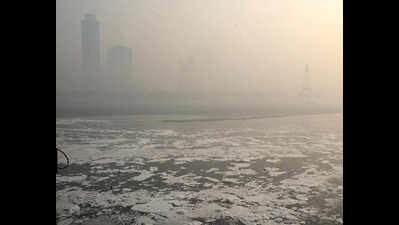
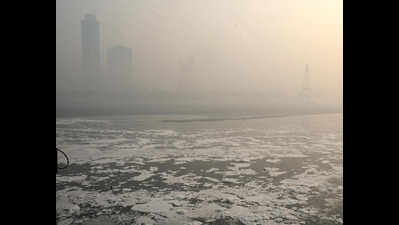
New Delhi: Aiming at real-time monitoring of the Yamuna as well as major drains that fall into it, Delhi govt is setting up 41 online monitoring stations (OLMS), of which six will be built along different parts of the river.The work is set to be completed by April-end, and a tender for it was awarded in March. Of the 41 online stations, 35 will monitor major drains and six will analyse the pollution load on the river, officials said.Delhi environment minister Manjinder Singh Sirsa said the move is the first step of govt’s initiative to clean up the river.“This will bring transparency. Data is crucial for cleaning up the river and controlling the pollution load. Through real-time monitoring, we will be able to figure out the fault lines and fix accountability,” Sirsa said.Previously, similar bids were made in 2024 and 2025, and tenders were floated but remained inconclusive. The tenders stated that the project will include five years of operation and maintenance, ensuring round-the-clock monitoring and transmission of data to the DPCC server.The monitoring will check real-time temperatures, flow, pH, biological oxygen demand (BOD), chemical oxygen demand (COD), total suspended solids (TSS), total nitrogen (TN), total phosphorus (TP), ammonium, dissolved oxygen and conductivity.Officials, however, clarified that the OLMS will not measure fecal coliform — the major indicator of raw sewage. This will be monitored manually. Offiicals added that the manual monitoring of river and drains will continue regardless of the OLMS operations.The real-time monitoring and data generation will start in May.“This will be similar to real-time air quality and noise pollution data being displayed on the Delhi Pollution Control Committee (DPCC). The data will be transparent and will be accessible. It will help us monitor the water quality of the river and drains, as well as track fluctuations in major parameters in real time,” an official said.The six locations where these monitors are being installed include — Palla, ISBT bridge, ITO, Nizamuddin bridge, Okhla barrage and Asgarpur.DPCC currently collects water samples once a month at eight locations along the river. Wazirabad, where Delhi gets its drinking water from, is notably missing from this list.Officials, however, pointed out that Wazirabad is being monitored by Delhi Jal Board, though the data from DJB is not accessible to the public.The river enters Delhi at Palla, and at Wazirabad loses its maximum flow since a major chunk of water is diverted for drinking. Thereafter, between Wazirabad barrage to ISBT bridge, the river receives its maximum pollution load as the Najafgarh drain meets it. This accounts for approximately 80% of Yamuna’s pollution in Delhi.In 2018, the National Green Tribunal-appointed Yamuna Monitoring Committee (YMC) said only a 2% stretch of the river, stretching 22km, accounted for 76% of the total pollution load. In 2019, the tribunal directed DPCC to share monthly data. Monthly reports on the drains and sewage treatment plants have been available since 2019.