





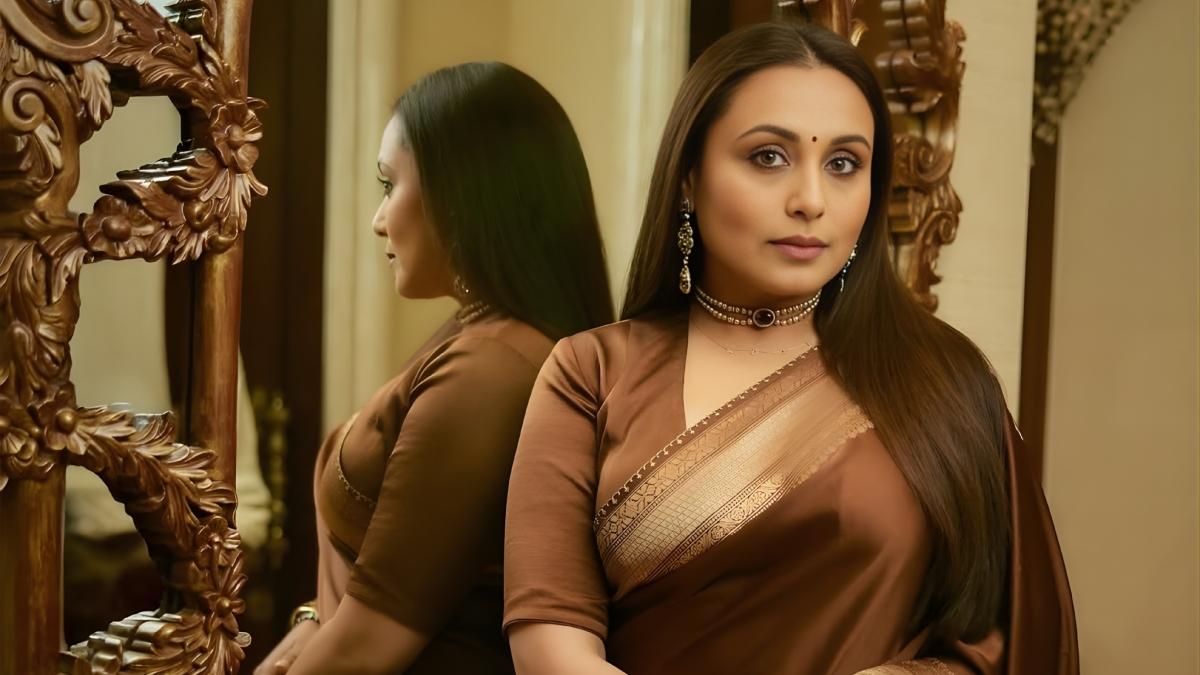
Rani Mukerji
| Photo Credit: Special Arrangement
It is a breezy winter afternoon in Mumbai. The sun shines bright on Juhu Beach. From a huge window on the the seventh floor, the serene blue of the sea is visible. “It is quite a view,” I remark, looking at the vastness as Rani Mukerji smiles while taking a seat on the sofa chair opposite. Her office space has a quaint charm.
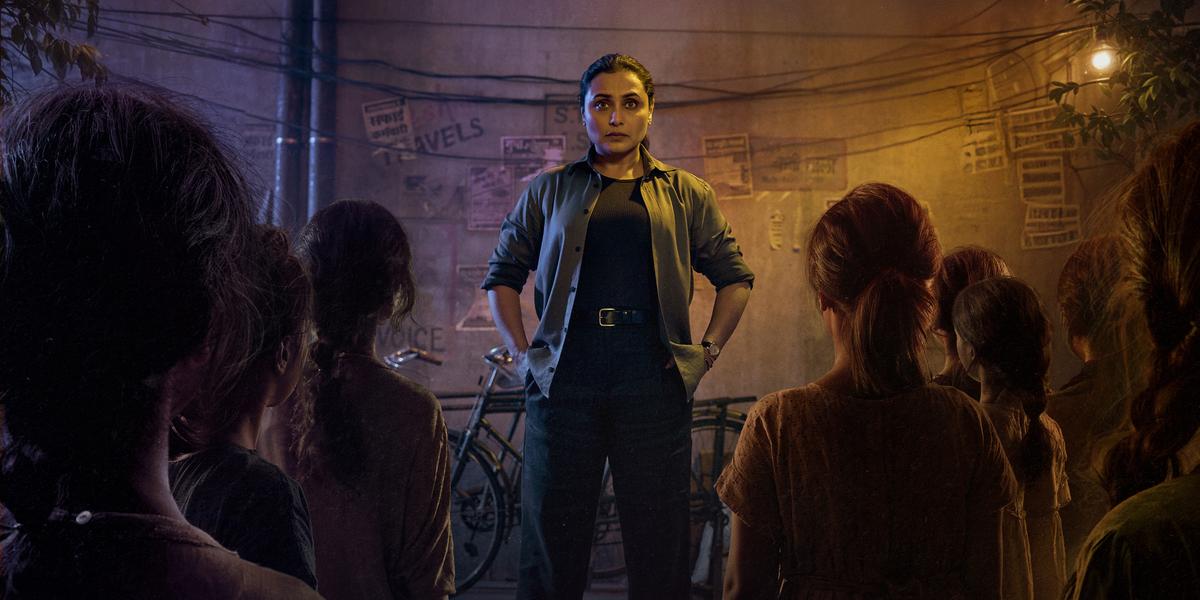
The actor is gearing up for the release of Mardaani 3, where she returns as top cop Shivani Shivaji Roy. Shivani has been battling personified evils in the thriller franchise, right from the first part, where she locked horns with the menacing child trafficker played by Tahir Raj Bhasin. The sequel, which came out in 2019, saw her chasing a psychopath who brutally assaults and murders women. Mardaani 3 takes the baton ahead, exploring similar themes with popular appeal. Together, the films spark a burning concern for women’s safety in India. Rani says that Mardaani was born out of the collective angst experienced in the aftermath of the heinous 2012 Delhi gang rape.

Rani Mukerji in ‘Mardaani 3’
| Photo Credit:
Special Arrangement

“It was my way of showing my anger as an artiste. So, Mardaani is an important film with important social messaging; it is not just a franchise. It is about making people uncomfortable, to make them realise that we should be speaking about this issue more often. I want to keep coming back with this message as the reality for women has still not changed from the time we made Mardaani in 2014,” says Rani, leaving a thought: can films like Mardaani really lead to social transformation? The actor takes a moment to ponder. “I don’t know about that. But it’s at least enough to start a conversation. If a film can even transform one person, that is a big thing,” she says.
The Mardaani films are known for their grave themes and unflinching depiction of violence against women. Rani says that it is difficult to shoot for these scenes. “As a mother and as a woman, these are disturbing topics. We know that as women, we are made to feel uncomfortable in various situations. So, a lot of times, while filming, we have to get deeply involved in a scene to get it right. Sometimes, when the scene is done, it feels horrific to think about how all of this is happening in reality. You feel helpless. We are still merely enacting these scenes, but there are girls out there experiencing all this along with mothers going through pain,” Rani says.
Rani Mukerji in ‘Mardaani 3’
| Photo Credit:
Special Arrangement
Mardaani is also among the first female-led franchises in a country where male-led spectacles reign high. Rani, however, refuses to look at the scenario in such binaries. “I don’t think the audience sets out to watch a film thinking that it is male-led or female-led. What matters is the story being told, irrespective of the gender of the protagonist. We need to change that narrative. We need to view films based on content so that the audiences give us the box office reception that the film deserves,” Rani says.
Also Read I ‘The Mardaani franchise was born from anger,’ says Rani Mukherji
The actor has seen a host of box office successes and failures in her 30-year-long career. There are those that worked well— Bunty Aur Babli (2005), Hum Tum (2004), Saathiya (2002) and Hichki (2018)— and those that missed the mark— Thoda Pyaar Thoda Magic (2008), Dil Bole Hadippa! (2009), Calcutta Mail (2003) and Laaga Chunari Mein Daag (2007). Box office setbacks impact her the same way as before. “I think it affects me more than it did when I made my debut. If it doesn’t affect me, then I should not be doing more films,” she says. “It is ultimately the box office that makes an actor come alive. How are you going to remain a star if the audience is not giving you adulation? We cannot remain stars in isolation.”

And so, it is the love from the audience that immensely carries value for Rani. Last year, she won her first National Film Award for Best Actress for her performance in Mrs. Chatterjee vs Norway (2022). She notes the importance of the honour while maintaining how she relates to her Chinese zodiac sign of a horse. “I have my blinkers on. I have to keep doing my best irrespective of whether I win an award or not. For me, it was heartening to see my fans happy. Their love for me has been constant,” she says.
These days, Rani is curious to observe the watching patterns of the young. She strives to understand their gaze. “What I have realised is that the younger bunch enjoys nostalgia. They are glued to it, remaining connected to what we did 15-20 years ago. In a way, they have kept our older films alive,” Rani says.
That’s what helps her in choosing her projects, knowing what will connect with people. The actor considers it a “great responsibility” to continue to appeal to the audience. “ They have to give their time to me. So, I have to work on myself and take care of myself to be able to look good on-screen. Self-preservation is very important for an actor,” she signs off.
Published – January 19, 2026 03:47 pm IST
