





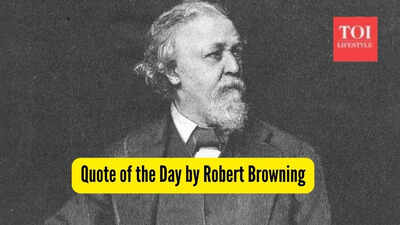
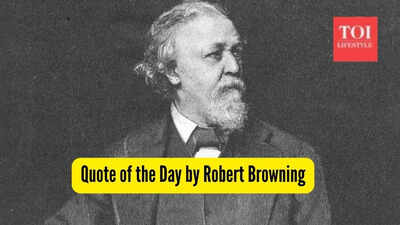
Robert Browning was one of the most original poets of the Victorian era. He was a master of the dramatic monologue and was able to look into people’s minds like no one else. He was born in 1812 and died in 1889. He had a life full of literary successes, a passionate marriage, and a style that mixed hope with harsh truth. His father worked as a bank clerk and loved books, and his mother was a musician who encouraged his creativity. His dad taught him Latin, Greek, and the classics at home, which sparked a lifelong interest in history and Renaissance figures. He had given up on formal schooling by the time he was a teenager and was writing poetry inspired by Shelley and Keats. His first book, Pauline: A Fragment of a Confession (1833), was full of teenage angst, but critic John Stuart Mill said it was too self-indulgent. Browning learned his lesson and stopped writing in a confessional style and started using objective voices. Next, he tried writing plays (Strafford, 1837), but poetry was more appealing. Paracelsus (1835) hinted at genius by looking into a Renaissance doctor’s soul-struggle, but Sordello (1840) confused readers with its many references to medieval Italy. Browning spent time in London, went to Russia and Italy for short trips, but stayed with his parents until love changed everything.In 1845, Browning wrote to Elizabeth Barrett, a sick poet who was stuck in her father’s house. This was fate. Letters flew, secret meetings followed, and they ran away to Italy in 1846. It was all very scandalous. They did well in Pisa and Florence. Their son Pen was born in 1849, and Elizabeth’s health got better in the Tuscan sun. Browning wrote Christmas Eve and Easter Day (1850), which was about faith and doubt, while she was also writing Aurora Leigh. Their home was full of art, politics (they supported Italian unification), and endless talking. He was heartbroken when Elizabeth died in 1861 from lung problems. The books that followed were-Men and Women (1855), it had amazing monologues like “My Last Duchess,” which was a Duke’s creepy brag about killing his wife, and “Porphyria’s Lover,” which was about an obsession that made someone snap their neck. His signature trick was to let readers judge warped minds by showing souls through jagged speech.One of his most famous lines are “Grow old along with me! The best is yet to be, the last of life, for which the first was made. Our times are in his hand who saith, ‘A whole I planned, youth shows but half; Trust God: See all, nor be afraid!”These lines are from Robert Browning’s poem “Rabbi Ben Ezra” They are among the most quoted lines and appear romantic at first glance but have a deep Biblical connotation. The best is yet to come underlines that aging not as decline but a phase where wisdom reveals the divine plan hidden in the hurried sketch of youth. The early years are just a prologue, full of impulses and half-formed dreams. Browning, whose wife Elizabeth Barrett Browning died young, was a brilliant optimist. Written in 1864, during Browning’s own later successes, these words are still a timeless cure for midlife dread. They are whispered at weddings and carved into tombstones, showing how poetry can change how we think about death as a beautiful opportunity.