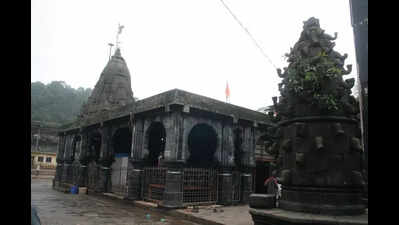





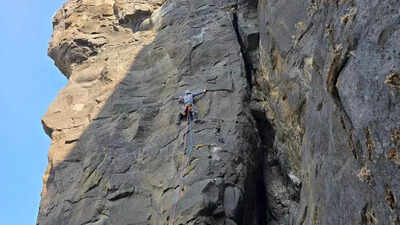
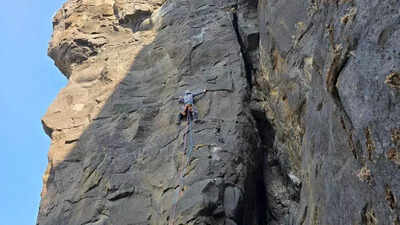
Pune: From the east-facing wall near Mahadevi temple in Kamshet, a striking rock formation rises against the Sahyadri landscape. In late Dec, this rock face near the Telni waterfall in Inglun village, Maval taluka, became the site of two newly mapped traditional climbing routes, opened by a team of Pune-based climbers and named Gajmukh 1 and Gajmukh 2. “The rock formation resembles Lord Ganpati’s face, giving the climbing routes their names. Both cracks are clearly visible from the temple. Vehicles can reach nearly the base, followed by a short 15-minute walk. Facing the rock, the left crack is Gajamukh 1, while the right is Gajamukh 2,” said Varun Bhagwat, who led the expedition with six other climbers.Bhagwat, a microbiologist turned full-time mountaineer for the last ten years, said the routes were the result of careful observation rather than a spontaneous decision. “Last Nov, we explored the area and spotted two prominent cracks on the rock face, initially studying their potential for climbing. In late Dec, we returned with a clear plan. Drawing from our earlier assessment, we formed a team, gathered the necessary equipment, and chose to attempt the climbs in traditional style,” he said.Both routes rise roughly 40 to 45 metres and were climbed in a style that relies on removable protection placed into natural features of the rock instead of fixed bolts throughout the climb. The team reached the site on Dec 29 and established a base camp. Climbing began the following day. Gajmukh 1, which follows a relatively straightforward crack system, was completed in a single pitch.The second route demanded far more time and effort. “That was the toughest part. The wall is above your head. Clearing the overhang took more than 24 hours of effort spread across two days, with around 8 hours of climbing each day. Once we crossed it, we made a station and then continued all the way to the top,” Bhagwat said.Seven climbers were part of the expedition. Four handled the climbing and route mapping, while three others managed logistics, including carrying equipment, cooking meals and fetching water, roles that were essential to sustaining the climb over multiple days.Permanent bolts and anchor plates at key stations were provided by Giripremi, a Pune-based mountaineering institute, while the rest of the protection used during the climb was removable.For Bhagwat, opening and documenting routes is part of a longer commitment to developing climbing in the Sahyadris. Since 2019, he and other climbers from the institute have worked on routes at Jivdhan fort, Madan fort, Sinhagad and the Fergusson College rock quarry. “Once routes are mapped and shared, others can come, practise on them, and get stronger,” he said.The team is looking ahead at more routes to map. “There are a few plans in the Lonavala region next. The idea is to explore new rock faces and open routes so that more climbers can experience them. Once routes are established, others can practise, train, and prepare themselves for bigger objectives. It helps build a climbing ecosystem rather than keeping routes limited to a few people,” Bhagwat said.