




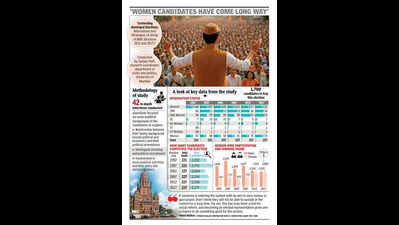
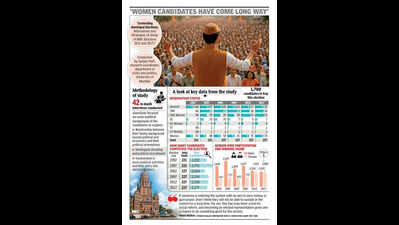
Mumbai: Better social standing, access to power and political ambition motivated Mumbaikars to enter the BMC poll fray, according to a 158-page academic study by the University of Mumbai.Published on the State Election Commission website, the study examined the 2012 and 2017 BMC elections to understand why candidates entered the fray and the strategies they deployed to win a seat in the country’s richest civic corporation. The study, titled ‘Contesting Municipal Elections: Motivations and Strategies (A Study of BMC Elections 2012 and 2017)’, was conducted by Sanjay Patil, research coordinator from the department of civics and politics of University of Mumbai, under the guidance of his professor Surendra Jondhale.The study, which began in Feb 2017 before the civic polls and was released by the commission in Nov 2017, identified six primary factors: political ambition, political legacy and patronage networks, pressure or encouragement from supporters and local volunteers, the strength or weakness of the opposition, perceived chances of winning, and the opportunities and benefits that come with holding office.Dynastic politics remains central, the study noted, a pattern visible again with MLAs seeking tickets for relatives. Colaba MLA Rahul Narwekar and Malad MLA Aslam Shaikh have three family members each in the upcoming civic elections. According to Jondhale, in such cases, there’s a clear message that leaders want to continue to be in power mostly by fielding their family, be it wives or children. The report says motivations often overlap. A major pull is the ability to advance business interests by gaining access to officials and speeding up clearances. It also flags the lure of money, often tied to real estate, illegal constructions, hawking networks and civic contracts. Other motivations include prestige, improving infrastructure and amenities in a ward, and expanding community work.The study noted some candidates are socially motivated by the opportunity to engage directly in policy-making, offer alternative models of governance, or take on corruption within the BMC. Others enter the race to champion specific local causes, including slum redevelopment and housing issues. The study also highlighted a tactical advantage in reservations: an OBC woman is seen as the best suited partner for most flexible candidates for many aspiring corporators as she can contest across General, OBC, Women and OBC-Women categories.“While the study is around eight years old, the situation hasn’t changed much. The role of informality and patronage networks in civic politics has only grown over the years and one can still see how it determines political interests,” said Patil. He said politicians, who were earlier seen to have a nexus with business interests and informal actors, have now themselves become political entrepreneurs. “It is, however, important to note that women candidates have come a long way. Instead of merely being shadows or proxies of their male counterparts, exposure to the system has made a lot of them assert their agency in some ways and become stakeholders rather than mere signatories.”Patil also said male politicians strategically positioned their children in public life in the run-up to elections. “One former corporator had his daughter, a doctor, sit at the Aapla Dawakhana for two hours every day. This helped her understand the voters, even as residents got familiar with her,” he said, adding that she got a ticket to contest.A senior politician said an elected corporator’s lifestyle changes. “They move from a small car to a fancy one. The affidavits they file during the nomination process are also a giveaway as their total assets show a spike when compared to the previous election.” Many corporators, though, begged to differ with the study’s observations. Advocate Tulip Miranda, Congress nominee from Kalina, said, “The euphoric feeling I get at being able to serve those who are struggling with basic necessities is something no other job could give me.” Independent candidate Nehal Shah from Matunga and a former BJP corporator said the corporator’s role isn’t about entitlement but service. “If I run an NGO, I can help a limited group of people. But, as a corporator, one can impact thousands of lives at once.”