




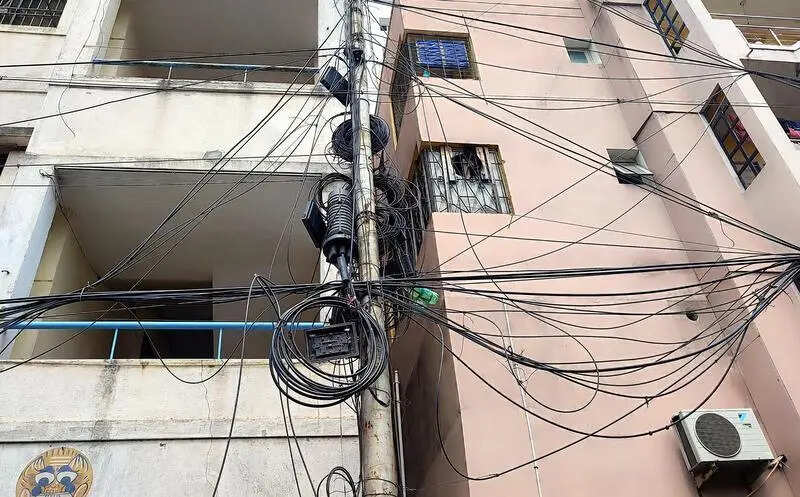
Pune: The civic body has finalised its underground first policy with strict new standard operating procedures for cable laying, imposing a total ban on overhead cables across all major roads and stipulating that permissions for hanging wires would be granted only in the most exceptional circumstances.The Pune Municipal Corporation (PMC) aims to declutter the city’s skyline and streamline urban infrastructure.Micro-trenching and horizontal directional drilling have been made mandatory for all installations. Civic areas would be mapped into red and green zones for strict compliance with the policy.PMC commissioner Naval Kishore Ram on Wednesday said, “We will create a safer, more aesthetic and technically sound utility network by enforcing the regulations and mandating that all new infrastructure follows the underground model.”Residents and activists said the policy was good, but its implementation needed to be effective.Meanwhile, on Wednesday, the civic body launched a crackdown on unauthorised overhead cables and cleared 12,000 running metres in the Satara Road area. Officials said overhead cables not only deface the city, but pose a risk to human life due to irregular installation. They said recent surveys had revealed that there are 3,600 km of unauthorised cables within the municipal limits.Activist Vijay Kumbhar of Surajya Sangharsh Samiti said, “Use of overhead cables has increased due to a nexus between cable operators, civic officials and local politicians. Action must also be taken against the civic staff ignoring the spreading network of illegal cables.”The Maharashtra Prevention of Defacement of Public Property Act, 1995, provides for punitive action against individuals or entities that deface public property and spaces. Legal action is specifically taken under the Act against installation of illegal overhead cables.PMC officials said anyone guilty of defacement — which includes installation of unauthorised cables, posters or banners — was liable for imprisonment for a term of up to three months, a fine of up to Rs2,000, or both. Broken or low-hanging wires could lead to serious accidents, injuries or even fatalities. Consequently, operators responsible for laying such cables could face prosecution for a criminal act of negligence.