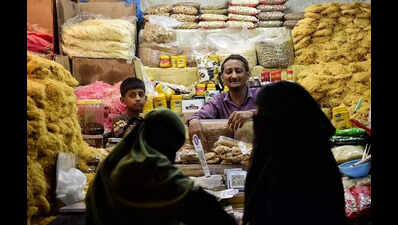




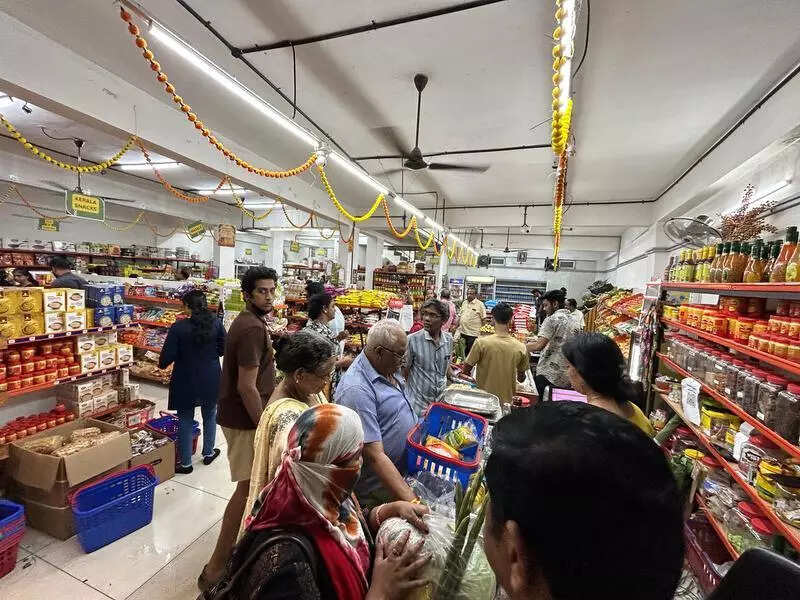
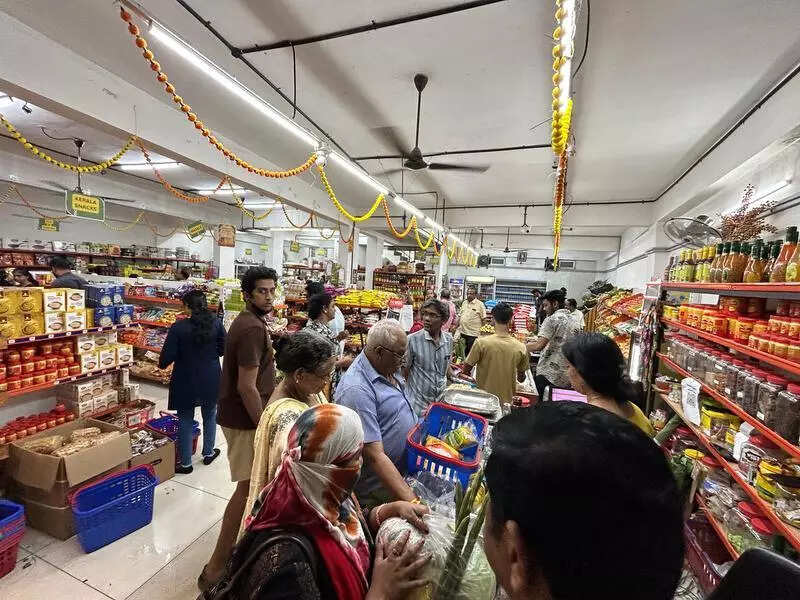
Pune: Kerala stores across Pune are packed this week as the city’s Malayali community gets ready to celebrate Onam on Friday. In Rasta Peth, NIBM, Kalewadi, and beyond, the rush begins as soon as the shops open, with aisles overflowing with kasavu sarees, mundus, spices, banana chips, and fresh produce brought from Kerala. Alongside the festive excitement is a common complaint that this year’s Onam feast is proving to be expensive, with coconuts, flowers, vegetables, and even coconut oil costing significantly more than before.At South Staar Kerala Store and Café in NIBM, the demand spans everything from flowers for pookalam to banana leaves. Owner Raji George said, “The price of coconut oil has increased this year. Last year, it was around ₹250–300 per litre, and this year it is ₹550–590. Coconut, too, is pinching pockets as it is the main ingredient for sadya. From payasam to chutney, everything requires coconut. People also prefer to make coconut milk with freshly grated coconut. But no matter what the prices are, the demand is the same. People will celebrate, as this is a big and important festival for the Malayali community, even if it is pinching pockets.”John Thekkinkad, general secretary of Pune Malayalee Federation, said, “Members of the federation will make a pookalam on platform number 1 at Pune Railway Station on Friday, and distribute homemade payasam to the public in celebration of Onam. It brings us great joy to celebrate the festival not only with the community but also with others. There will also be a chenda melam performance. The number of pravasi Malayalees in Pune has increased by 10–20% since last year.“In Kalewadi, Jiji Mathew, owner of Kairali Bazar, said, “Just last week, the price of snake gourd was ₹40 per kg and this week it has shot up to ₹200 per kg, but people who will make sadya will still buy it because it is only once in a year we do all this. This year, there is a lot of interest for sadya among North Indians and Maharashtrians as well. Out of over 6,000 orders for sadya, most have come from them. The increase in prices of coconut and other products has translated into increased prices for sadya as well. This year, we have increased our sadya prices by ₹100, which includes 24 items plus condiments.”For families, the celebration goes beyond economics. Sneha Nair, a resident of Fatimanagar, said, “All our cousins are coming home this year. We’ve ordered banana leaves, and will be cooking together from morning to serve a grand sadya on the floor as it is a tradition. It’s one day when everyone in the family sits down together and eats without the distraction of phones or television.”For many, shopping itself is part of the celebration. “We prefer to buy mundu and sarees in the stores instead of ordering online. For my mother, the festival starts with the shopping for it — a feeling you don’t get when you order online,” said Pratibha TN, a resident of Rasta Peth.That sense of togetherness is what keeps people returning to the crowded shops despite the hike in prices. “We’ve bought kasavu sarees, banana chips, payasam mixes, and fresh vegetables. Relatives from Mumbai are coming over, and the children are waiting to make pookalam. Onam is when our home feels like we are in Kerala again,” said Rohit Nambiar, a resident of Aundh.