


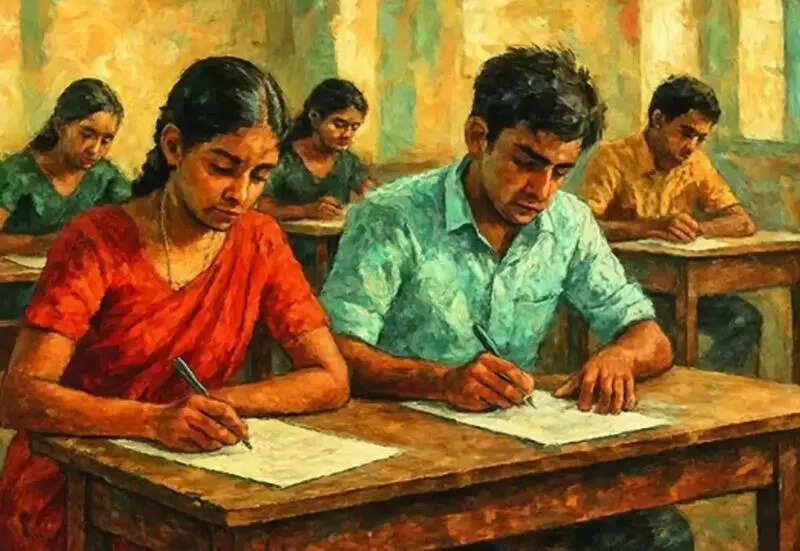
Pune: The Maharashtra Teacher Eligibility Test (TET) tentative results, released late on Friday, showed that nearly 10% of the 4.46 lakh candidates who took the Nov 2025 exam had qualified, an official from the Maharashtra State Council of Examination (MSCE) said. Candidates have been given time till 6pm on Jan 21 (Wednesday) to raise objections, after which MSCE will announce the final results. “These are only provisional results and the final list will be published after the council reviews all objections and suggestions submitted through candidates’ login IDs,” a senior official said.This year, TET has been at the centre of intense debate following a Supreme Court Sept order, making it compulsory for all teachers, including those already employed, to clear the exam to retain their jobs. Previously, TET was mandatory only for aspiring teachers. Teachers with less than five years of service remaining were exempted, though they would be ineligible for promotions if they failed to qualify.The order and subsequent govt resolutions sparked resistance within the teaching community, especially because the Supreme Court also stated that teachers failing to clear TET within two consecutive years would face compulsory retirement.Concerns further escalated due to historically low pass percentages. In 2024, only 3.38% of candidates cleared the exam, with just 11,168 qualifying out of more than 3.5 lakh applicants.Mahendra Ganpule, spokesperson of the Maharashtra School Principals’ Federation, said discussions were ongoing regarding the low pass rates, with some teachers demanding a reduction in the qualifying percentage. “Teachers will submit their objections, and we will have to wait for the council’s decision. The government resolution mandating qualification within two years remains in force and has not been withdrawn,” he said.To qualify as a teacher for Stds I-V, candidates must clear Paper I, while Paper II is required for teaching Stds VI-VIII. Last year, the examination was held across 1,423 centres in 37 districts, with over 2 lakh registrations for Paper I and 2.7 lakh for Paper II. Popular language choices (in order of preference) included Marathi, Hindi, English, Urdu, Kannada, Bengali, Gujarati, Telugu and Sindhi.