




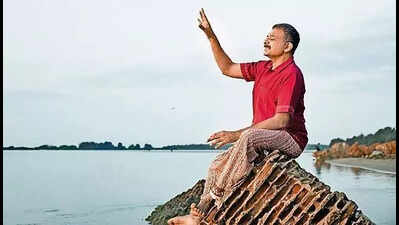
Pune: A policy thinktank known for roundtables and research papers is preparing to place music, dialogue and public participation at the centre of its newest experiment with the launch of the first edition of Palash, a cultural initiative that will be rolled out from Feb 27 to March 1 at its campus in Pashan. Conceived by art and culture convenor Arti Kirloskar, the event marks a deliberate shift toward activating ideas through the arts rather than policy alone. “The Pune International Centre (PIC) has been working in the sphere of national security, sustainability and policy discussions for several years. The new event emerges from the think tank’s evolution over 15 years, from operating out of small offices to building a seven-acre multidisciplinary space with an auditorium, amphitheatre and convention facilities. This new campus prompted a larger question about public engagement. We realised that simply hosting roundtables was not enough. Art and culture allow people to enter into conversations differently,” said Kirloskar. The event runs alongside PIC’s broader intellectual programming, including economic dialogues and public discussions, reinforcing its interdisciplinary vision. “We should not work in silos. Art becomes the warp and weft that connects policy, sustainability and society. Sometimes a song communicates what argument or text cannot. Art reaches people before they even realise they are thinking differently,” said Kirloskar. Palash, she said, was conceived as an annual platform that collaborates rather than competes with Pune’s existing arts ecosystem. “We don’t want to replace what the city already does well. The idea is to strengthen organisations, collaborate, and create something Pune may be missing. We asked ourselves if PIC could curate something independently that reflects who we are, and that is how we came up with the idea for Palash,” she said, adding that the title itself carries symbolic intent. “Palash represents knowledge, music, art and wisdom. It is also a spring festival, a moment of renewal. The flowering tree felt like a metaphor for what PIC is trying to do, bringing culture into a dialogue with society,” said Kirloskar. Headlining the inaugural edition is acclaimed Carnatic vocalist and author T. M. Krishna, whose return to Pune comes nearly nine years after his last performance in the city at a music festival in 2017. The programme opens with the launch of his book We, the People of India, followed by a collaborative performance with the Jogappas, a transgender musical community from Maharashtra and Karnataka on the second day, and concludes with a solo concert. “I have performed in Pune many times over the years, and what always strikes me is the discernment and passion with which audiences listen, especially to classical music,” Krishna said, adding that the city has long demonstrated a strong tradition of engaged and attentive listenership. Speaking about the upcoming performances, Krishna noted that audiences can expect both tradition and expansion. “My music comes from the heart and soul of Carnatic music, but it has also grown beyond boundaries, cutting across genres, cultures and languages. Listeners will hear what I call a ‘hardcore’ Carnatic sound, but also an exploration of the expansive cultural basket that our country is.” He highlighted the collaborative concert with the Jogappas as a particularly significant moment within the festival. “We are finding passages where we can come together while respecting each other’s music, cultures and identities. It is also a way of gently dismantling the separations we have created in the society, social and otherwise.” Kirloskar emphasised how inclusion is central to this edition. “Good music cannot belong to only one kind of person or one social group. When Krishna performs with the Jogappas, it challenges our assumptions about what we call ‘high’ art. It opens minds, and that is exactly the conversation we want,” said Kirloskar. Designed as an open public event, Palash will remain free and open to all with prior registration through social media. “If art can help us reflect, question and imagine better communities, then it is not just entertainment. It becomes a way of shaping civic life,” said Kirloskar.