



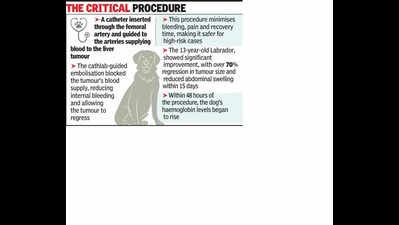
Pune: A private veterinary clinic in the city successfully performed a minimally invasive procedure — cathlab-guided embolisation — on a 13-year-old critically ill male Labrador last month to save its life when conventional surgery posed a high risk of fatal bleeding.Pet of a Pune-based couple, the Labrador was suffering from severe anaemia, critically low platelet levels, respiratory distress and large cancerous tumours in the liver and spleen.
According to the Small Animal Clinic, where the pet was treated, the Labrador was in a highly critical condition for several months, presenting with abdominal distension (visible swelling or enlargement of the abdomen), severe weakness, difficulty in standing and walking, and breathlessness. “Clinical examination revealed a large abdominal mass weighing approximately 2.5-3kg,” the clinic said.Subsequent investigations, including ultrasound and CT scans, confirmed the presence of large splenic and liver tumours, suspected to be malignant (cancerous), with possible metastasis. Dr Narendra Pardeshi, veterinary surgeon with the clinic, said, “After confirming a large splenic tumour with a liver tumour, we immediately focused on stabilising the Labrador and planning the safest possible life-saving approach. Such conditions are commonly seen in older dogs, especially those with a history of tick fever and splenic tumours, which are highly aggressive and rich in blood supply, making treatment extremely challenging.”Traditionally, such cases are managed through open abdominal surgery. Dr Pardeshi, however, said the risk of uncontrollable bleeding and death was extremely high, particularly when the liver and spleen were involved and the dog had severely compromised blood parameters. So, an emergency blood transfusion was administered using blood donated by another dog. Even after 48 hours, his blood parameters showed minimal improvement, making conventional surgery unsafe.“Operating under these conditions would have been extremely dangerous. This is when we decided to adopt an unconventional but minimally invasive interventional cathlab approach,” Dr Pardeshi said.An interventional embolisation procedure was carried out on Dec 15 last year under the expert guidance of vascular surgeon Dr Dharmesh Gandhi and interventional radiologist Dr Kiran Naiknaware, along with critical technical support from Kanhaiya Khaire, cath lab technician and manager of the cardiac department.Within 48 hours of the procedure, the dog’s haemoglobin levels began to rise. Follow-up evaluations after 15 days showed more than 70% regression of the tumour, along with a significant reduction in abdominal swelling. “Today, Muffin is active, alert, and steadily recovering,,” Dr Pardeshi said.