



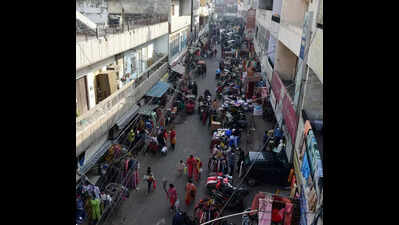
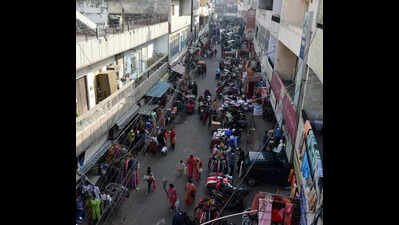
New Delhi: Municipal Corporation of Delhi (MCD) has discarded plans for a revamp of Kamla Market, opposite New Delhi Railway Station, citing a fund crunch and difficulty with its long-term upkeep. Under Phase I of the project, implemented during 2024–25, the civic body repaired the market’s entrance and other damaged portions of the façade, revamped the clock tower, and upgraded the surrounding area. More extensive upgrades were proposed under Phase II, including repairs to internal common areas, roof maintenance, improvement of pavements and standardisation of shop fronts. There were plans to construct separate toilet blocks, especially for women. The plan, however, did not materialise. Earlier, officials said MCD approached various organisations to arrange for funds through corporate social responsibility (CSR) initiatives, but the efforts did not work out. “However, we are working on the construction of a toilet for women and persons with disabilities after demolishing an old and dysfunctional public convenience. There was no such facility earlier, which caused inconvenience to many people. We also plan to develop a modern toilet here and hand it over to the market association,” an official said. Kamla Market, near Ajmeri Gate in central Delhi, was established in 1951. The shops in the market were allotted to refugees who migrated from Pakistan during the Partition, with the objective of providing them livelihoods. The market was inaugurated by India’s first President, Dr Rajendra Prasad, and named after Prime Minister Jawaharlal Nehru’s late wife, Kamala Nehru. Over the years, the market emerged as a hub for air coolers and later became a base for the city’s goods transporters. However, the lack of regular maintenance and encroachment on roads and common areas severely affected accessibility. The roof inside the market is damaged in several places, while pavements outside the small shops are in a poor condition. Stacks of goods placed along walkways further restrict movement, making it difficult for pedestrians to navigate the area. While traders demanded concrete measures to give a new lease of life to the market, the civic body maintained that improvement will not be possible unless shopkeepers and visitors cooperate in keeping the area clean and free of encroachments.