




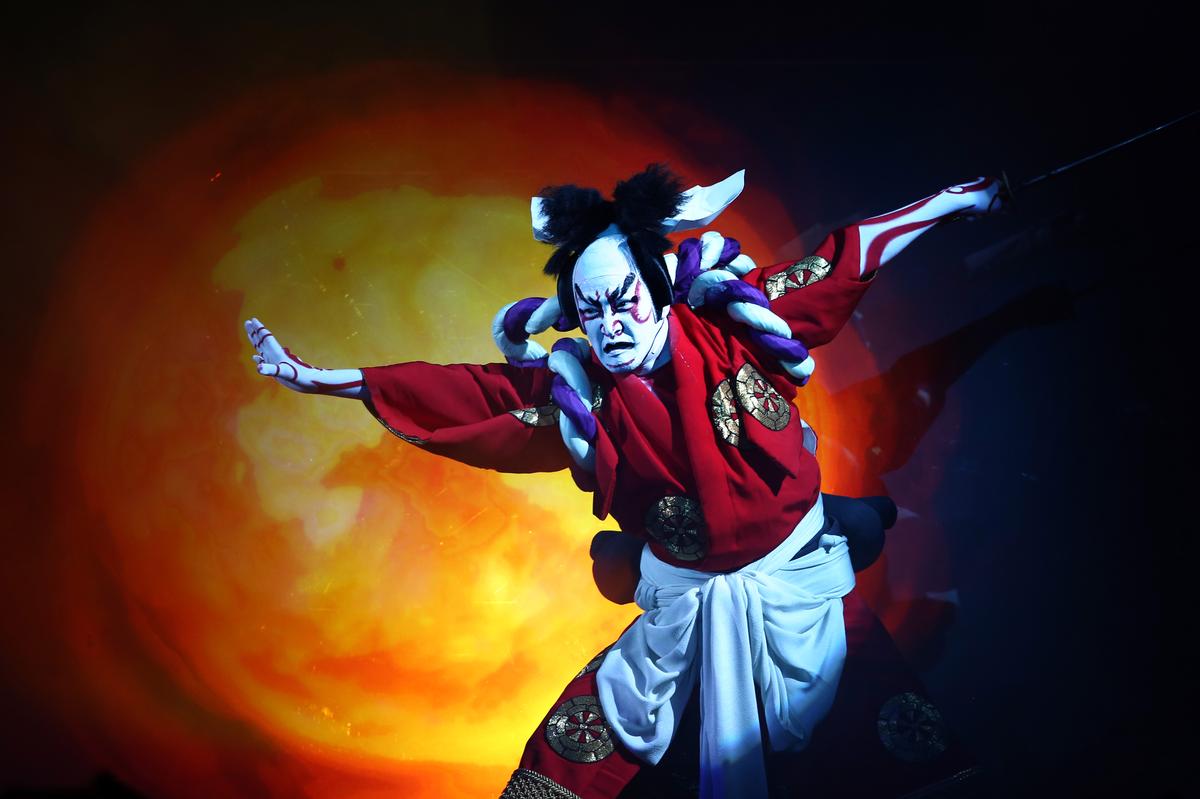
Kabuki is known for its incredible blend of drama (mime) and dance. It is a theatre style of Japan that is greatly known for the exquisite performances and focus placed on well-designed costumes and colourful makeup. Within this theatre, all of the roles are played by men, with their characters and roles defined by their makeup, costumes, and masks. But how exactly did this form of theatre come to light?
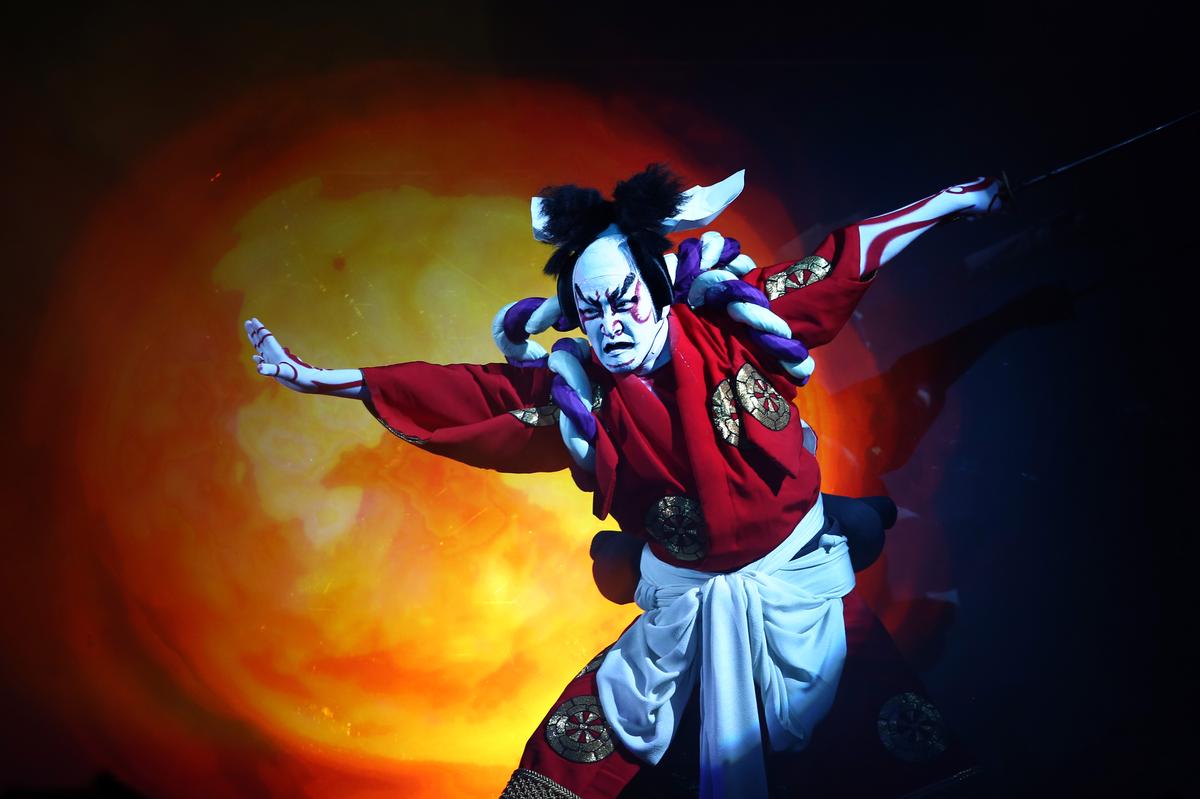
PHOTO: Getty Images / CARL COURT
Unmasking history
Like a majority of Japan’s popular culture, kabuki also emerged in the country during the Edo period, in the year 1603. It all began when Okuni, a young miko (priestess) of the Shinto shrine known as Izumo Oyashiro, began a performance with other young women dancers. It was a pantomime she performed on the dry bed of the Kamo River in Kyoto. Contrasting with today’s kabuki plays, in the beginning, women played both male and female characters. But as time passed, they were banned from performing, and Okuni replaced them with young boys. Following this, in 1651, the shogunate placed further restrictions, allowing only males over the age of 15 to participate. Thus began the kabuki we all know today. During the time of the Genroku period (1673–1841), the popularity of kabuki only grew, and it became closely associated with bunraku, a popular form of puppet theatre. However, within this same period, kabuki slowly lost its popularity, which was overtaken by bunraku due to the presence and influence of many skilled playwrights for that form of theatre back then. But after imperial rule was re-established in Japan, with the restoration of the emperor, kabuki came back to the light and once again began increasing its popularity. Today, it is Japan’s most popular form of traditional drama.
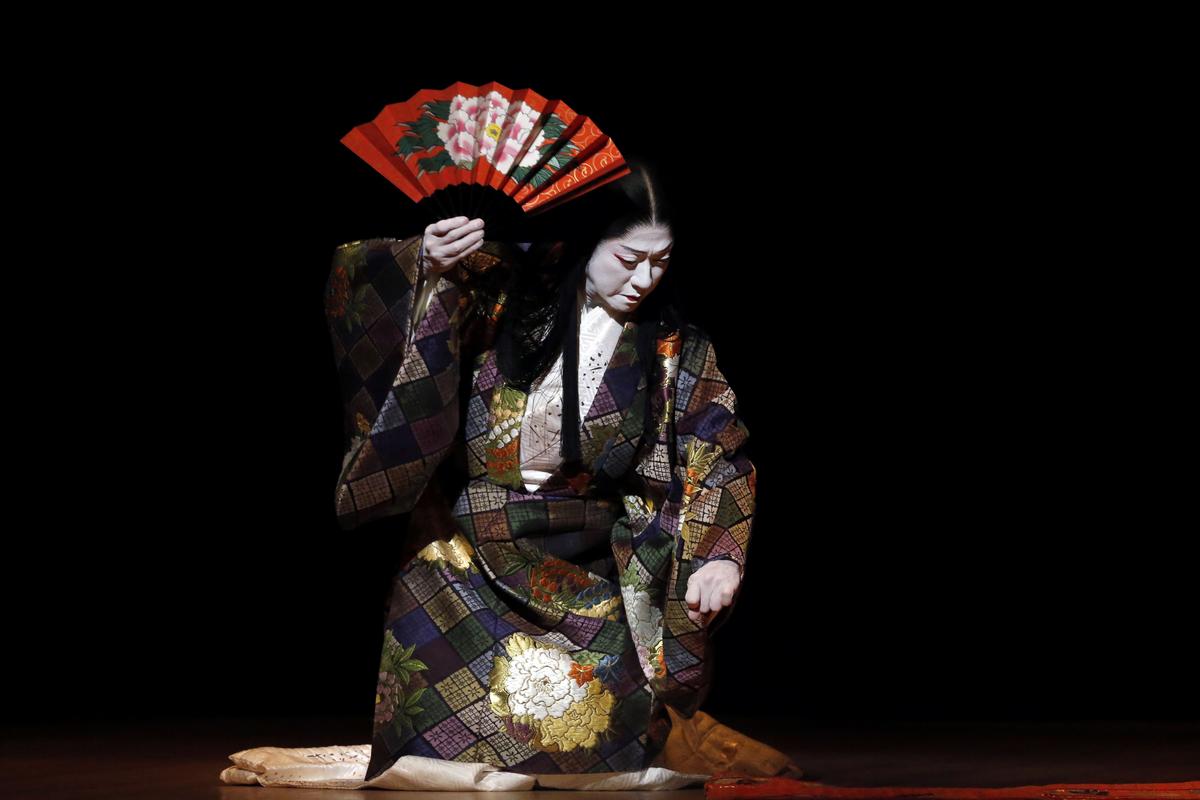
PHOTO: AFP
Stage time!
When it comes to drama, the stage and its visual elements aid in telling part of the story. In the case of kabuki, there was one element that was used by the actors. This is a projection known as the hanamichi (flower path). Think of a walkway that is used for fashion shows where models make their glamorous entrances. Only in this case, the Hanamichi is utilised for ‘dramatic’ entrances and exits. This pathway was not just used as a means for the actors to get on and off the stage, but its design and proximity to the mainstage were also utilised for dramatic effect in a variety of scenes. In short, it provides depth to the story. As society developed, so did the kabuki stages, with new technological advancements and innovations brought to the scene. Some of these include seri (stage traps), chunori (midair performances), and mawari-butai (revolving stage). While most scene changes in drama are done with the curtains closed, in kabuki, some of the changes are done with the actors still visible to the audience. This is done through the use of Hiki Dogu (small wagon stage), where the actors, or the scenery, are rolled away on a moving platform.
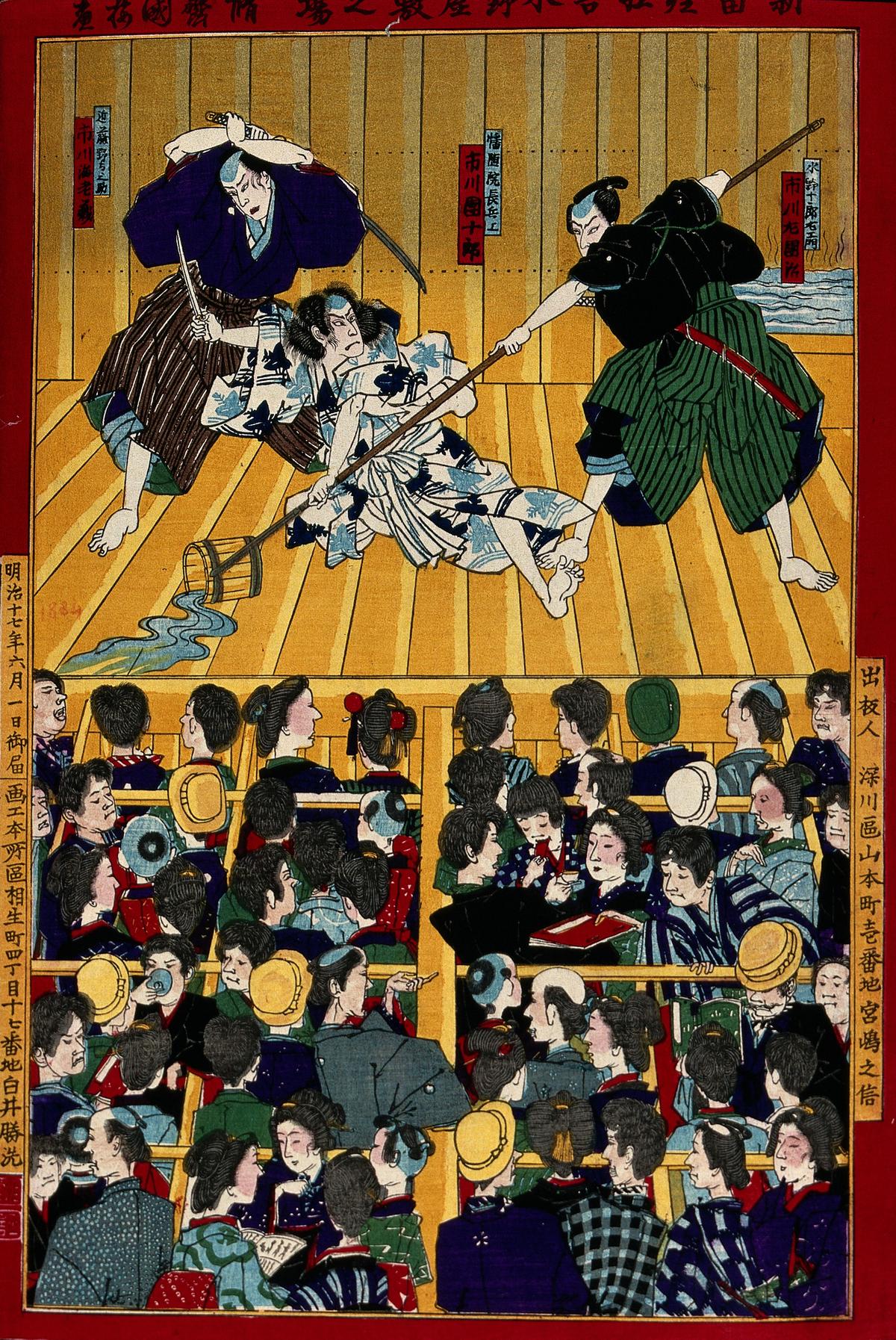
PHOTO: WELLCOME LIBRARY, LONDON / WIKIMEDIA COMMONS
The stories told
So what exactly are the tales that are told through this wondrous style of drama? There are three main categories when it comes to this. Jidaimono (historical legends and events), shosagoto (dance drama), and sewamono (contemporary stories). The theme that is emphasised within the overall plot is the clash between societal morality and one’s emotions. Basically, the society of Japan has its own share of moral ideals that are to be followed by the people. However, in the story, the main inciting incident of the plot, or the distinctive characteristic of the protagonist, comes from their strong human emotions and the actions that follow. Whether it be love, revenge, curiosity, or sadness, most of these stories end in tragedy. One of the most popular kabuki dramas is Kanadahon Chushingura, or The Treasury of Loyal Retainers. It is a retelling of a true story that had occurred on the 31st of January, in 1703. Where 47 ronin (samurai with no lord) avenged the unjust death of their master at the hands of the powerful court official, Kira Yoshinaka. The tale follows the themes of loyalty and honour. Some other stories include Benten Kozo, which follows the lives of five cunning and extremely clever thieves, and Renjishi, which tells a story that focuses on the relationship and loyalty between an ageing father lion and his cub.
Makeup applied for Kabuki actors PHOTO: REUTERS
Costumes, and masking makeup
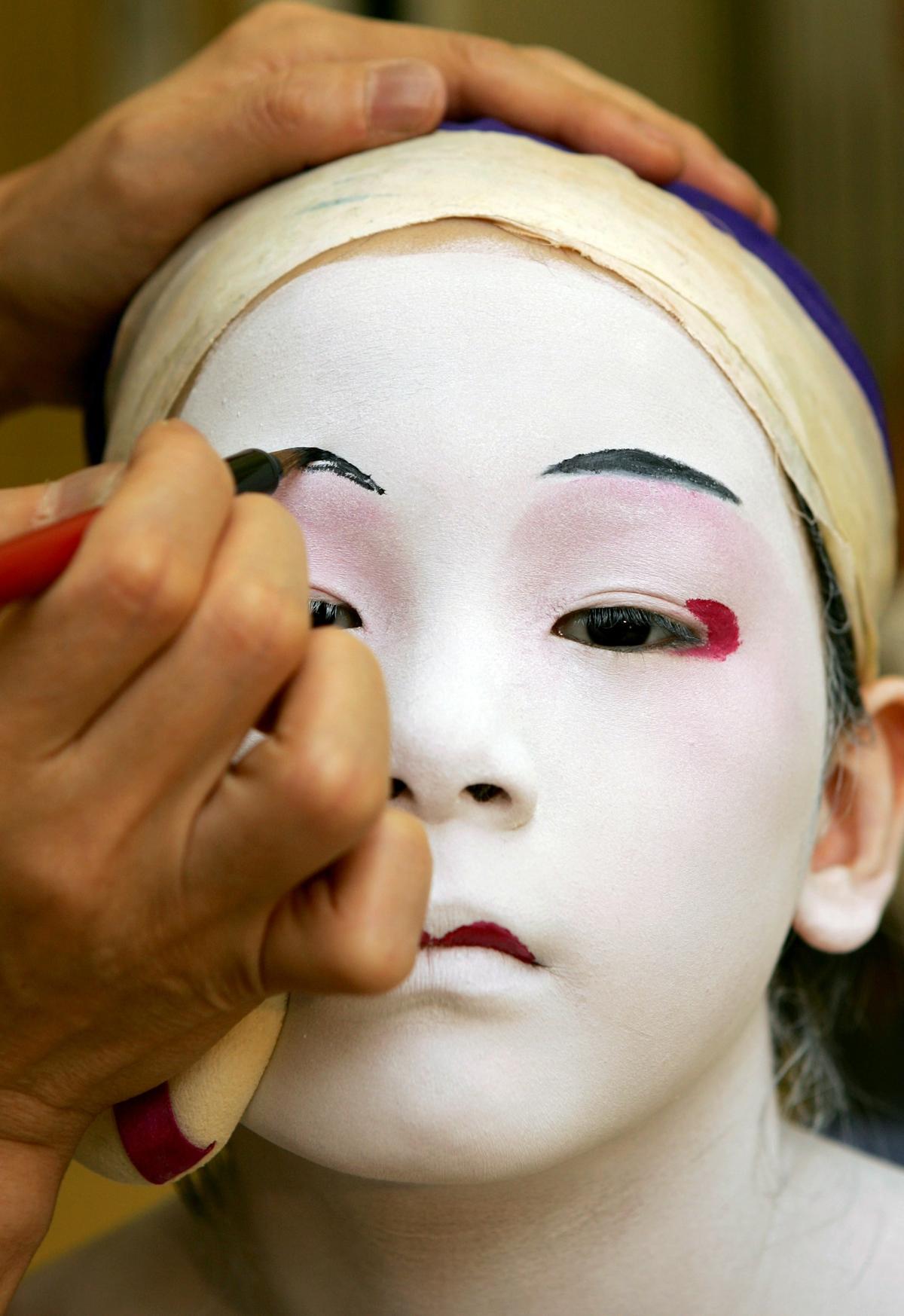
In kabuki theatre, the main focus that distinguishes it from other forms of theatre consists of the costumes and makeup. The costumes are normally given over-the-top designs and weigh from 30 to over 60 kilograms! The kimono worn by the actors is designed with multiple layers and is multi-coloured. Padding is worn underneath to provide the proper body shape of the character. Now, coming to makeup, there is something you ought to prepare yourself for. The elaborate application of it is something to behold! One look at a kabuki actor’s face and you would wonder if they were wearing a mask. This is known as kumadori makeup. They say not to put a mask over your emotions, but in kabuki theatre, masks created by kumadori makeup are specifically meant to convey or exaggerate the emotion of a character! Not only that, the different designs representing style and ferocity in two different masks also help the audience identify the gender of the character (female in case of a stylistic design, and male in case of a fierce display). Male actors who play female characters in the play are known as onnagata. The oshiroi (white base) of the stage makeup is created using rice powder, and the different colours convey different expressions and characteristics. Red, for example, depicts heroism and righteousness, blue showcases a character’s villainous personality, and purple is used to depict someone of noble blood.
ACTIVITY
Given below are a few Japanese terms. Use the hints in the brackets to guess the terms that were mentioned in the article. Don’t peek!
1. Miko (a woman who is a priest) _____________
2. Hanamichi (‘michi’ means ‘path’ or ‘road’) ______________
3. Seri (Traps used on stage) ______________
4. Hiki Dogu (Used when the curtains are open) __________________
5. Ronin (47 of them fought to avenge their lord) _________________
Super kabuki
Despite the ban in the 17th Century, there are some local troupes in Japan that get women actors to play women characters. In this modern day, the essence and magnificence of the kabuki theatre can be found in other platforms of entertainment besides the stage. One of the most popular shifts went towards the anime platform. A new branch of this theatre genre, known as ‘Super Kabuki’ , wherein there have been anime-based productions of kabuki plays. Simply put, the basic story of a popular anime franchise is told through a kabuki play, with the actors taking up the roles of the fandom’s favourite characters. Two popular anime series that have gotten their own kabuki performances include ‘Naruto’ and ‘One Piece’.
Published – October 07, 2025 04:28 pm IST