





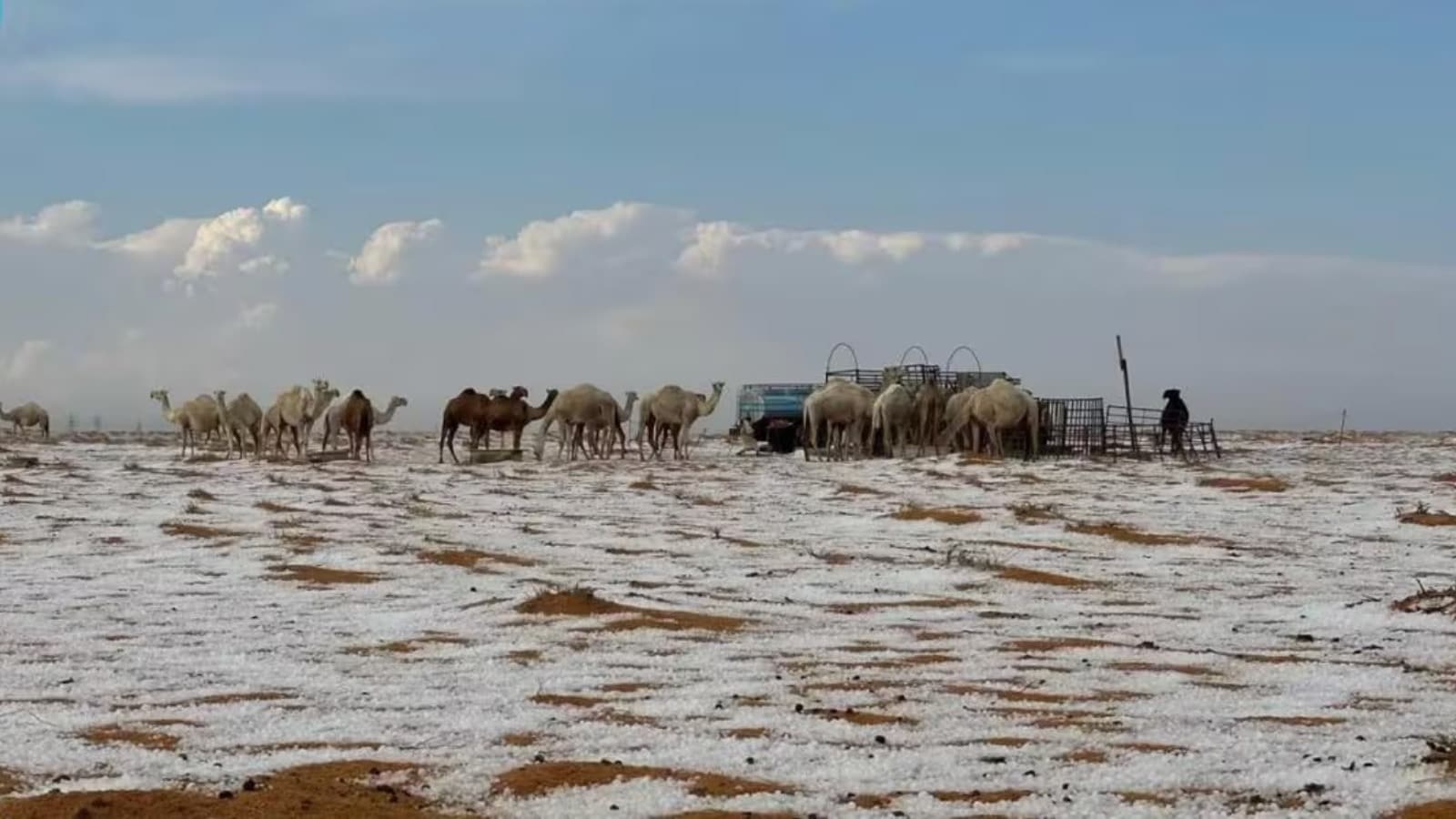
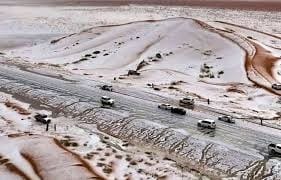
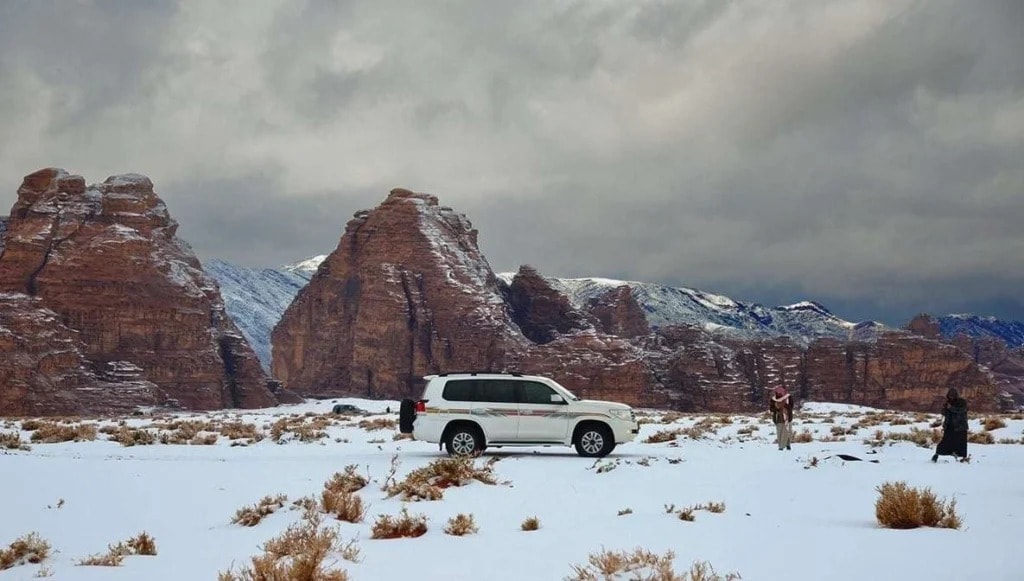
Al-Jawf in Saudi Arabia created history after the region reportedly received snowfall for the first time ever. Locals are thrilled and described the sight as unusual. Areas such as Sakaka city and the Dumat Al-Jandal governorate were covered in snow for sometime.
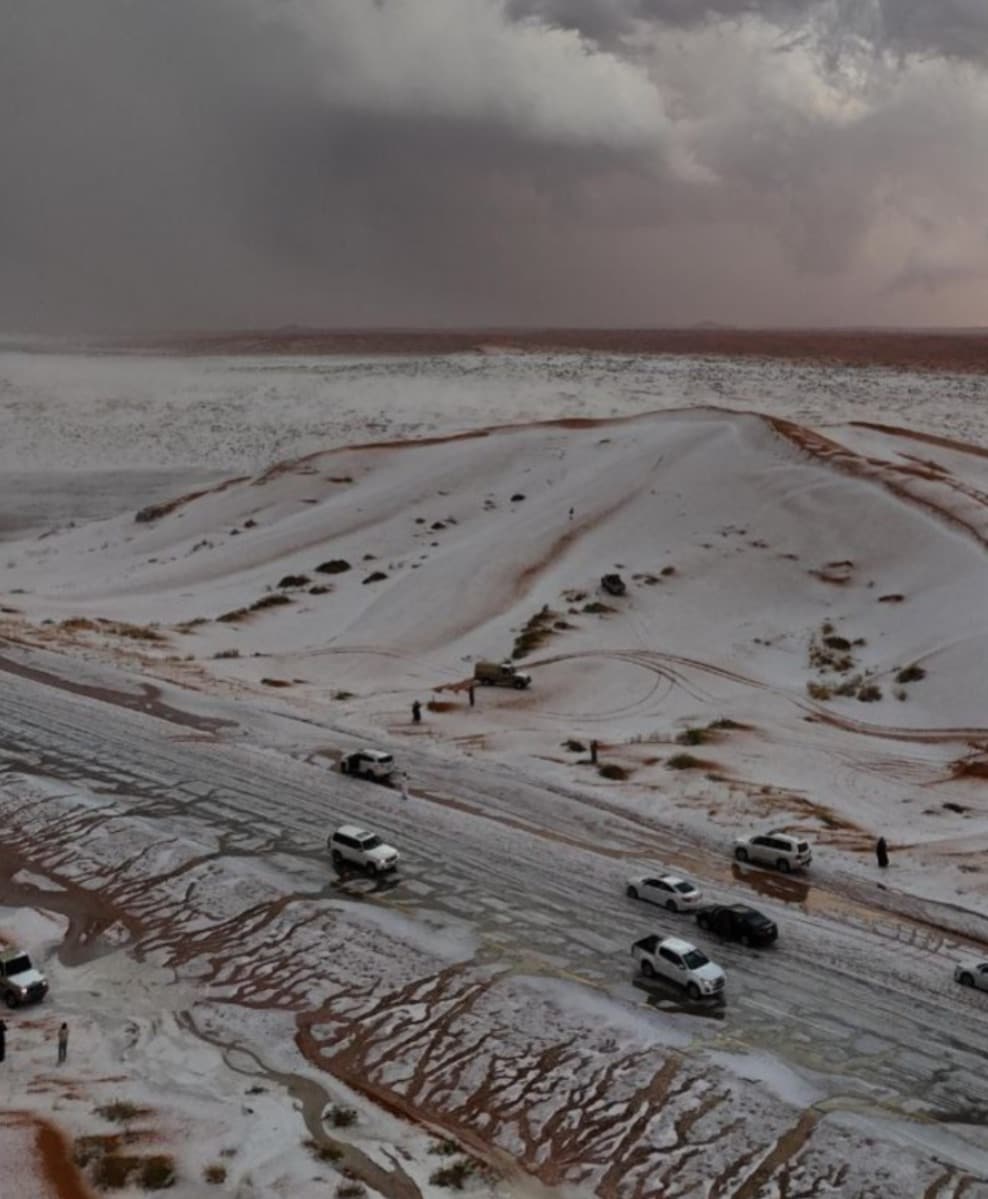
Located in the northern part of Saudi Arabia, Aj-Jawf also became a part of several conversations regarding weather and climate change in the region. But beyond that, many are also linking the rare event to religious beliefs particularly references to Qayamat in Islam.
In Islamic belief, Qayamat refers to the Day of Judgment when the world ends and all humans are resurrected for accountability. There are several signs that would appear before that day which are recorded in authentic hadiths by Prophet Muhammad.
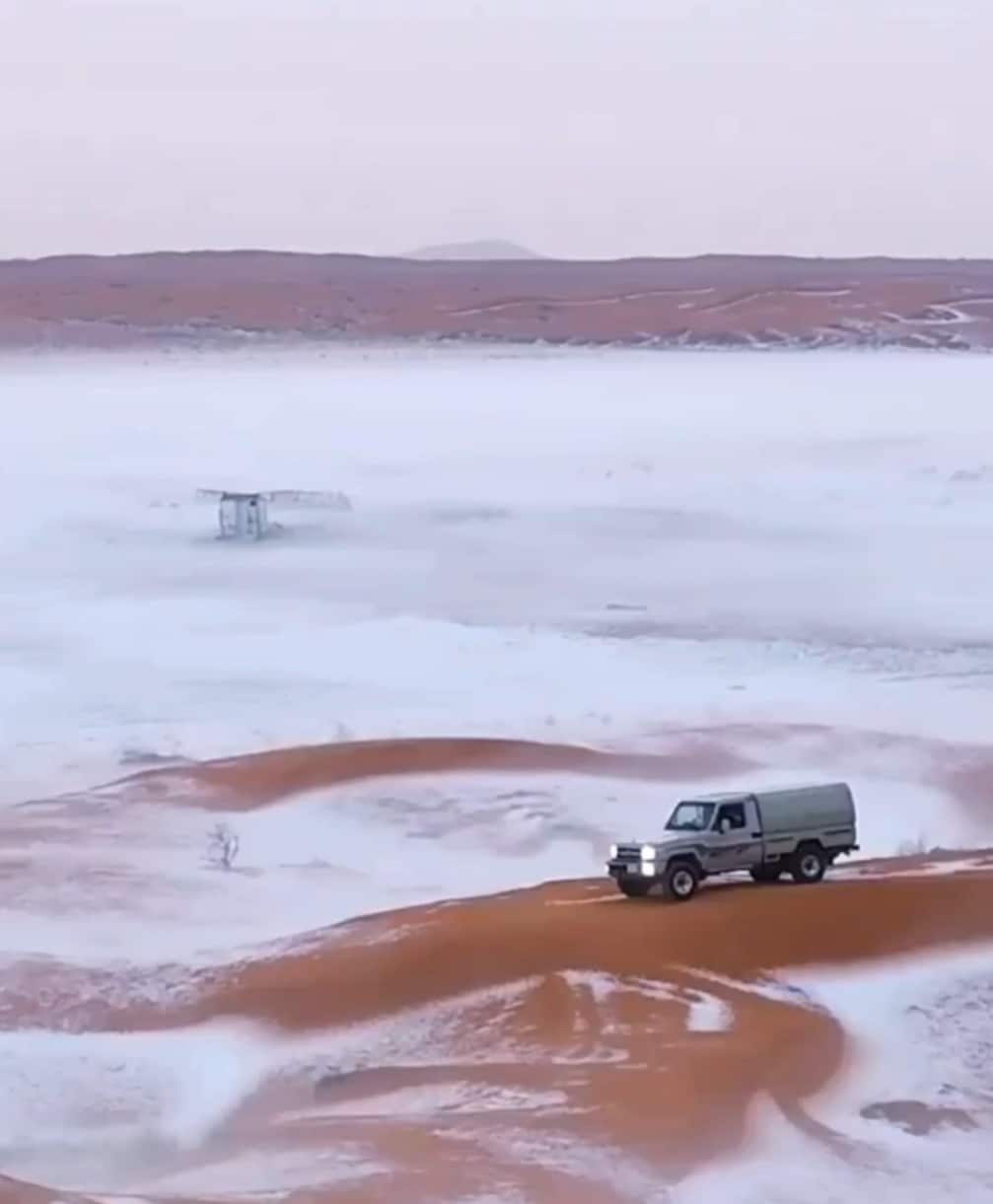
These narrations mention several key signs. One of them refers to the land of Arabia turning green again with rivers flowing and meadows returning to areas that are currently dry.
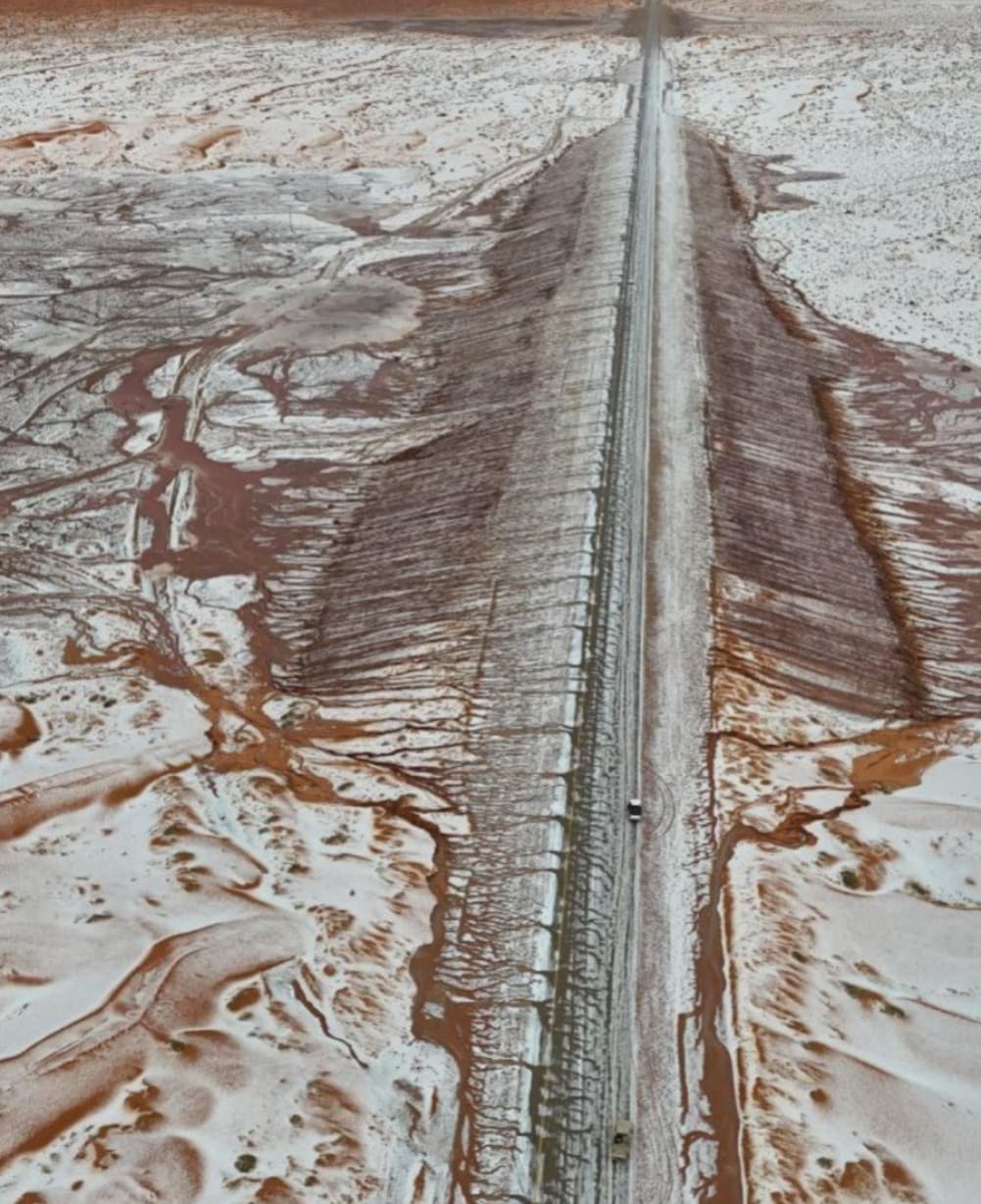
Other major signs described in hadiths include the emergence of the Mahdi and the appearance of Dajjal. The narrations also speak about the return of Jesus near the end times along with three major landslides occurring in different parts of the world. A beast emerging from the earth and the sun rising from the west are some other signs.
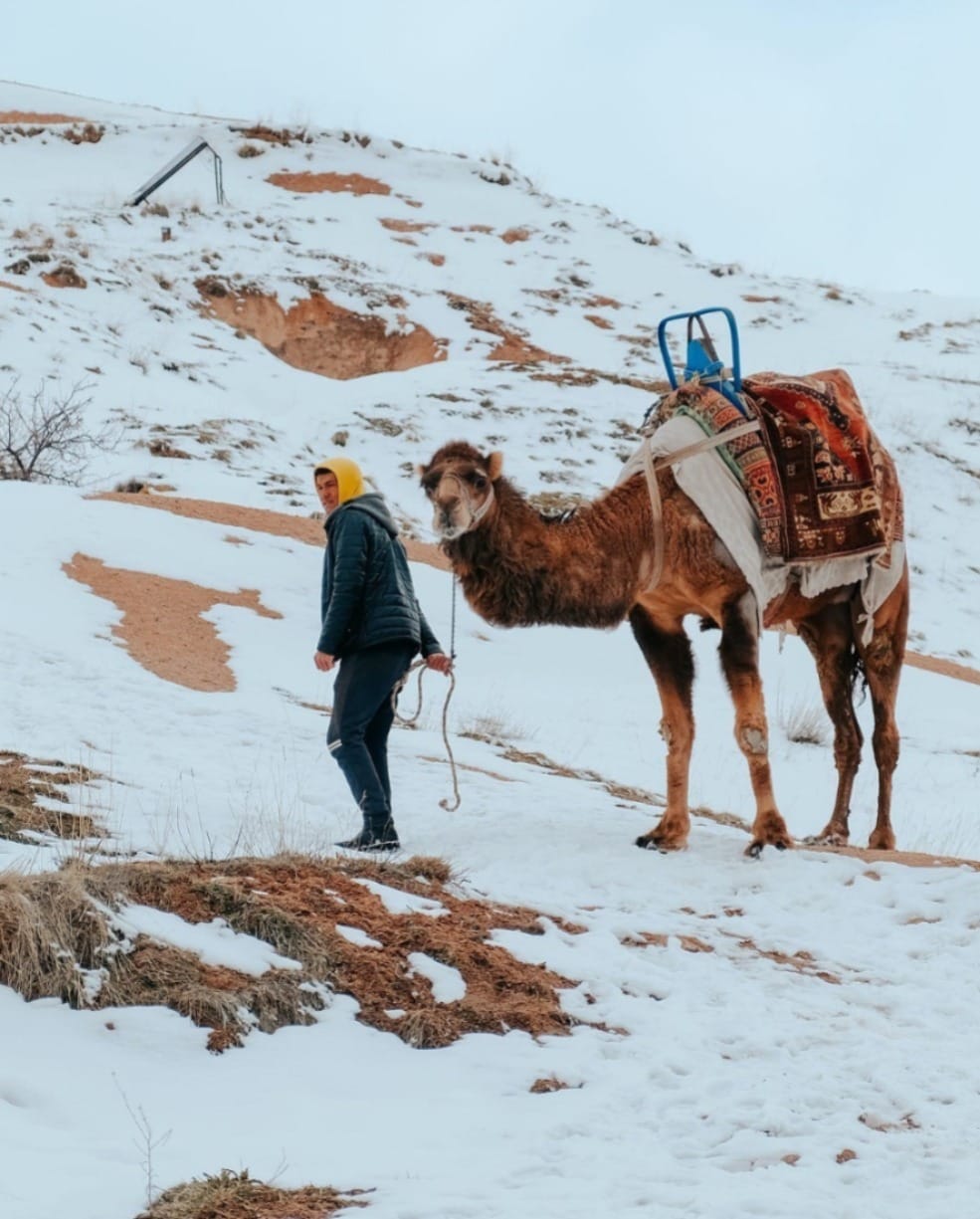
The recent snowfall in desert regions like Tabuk, Hail and now Al-Jawf has led some people to question whether such events are linked to these signs. But scholars point out that no authentic hadith directly mentions snowfall in deserts as a sign of Qayamat.
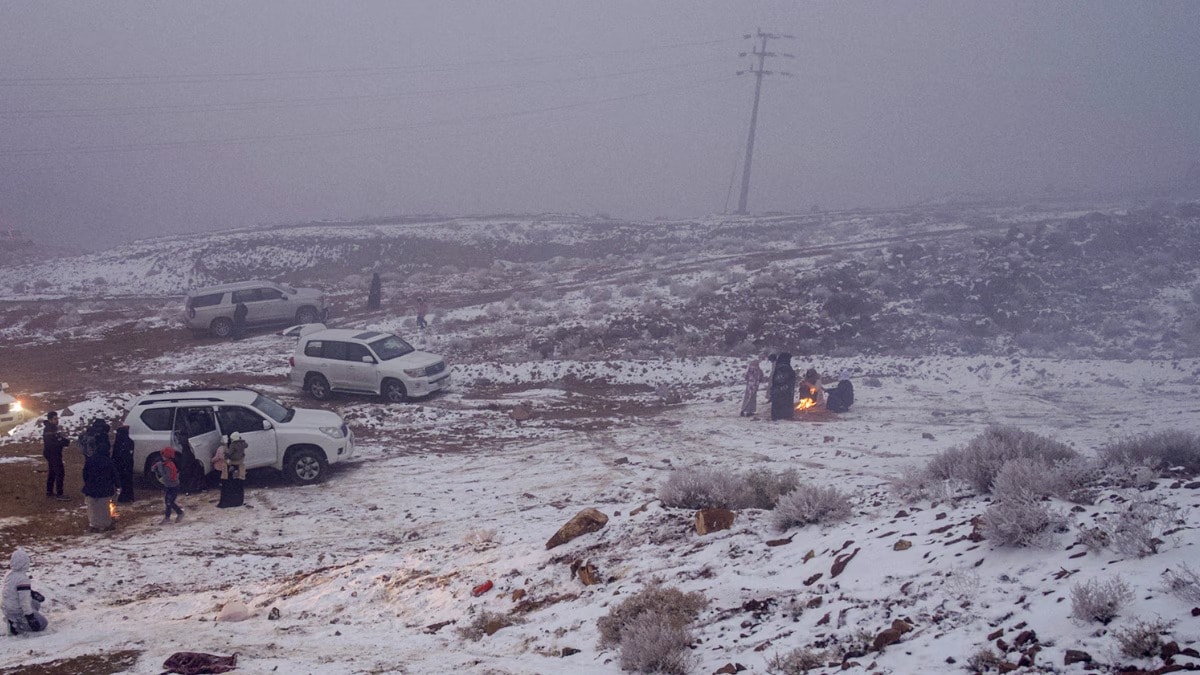
Snow is mentioned only once in a hadith where it refers to pledging allegiance even if one has to crawl over snow. Scholars clarify that this narration is unrelated to the signs of the Day of Judgment and should not be connected to end-time discussions.

The most cited authentic hadith regarding Arabia’s transformation is narrated by Abu Huraira and recorded in Sahih Muslim. In it, Prophet Muhammad states: “The Hour will not be established until… rivers and meadows return to the land of Arabia.”
A similar narration is found in Sunan Ibn Majah which reinforces the idea of Arabia becoming green again while also mentioning an increase in wealth. Classical scholars such as Imam Nawawi interpreted this as a future return to fertility.
Shaykh Ibn Uthaymeen also explained this narration as the Arabian Peninsula becoming filled with rivers and greenery near the end times. Scholars note that geological evidence shows the region was green thousands of years ago which aligns with the wording of “return” mentioned in the hadith without confirming that such signs have already been fulfilled.