




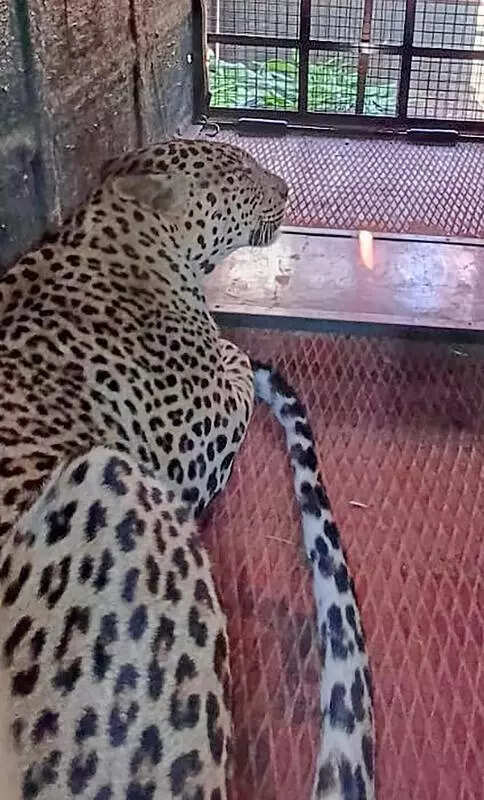
Pune: An intensive leopard-trapping drive by the Junnar forest division has significantly mitigated human-animal conflict in recent months, providing much-needed relief to hotspot villages across Manchar, Otur, and Shirur ranges.Since Oct 2025, forest officials have trapped 110 leopards from approximately 25 high-risk villages. The crackdown followed a series of alarming attacks, including the tragic deaths of two individuals — one of them a school-going child — in Pimparkhed village. These incidents had triggered widespread panic among residents living near forest fringes and sugarcane-dominated landscapes that frequently attract big cats.Officials state that the sustained nature of the operation has been the key to its success. “Almost every day, we are trapping a leopard in these hotspot villages,” said Smita Rajhans, assistant conservator of forests, Junnar division. “Leopards have a natural tendency to occupy new territories when space becomes available. We have witnessed this pattern repeatedly in Junnar, which explains why trapping continues despite earlier removals.”To support the massive operation, the department deployed over 400 trap cages — one of the largest such mobilisations in the region’s history. Cages were strategically placed in areas with frequent sightings, livestock kills, and high human activity in farmlands.The results are evident in the numbers. According to senior forest officials, distress calls from villagers — which previously averaged nearly 30 per day — have dropped to fewer than 10.“This clearly indicates that the intensity of the conflict has reduced. While the problem isn’t entirely eliminated, the situation is currently under control,” a senior official said. The reduction in leopard presence has restored a sense of security for farmers, many of whom must work in sugar cane fields during the high-risk hours of dawn and dusk.Naresh Dome, the sarpanch of Pimparkhed, noted the improvement but urged continued vigilance. “Trapping was the most crucial factor. Had the department acted sooner, we might not have lost innocent lives. While sightings have reduced, fear remains. This action needs to continue for a substantial period to bring things back to normalcy,” he said.The department emphasised that trapping is part of a broader mitigation strategy, not a standalone solution. “Trapping is a tool used only in villages reporting consistent conflict to reduce immediate threats to human life,” an official said, adding that awareness programmes and community coordination remain ongoing. However, the success of the drive has created a logistical challenge. The Manikdoh Leopard Rescue Centre is currently sheltering over 150 animals and is nearing maximum capacity. To ease the pressure, officials confirmed that around 50 leopards are slated to be shifted to the Vantara facility in Gujarat in the coming months, pending final approvals.The Junnar landscape is recognised as one of India’s most complex leopard-human coexistence zones, where fragmented forests and expanding agriculture bring wildlife into constant contact with humans. While conservationists often debate the long-term efficacy of relocation, local officials maintained that in crisis situations, safety must take priority. “The focus is safety,” an official said. “Trapping has helped us buy time, calm the situation, and protect villages that were on edge.”