



For decades, the story of Indian aviation followed a predictable pattern. A city would have one airport. The airport would slowly expand. Passenger numbers would grow much faster than expected. Congestion would become normal. Eventually, planners would announce a major expansion that promised to solve the problem for the next decade. Then the cycle would repeat. What is changing now is not just the scale of air travel, but the thinking behind how airports are planned. India is no longer building airports simply to solve present-day problems. It is building them in anticipation of a future in which a single airport will no longer be enough for a major city. The result is a quiet but important shift towards a dual-airport model.Cities like London, New York and Tokyo have functioned with multiple airports for decades. But India resisted the idea for a long time, partly because air travel was limited to a relatively small section of the population and partly because building a second airport required enormous investment and political will. For years, the assumption was that one large, well-equipped airport could handle the needs of an Indian metropolis. That assumption is now collapsing under the pressure of numbers that are rising far faster than planners once imagined.The most dramatic example of this transformation can be seen in the national capital region. For years, Delhi relied almost entirely on one international airport that kept expanding in phases. New terminals were built, additional runways were added, and the airport was repeatedly modernised. Each expansion created the impression that the problem had been solved permanently. But the growth in passenger numbers was relentless. Low-cost airlines brought millions of new passengers into the aviation system. Smaller cities became connected to the capital in ways that would have seemed impossible a decade earlier.
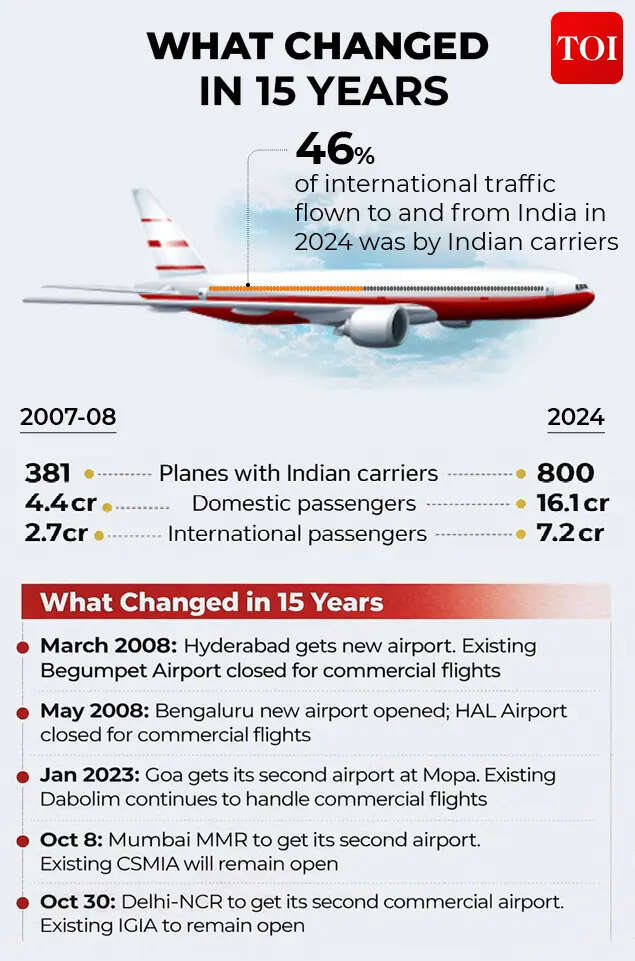
Delhi-NCR and Mumbai are entering it first, Goa has already tested it, and cities such as Chennai and Bengaluru are now preparing for it. Together, these developments mark one of the biggest structural shifts in India’s aviation sector.This is not just about reducing congestion. It is about reshaping how cities grow, how airlines plan their networks, and how India positions itself in the global aviation economy.
Delhi-NCR’s twin-airport strategy
The recent example of this shift can be seen in the national capital region. For years, Delhi relied entirely on Indira Gandhi International Airport, one of the busiest airports in the world. Even after multiple expansions, airlines struggled to secure new slots, particularly during peak morning and evening hours. The growth of low-cost carriers and regional routes meant the airport was handling far more traffic than it was originally designed for.Over the last two decades, Delhi has spread rapidly southward (toward Gurgaon) and eastward (toward Noida). Both neighbouring cities have become magnets for corporate investment, jobs and real estate, making Delhi-NCR home to an estimated 3.5 crore people — the second-largest urban agglomeration in the world after Tokyo.UN projections suggest Delhi-NCR will surpass Tokyo within four years, possibly sooner.
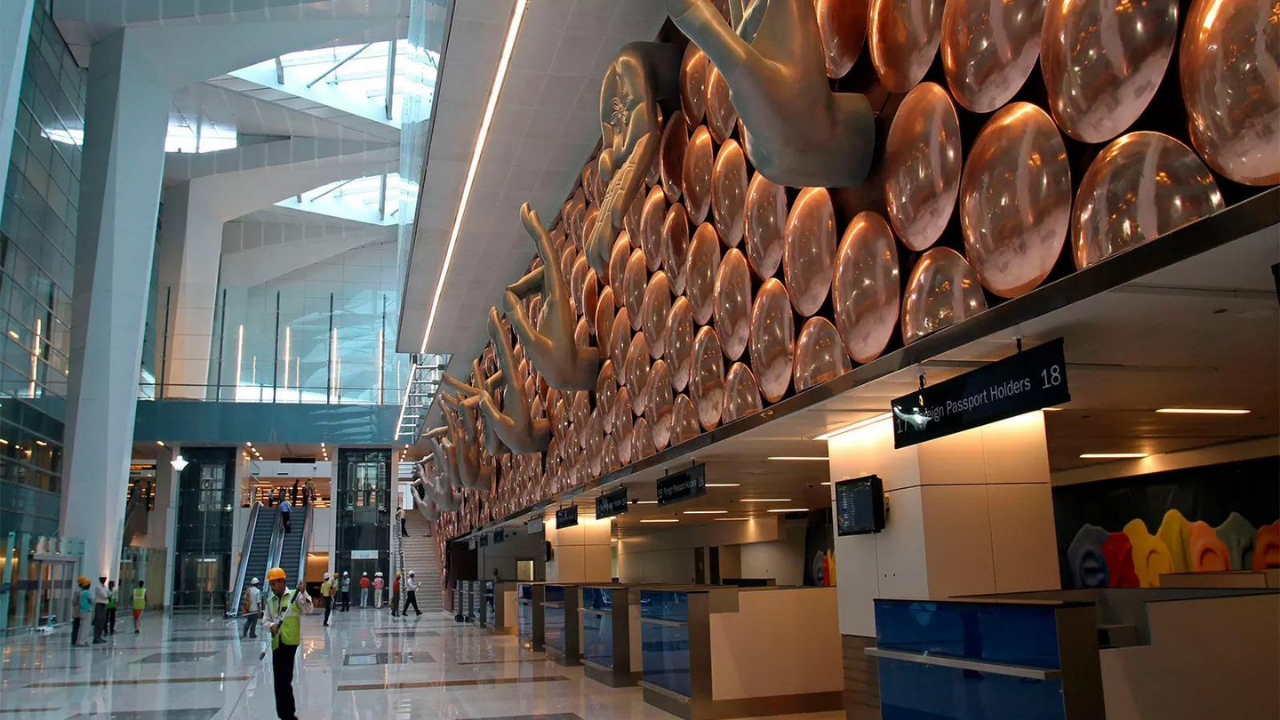
Delhi’s Indira Gandhi International Airport
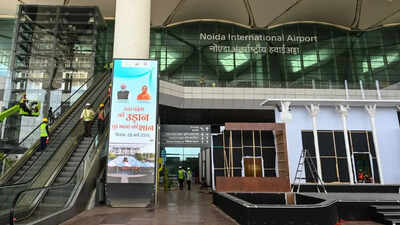
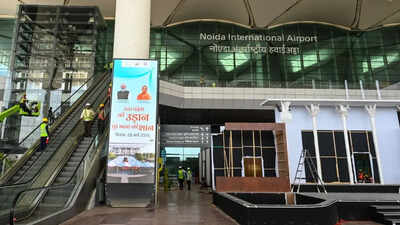
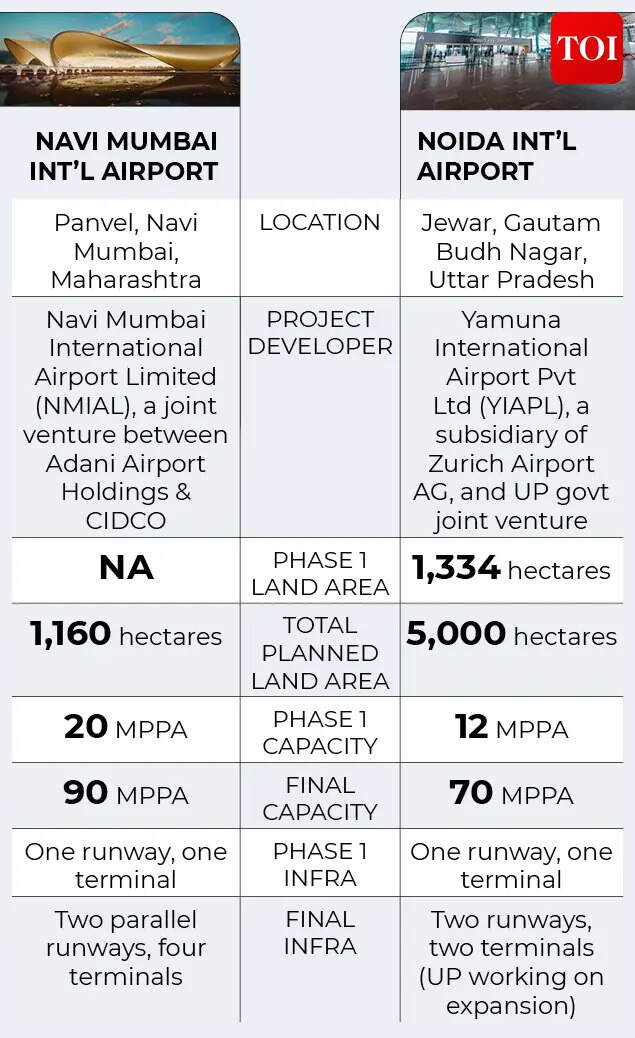
That is why the inauguration of Noida International Airport represents more than just a new terminal opening. It marks the beginning of a dual-airport system that could eventually handle more than 200 million passengers a year across the region.
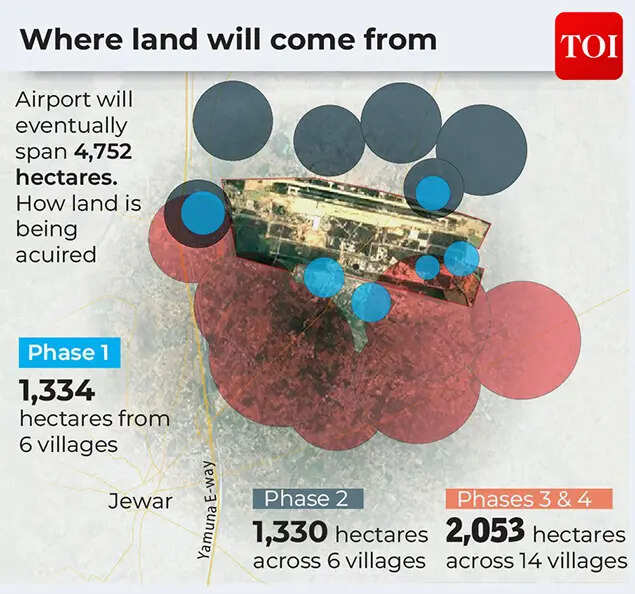
The scale of the new airport explains the ambition behind it. Nearly Rs 11,200 crore has already been invested in the first phase, which alone will handle 12 million passengers annually. Once fully developed, the airport is expected to handle 70 million passengers a year and operate with up to six runways. Spread across thousands of acres and backed by global investment from Zurich Airport International AG, the project is being projected as one of the largest aviation infrastructure developments in the country.
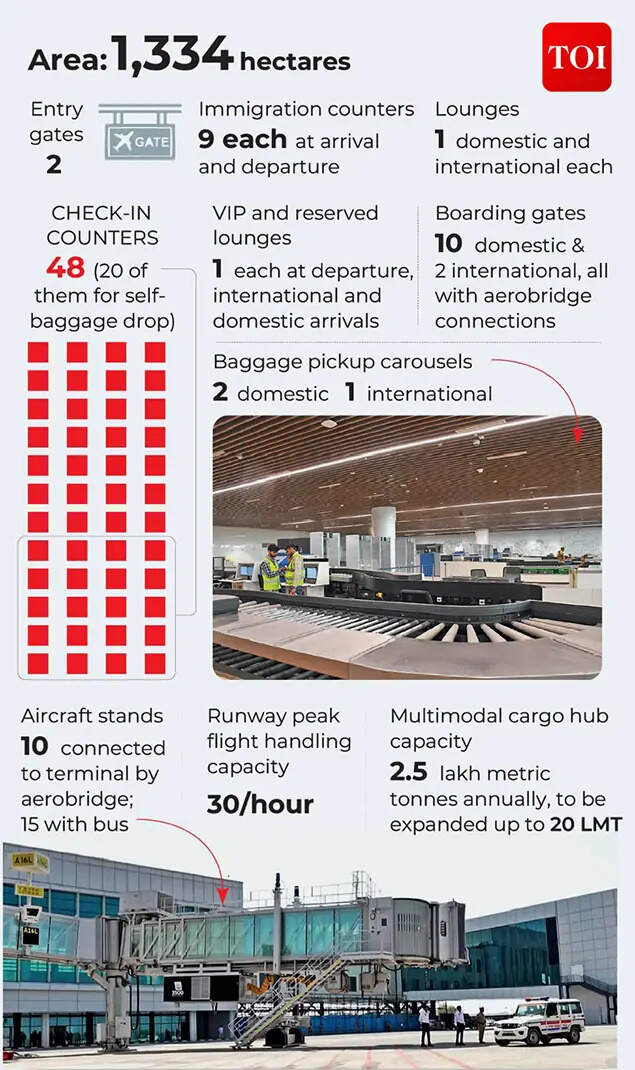
The airport has been designed in such a way that it can expand without disrupting existing operations. Instead of rebuilding terminals every few years, new terminals can simply be added next to the existing ones. Each phase is meant to increase capacity gradually — from 12 million passengers to 30 million, then to 50 million, and eventually to nearly 70 million passengers annually.
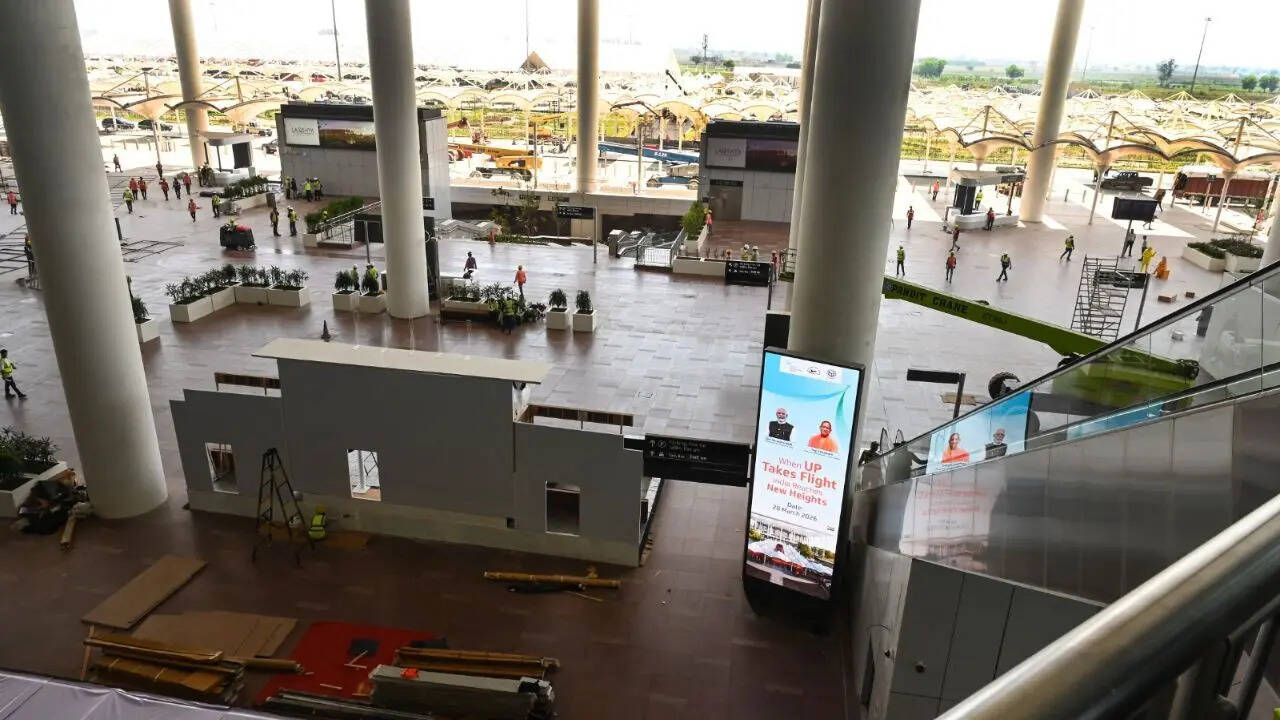
Over time, additional runways will also be added, and the airport could eventually have as many as six runways, placing it among the largest airport complexes in the world.Industry experts believe the new airport will reshape economic geography in north India. Manoj Gaur, CMD of Gaurs Group, summed up the mood when he said the airport is set to emerge as “a powerful gateway for the state, significantly enhancing global connectivity and attracting investments across sectors”. Real-estate analysts are already predicting sharp price increases along the Yamuna Expressway corridor, with the region expected to evolve into a full-scale aerotropolis — a city built around an airport rather than the other way around.
Mumbai’s twin-airport system
If Delhi represents expansion, Mumbai represents necessity. The city’s primary airport, Chhatrapati Shivaji Maharaj International Airport, has been operating close to saturation for years. Despite having two runways, they intersect, which means only one aircraft can take off or land at a time. At peak hours, the airport operates almost at its physical limits.The Navi Mumbai International Airport is therefore is the only way Mumbai can continue growing as an aviation hub. Unlike Delhi, where the two airports will be operated by different companies, Mumbai’s twin-airport system will be run by a single operator, the Adani Group. The company has openly said it wants the two airports to function as “independent but cohesive”.Jeet Adani, director of the group’s airport division, has even suggested that the two airports may eventually specialise. One could become the base for a major airline alliance such as Star Alliance (two of the three major global airline alliances), while the other could serve another global alliance — a model similar to cities like New York or London.
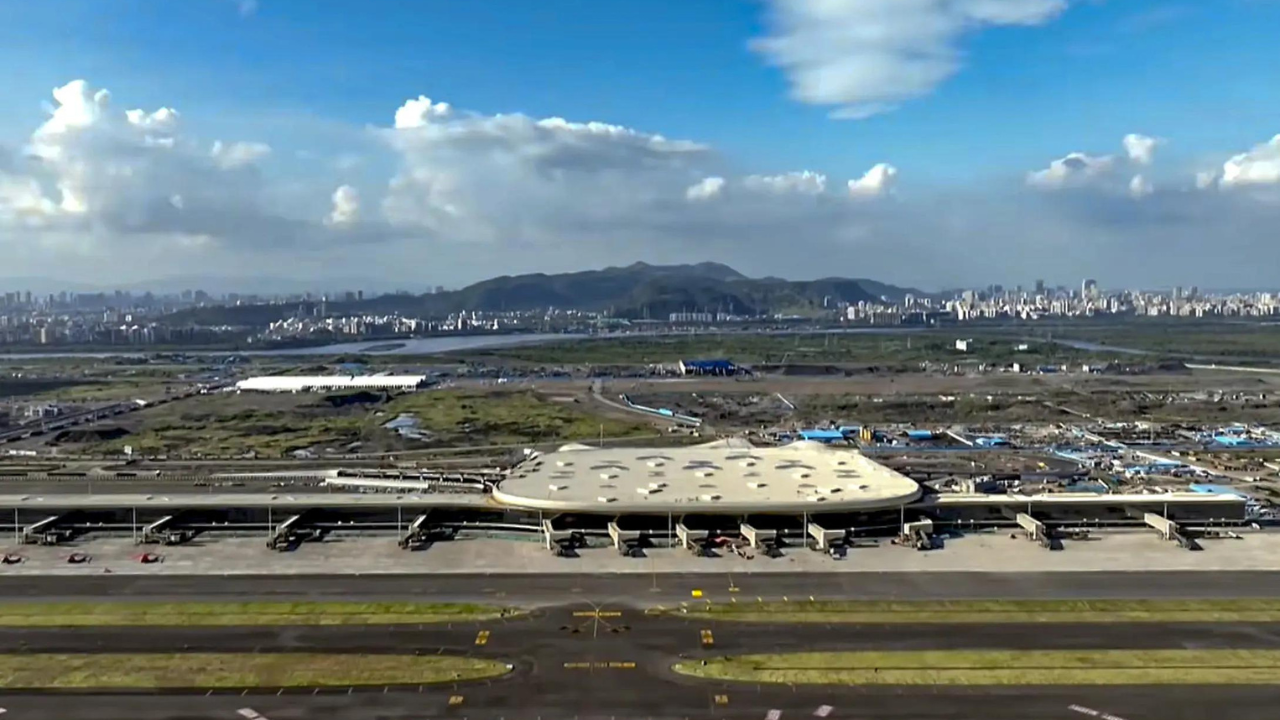
The long-term vision is clear: The Navi Mumbai airport is being designed not only as a relief airport but as a global hub capable of handling tens of millions of passengers annually.The impact will not be limited to airlines. Economists expect the new airport to transform the entire Mumbai Metropolitan Region, especially Navi Mumbai and the surrounding industrial zones. Once fully developed, the region could become one of the largest aviation-driven urban clusters in Asia.
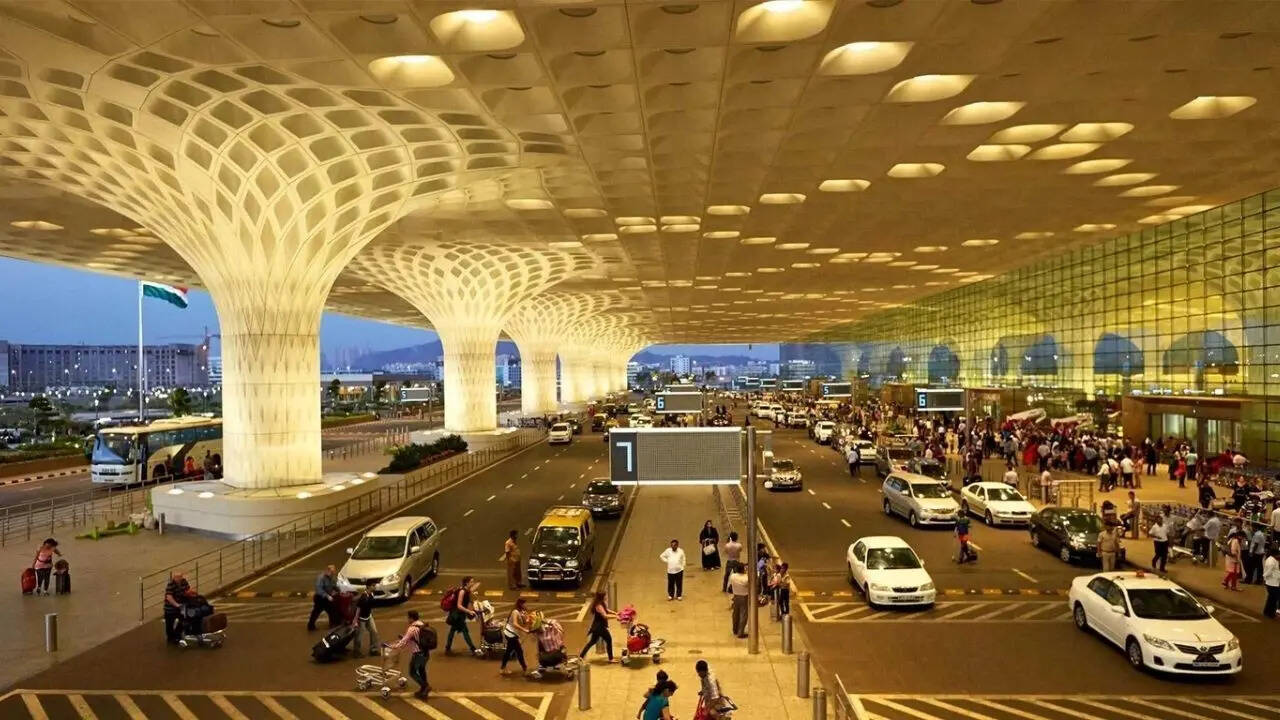
Chhatrapati Shivaji Maharaj International Airport (CSMIA)
By the end of the decade, Delhi and Mumbai will each operate through a twin-airport system — Indira Gandhi International Airport alongside Noida International Airport, and Chhatrapati Shivaji Maharaj International Airport alongside Navi Mumbai International Airport. Together, these four airports could turn both metros into major global aviation hubs.With record aircraft orders by Indian airlines and the possibility of expanded flying rights — especially with countries like the United Arab Emirates — traffic is expected to grow much faster than earlier projections.There will be initial challenges, from connectivity to slot allocation, but the long-term impact is clear: by the 2030s, India’s two biggest metro regions will finally have airport capacity that matches their size, economy and rapidly growing air travel demand.
Goa had already tested the model
While Delhi and Mumbai are still transitioning, Goa has already demonstrated how a dual-airport system can work in India. The Manohar International Airport began operations in 2023 while the older Dabolim Airport continued functioning. Instead of reducing traffic, the presence of two airports actually increased the number of passengers travelling to the state.
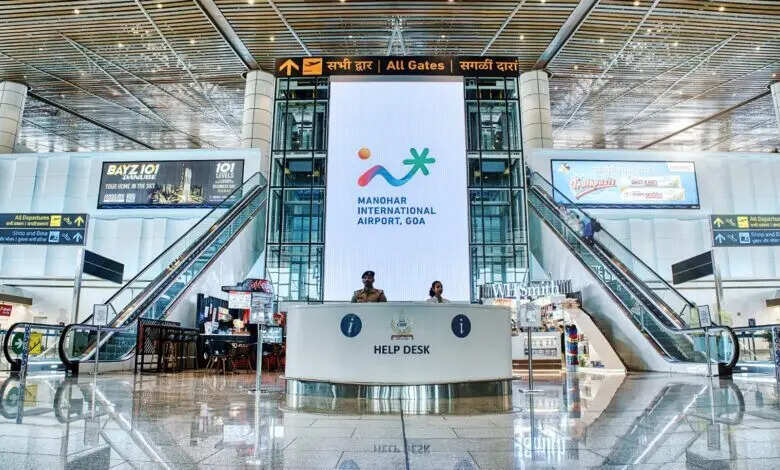
Manohar International Airport
Before the new airport opened, Goa handled around 8.4 million passengers annually. After the second airport became operational, the combined passenger traffic crossed 11 million. The lesson is important: In a fast-growing aviation market, a second airport does not divide demand — it often expands it.
Chennai and Bengaluru: Aspirations are turning into policy
The dual-airport idea is no longer limited to Delhi and Mumbai. Chennai is preparing for a second airport at Parandur, a greenfield project that could transform the city’s long-term aviation capacity. The proposed airport is expected to be spread across nearly 5,000 acres and built in phases, with an initial capacity of around 20 million passengers a year — almost equal to the current capacity of the existing airport.What makes the project significant is not just its size but its design. The plan includes two runways with multiple passenger terminals located between them, allowing aircraft to move faster and improving overall efficiency. The airport is also expected to be connected directly to the Chennai-Bengaluru expressway and metro rail, indicating that planners are already thinking in terms of multi-airport systems rather than standalone projects.Bengaluru is moving in the same direction. The Karnataka government has already identified potential sites for a second airport, with the Airports Authority of India examining multiple locations. Officials have admitted that groundwork must begin now if the city wants the second airport to be ready after 2033, when regulatory restrictions on a second airport within a certain radius are expected to ease. For a city that has become India’s technology capital and one of the fastest-growing aviation markets in the country, the pressure for a second airport is only likely to grow stronger.
The aviation vision behind the shift
These projects are not isolated decisions. They are part of a larger aviation strategy outlined by PM Narendra Modi. Speaking to industry leaders at an event, the Prime Minister said the aviation sector has undergone a historic transformation over the past decade and that India is now the world’s third-largest domestic aviation market.He emphasised that air travel in India is no longer meant only for a small elite group but is being transformed into a mass transportation system. According to him, the country had around 70 airports in 2014, but today that number has crossed 160. By 2047, the government expects the number to exceed 400 airports. The Prime Minister also highlighted massive aircraft orders placed by Indian airlines and said the future of the aviation industry will depend not just on passenger travel but also on cargo, aircraft manufacturing and maintenance.His message is clear: India is not simply expanding its aviation sector. It is trying to become a global aviation hub that connects the Global South with the rest of the world. The development of dual-airport systems in major metropolitan regions fits directly into this strategy.
Why the dual-airport model is becoming necessary
The shift towards twin airports is being driven by a combination of factors. First is sheer demand. India already has one of the fastest-growing aviation markets in the world, and passenger traffic is expected to rise dramatically over the next decade. Airports in major cities are already operating close to their design capacity, leaving very little room for further expansion.Second is the geography of modern cities. Metropolitan regions are no longer compact spaces with a single centre. Delhi-NCR, for example, stretches across multiple cities such as Gurugram, Noida, Ghaziabad and Faridabad.
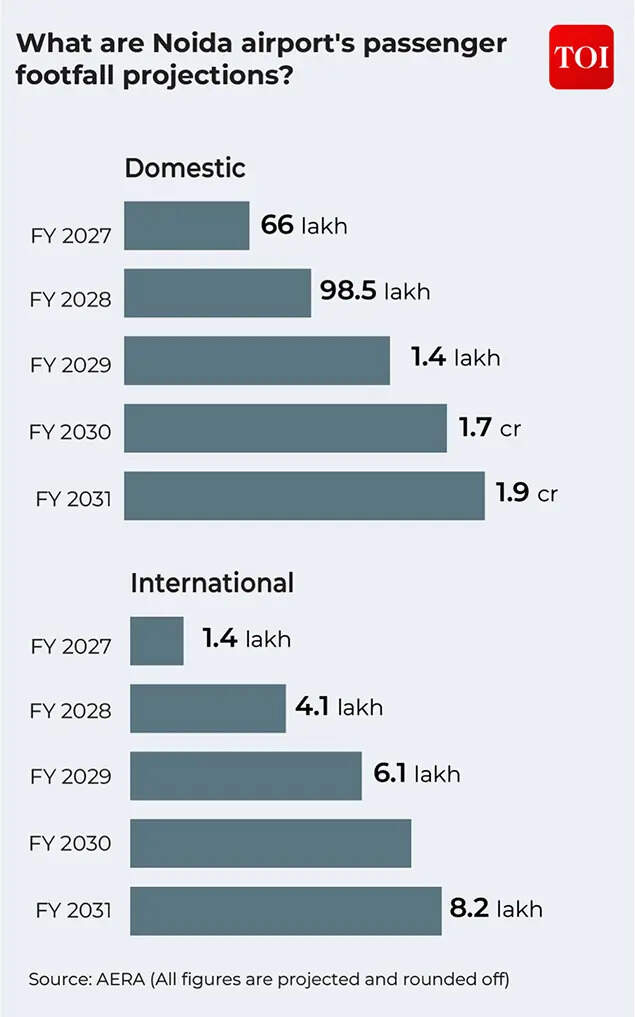
A single airport cannot efficiently serve such a large population. A second airport allows each region to have better connectivity and reduces travel time for millions of passengers.Third is the changing nature of aviation itself. Airlines are ordering hundreds of new aircraft, and many of them want to turn Indian cities into global hubs rather than simply operating domestic routes. This requires massive infrastructure, including cargo terminals, maintenance facilities and logistics hubs. A single airport cannot accommodate all of this.According to Crisil, India’s operational and upcoming alternate airports—Mopa (Goa), NMIA, and NIA—are expected to have an annual capacity of around 40 million passengers by the end of this year, and they are poised to cater to 45-50 million passengers annually by 2030. Overall, airport traffic in India is projected to rise from around 415 million passengers in the current financial year to ab 580 out million by fiscal 2030, at a compound annual growth rate of 8-9%, “driven by strong economic activity, untapped demand and easing of airport capacity constraints at select metros”, the ratings agency said.
A new aviation geography
The long-term impact of these projects will go far beyond aviation. Airports are powerful engines of economic growth, and second airports often create entirely new urban corridors. The development around the Noida airport, for example, is expected to include logistics hubs, manufacturing units, office spaces and residential townships. Similar patterns are expected around Navi Mumbai and the proposed airport near Chennai.Experts believe this could change how Indian cities grow. Instead of expanding in one direction, metropolitan regions may begin developing multiple economic centres connected by highways, metro lines and expressways. In such a scenario, the dual-airport model becomes not just an aviation strategy but an urban development strategy.
The bigger picture: India’s place in global aviation
Cities such as New York, London, Tokyo and Paris have relied on multiple airports for decades. India, despite having one of the world’s largest populations, continued to depend on single-airport systems in its biggest cities for far too long. That is now changing rapidly. With the launch of second airports in Delhi-NCR and Mumbai, and similar plans in cities like Chennai and Bengaluru, the country is finally aligning its aviation infrastructure with its economic ambitions.The transition will not be easy. Connectivity to new airports must improve, airlines must decide how to split operations, and passengers will need time to adjust. But the direction is clear.Passenger traffic data shows how severely India’s two biggest airports have hit a capacity ceiling. At Indira Gandhi International Airport, air traffic in the April–July period declined by about 2.6% compared with 2018, while Chhatrapati Shivaji Maharaj International Airport recorded only a marginal drop of around 0.2%. In practical terms, both airports are operating at almost the same level as they were seven years ago.What makes this trend more striking is that passenger numbers have still risen. Even with fewer airline seats available, traffic between April and July 2025 increased by roughly 8.5% in Mumbai and about 6% in Delhi compared with the same period in 2018. The numbers suggest that demand for flying has continued to grow — and that airlines are simply using larger aircraft or maximising existing capacity instead of adding more flights.This contrast becomes clearer when newer airports are examined. Facilities such as Kempegowda International Airport and Rajiv Gandhi International Airport, which were designed in the last two decades with long-term expansion in mind, have recorded much faster growth. Between 2018 and 2025, Bengaluru’s airport saw traffic rise by more than 21%, while Hyderabad registered growth of nearly 27%.The difference largely reflects how India’s airport network developed. Older hubs such as Mumbai, Kolkata and Chennai were built in the early decades of aviation and are now surrounded by dense urban development. Delhi shifted from Safdarjung to its present location in 1962, but even that airport is now approaching its limits. In contrast, newer airports were built with additional land, future runways and large terminals already planned.This imbalance is also visible in route data. The Delhi–Mumbai sector remains the country’s busiest domestic corridor, accounting for a significant share of total flights, while routes such as Bengaluru–Delhi and Bengaluru–Mumbai are not far behind. Strong demand exists — but the infrastructure at the biggest metro airports has not expanded at the same pace.The Noida International Airport and Navi Mumbai International Airport is expected to change this equation. For the first time, both Delhi and Mumbai will have a second major airport to share the load, which could finally correct the long-standing mismatch between demand and capacity.
Conclusion: One city, two gateways, and a new aviation era
The emergence of dual-airport systems signals something deeper than infrastructure expansion. It reflects a country that is planning for long-term growth rather than reacting to short-term problems. From Delhi-NCR to Mumbai, from Goa to the proposed projects in Chennai and Bengaluru, the message is the same — India is preparing for a future in which air travel will be as common as rail travel once was.If these plans succeed, the country will not just have more airports. It will have a completely new aviation ecosystem — one capable of supporting economic growth, international connectivity and the aspirations of millions of first-time flyers.(With inputs from Saurabh Sinha, Manju V)