




Inspired by the Indian Premier League (IPL), the Indian Super League (ISL) was set up in 2014 by Football Sports Development Limited (FSDL), which had entered into a 15-year contract with the All India Football Federation (AIFF) in 2010. The franchise-based model featured celebrity owners such as Sachin Tendulkar, who exited Kerala Blasters in 2018, Sourav Ganguly, who stepped down due to a conflict of interest, and Abhishek Bachchan and Ranbir Kapoor, both of whom continue to be involved.With each team mandated to have marquee players, franchises onboarded several high-profile international names such as Bruno Cirillo, formerly of Inter Milan, and Mikael Sylvestre, formerly of Manchester United. This resulted in most teams losing over Rs 30 crores by the end of the first season, which lasted a little over two months. While certain corrections were introduced and the player purse for the second season was capped at Rs 21 crores, comprising Rs 15.5 crores for international players and Rs 5.5 crores for domestic players, teams still spent a staggering Rs 12.5 crores on domestic players on the day of the second-season ISL auction. To put this in perspective, this amount was equivalent to, or more than, the cost at the time of running a full I-League season consisting of 11 teams, even as the ISL continued to operate without recognition from the Asian Football Confederation until 2019.
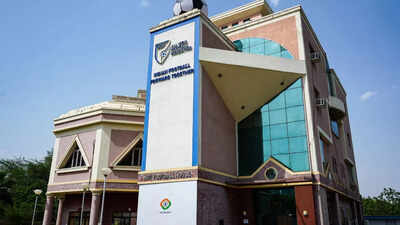
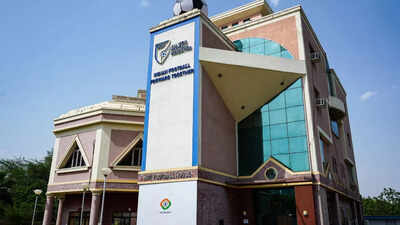
While the IPL, over the last 18 years, has continued to showcase top-quality cricket and further fuel the growth of the sport across India, the ISL has competed with leagues such as the English Premier League, where clubs with over 100 years of history continue to participate, and La Liga, which had a brand value of $1.6 billion and revenues exceeding $2 billion during the 2024–25 season. The ISL has managed to generate interest only in pockets, with Kerala being one such example. Accordingly, unlike the IPL where player salaries have risen season after season, the ISL has consistently introduced corrective measures to control costs. For the 2024–25 season, the official salary cap stood at Rs 18 crores, with the salaries of two foreign players and three developmental players, who have been with a club for more than three years, excluded from this cap.Go Beyond The Boundary with our YouTube channel. SUBSCRIBE NOW!What the ISL continues to have in common with the IPL is that it is the only other league in India to have operated without a break-even even during the pandemic, when a single-city season was held. While there were other setbacks along the way, such as FC Pune City being disbanded in 2019 and a couple of other clubs changing base or ownership, with Delhi Dynamos rebranding to Odisha FC in 2019 and Hyderabad FC failing to pay salaries and eventually being sold in 2024, FSDL, along with the support of the clubs, who are collectively down Rs 5,000 crores, remained committed to the growth of football.This momentum was brought to a standstill in 2025 due to a twofold challenge. First, the Supreme Court placed a hold on all commercial negotiations involving the AIFF until it delivered a final order in the long-pending case of AIFF vs Rahul Mehra and others. Second, the sanction and commercial rights agreement between FSDL and AIFF came to an end. Although concerns regarding the future of players were briefly raised before the Supreme Court just ahead of the closing of the summer transfer window, the final order, which approved the Constitution drafted by Justice L Nageswara Rao, was delivered only on September 19, 2025. In the interim, to keep footballing activity alive, the Super Cup preceded the ISL, even as uncertainty continued to loom.The new AIFF Constitution mandates that the federation own and operate the top-tier league and that such a league must implement promotion and relegation. This places approximately Rs 300 crores invested by some clubs, with zero returns so far, under threat. While a request for proposal for the management of the top-tier league was circulated in October 2025, there were no takers. Several stakeholders requested the Sports Ministry to intervene, and the issue was ultimately resolved when the Hon’ble Sports Minister announced on January 6, 2026, that the 2025–26 ISL season would commence on February 14, 2026, with all existing clubs agreeing to participate in an abridged version of the league.Over the last three weeks, several key developments have taken place:* FSDL appears to have agreed to hand over the ISL trademark to the AIFF. While the Indian leagues ecosystem has previously witnessed similar challenges, with the Indian Badminton League later becoming the Premier Badminton League and the Pro Volleyball League later becoming the Prime Volleyball League due to disputes between rights holders and federations, the transition in this case appears to have been relatively smooth.* A timeline of events has been circulated by the AIFF. While there have already been deviations, such as the request for proposal for media rights being published on January 18, 2026 instead of January 14, and no request for proposal being released for a commercial partner, which may now have been shelved, the most concerning aspect remains that clubs are expected to finalise and execute long-term, 20-year participation agreements by February 15, 2026. This comes despite the request for proposal for a long-term commercial partner being scheduled only for February 20, 2026, effectively asking clubs to commit without clarity on future commercial prospects.* At least four broadcasters attended the media rights pre-bid meeting, which had previously failed to attract interest.* The ISL charter circulated by the AIFF for club feedback incorporated several suggestions made by clubs, granting them a reasonable say in commercial matters and bringing it closer to the revised I-League structure, which was widely viewed as more equitable than the initial ISL version.* There has been no waiver so far on the participation fee, with most clubs seeking a waiver or a reasonable reduction of the Rs 1 crore fee.* There is also no clarity on relegation. Clubs have cited valid reasons such as lack of preparedness due to suspended training and limited time for squad planning, seeking an exemption from relegation, though this is a matter only the Supreme Court may decide.* With less than three weeks to go, certain clubs continue to face stadium-related challenges, with venues deemed unfit for play.* Several clubs have approached players for salary cuts, many of whom have agreed as a show of solidarity.While some positive steps have been taken, preparing and organising a season in just 39 days from announcement to commencement remains a significant challenge. This makes the 2025–26 season a make-or-break period for the AIFF, particularly as clubs are entering into only a single-season participation agreement as a provisional solution.
Poll
Do you believe the ISL can compete with established leagues like the EPL and La Liga?
Should the AIFF fail to conduct the season successfully or fail to demonstrate future potential, or if there are again no takers for a commercial partner expected to fund operational costs of around Rs 30 crores annually before the season concludes, several clubs may choose to sell at depreciated valuations or shut down entirely. Clubs may also explore forming a breakaway league, drawing parallels with the proposed European Super League, which has since been cleared from an antitrust law perspective, and the Competition Commission of India’s earlier ruling in favour of the Indian Cricket League.Another option could involve state federations sanctioning leagues, such as the Kerala Football Association sanctioning the Super League Kerala, an initiative not covered by the AIFF Constitution, where ownership rests entirely with a private entity. Clubs rooted in strong regional fan bases may consider working directly with state associations and becoming league operators themselves, especially given their long-term investments in grassroots development.In a World Cup year, with FIFA having conducted a trophy tour in India earlier this month, the English Premier League boasting an estimated following of over 150 million fans in India, and the fanfare surrounding Lionel Messi’s recent visit, the future of Indian football remains uncertain. The coming months could either rewrite the blueprint for sustainability or mark the end of another professional sports league in India.Aahna Mehrotra is the Founder & Principal Lawyer of AM Sports Law & Management Co.