




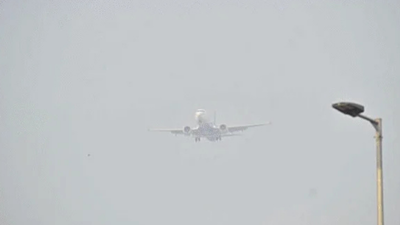
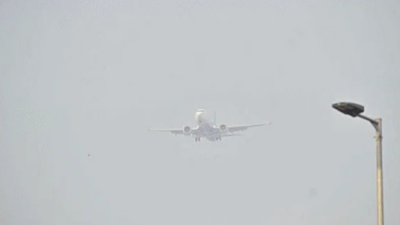
NEW DELHI: Delhi Airport has integrated AI systems, advanced predictive analytics and enhanced runway capabilities this winter to reduce the impact of fog on flight operations.A combination of these upgrades and technology should help ensure safer, more efficient flight operations and minimal disruption during low-visibility conditions (LVPs), Delhi International Airport Limited (DIAL), the airport operator, said on Wednesday.The Airport Predictive Operations Centre (APOC), which plays a central role, has integrated real-time data, predictive weather models and airside operational inputs into a single command environment. “It will enable faster decision-making and more accurate resource deployment during fog. It helps optimise runway utilisation, improves gate and stand allocation, prioritises aircraft sequencing, and ensures timely communication with all partners. This coordinated, data-driven approach significantly enhances the airport’s ability to maintain operational continuity even during rapid visibility fluctuations,” DIAL said.The airport has also completed an airside upgrade in association with the Airports Authority of India (AAI). The Dwarka end of runway 10/28 (the second runway) has now been equipped with a CAT III Instrument Landing System. “With this enhancement, three runways (10/28, 11L/29R, and 11R/29L) at Delhi Airport are now CAT-III compliant at both ends, enabling safe landings even in dense fog. The newly upgraded runway, along with the existing runway, enables around 30 landings per hour during low-visibility conditions,” DIAL said.The airside upgrade is expected to cut fog-related recovery time by nearly four hours. Delhi Airport will also use the Winter Fog Experiment (WiFEX) data on fog, which claims to provide 85% prediction accuracy. The Pune-based Indian Institute of Tropical Meteorology (IITM), in collaboration with the India Meteorological Department (IMD) and DIAL, has launched a decade-long collaborative research programme on fog — WiFEX.“Data related to temperature, humidity, wind profiles, aerosols, pollution particles, radiation, microphysics of fog droplets, and visibility changes are collected through instruments…. This will help in building advanced fog prediction models (1 to 36 hours in advance), understand local meteorology behind dense fog, improve airport operations and safety through accurate visibility forecasts, and create long-term datasets for fog research,” DIAL added.Videh Kumar Jaipuriar, CEO-DIAL, said: “While weather-related disruptions cannot be eliminated, these upgrades will greatly improve our ability to plan, respond and recover quickly.”