




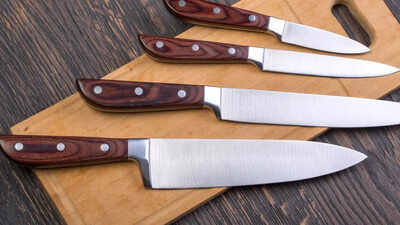
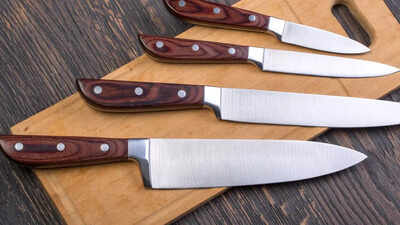
A dull kitchen knife, in addition to being very inconvenient, can, in fact, be very unsafe to use. When knives get dull, you have to apply much pressure in order to slice through the vegetable you are chopping, and this, in turn, can make the knife slip, leading to injuries. It is thought that a dull knife has to be professionally sharpened or even replaced if it has gotten too dull. The good news, in this case, is that the majority of dull knives can be sharpened or fixed in the comfort of your own home without having to spend a lot of money or even go out to purchase expensive equipment. Knowing how to sharpen dull knives in the comfort of your home can, in fact, help you take better care of your kitchen knives. Sharpening dull knives at home is an easy, inexpensive, and worthwhile endeavour. With routine maintenance and appropriate technique, your household knives are sure to become sharp, safe, and efficient at all times, thus making your culinary experiences delightful.
Why do kitchen knives become dull, and how to fix them
Knives lose their sharpness gradually, a process which may occur without you noticing. Using knives on hard surfaces, improper knife storage, and washing knives can also reduce their sharpness. Cutting knives on marble, glass, or a granite board, and storing knives in an untidy manner in drawers, among others, may result in knives losing their sharpness.The best way to sharpen dull knives is by using a whetstone. The stone should be soaked in water for about 10-15 minutes. The dull knife should be placed at an angle of about 15-20 degrees and drawn slowly along the surface of the stone from the bottom to the top. The process should be repeated on both sides. This technique, although it takes a long time, is effective in sharpening very dull knives.
- Sharpen with the bottom of a ceramic mug
Your tea mug can act like a knife sharpener. Simply invert your tea mug, and with the unglazed ring on the base, sharpen your knife as you would on a stone. The unglazed ring is rough enough to act as a makeshift sharpening stone.Honing does not sharpen a knife; it only aligns the knife’s edge. Honing a knife using the honing rod straightens the knife’s edge. Hold the honing rod upright and draw the knife down the length while at an angle, switching sides as you draw the knife down the honing rod. This is the best approach if the knife is not too dull and just requires honing.Sandpaper is also an option, though only when nothing else is available. Place fine-grit sandpaper (around 1000–2000 grit) on a flat surface. You then run the blade over the sandpaper gently, moving it with a constant angle. While not ideal for frequent use, it can help restore some sharpness temporarily.
- Avoid these common mistakes
Bad habits can undo all your sharpening efforts very quickly. Small changes in how you use knives can keep them sharp longer.
- Don’t cut on hard surfaces like stone or glass
- Avoid dishwashers, as heat and movement dull blades
- Don’t scrape food off boards using the blade’s edge
Why a dull knife can be a safety hazard in the kitchen
Though the dull knife in itself might appear to pose no serious threat, it does contribute to the risk of accidents in the kitchen.If the knife is dull, this will require more pressure to cut the food. Applying pressure to the knife increases the chances of the knife slipping off the place it is cutting, leading to injuries on your fingers and hand. Another implication of using dull knives is the discomfort they may lead to, especially when handling them over a long period of time. This will, therefore, make cooking more complicated, leading to safety hazards, and this is where the importance of sharp knives is seen.
How to keep knives sharp for longer
Preventing this problem is far simpler than continually trying to resharpen dull knives. This involves the use of wooden or plastic chopping boards, a knife block or magnetic knife strip for storage, as well as regular honing. Hand washing and drying also help in maintaining the knives.