



On March 1, a day after news broke about Iran’s Supreme Leader Ayatollah Ali Khamenei’s assassination, New York-based exiled Iranian-American journalist, activist and author Masih Alinejad, 49, was one of the loudest jubilant voices. She posted an emotional video on X: “Every morning, I wake up reading that my people are being killed by Ali Khamenei. But this is the first morning in my life that I get the good news. I wanna run and shout out of joy Ali Khamenei is dead! Free Iran!”
The war escalated on February 28 with U.S.-Israel airstrikes on Iran to counter Tehran’s “alleged” nuclear influence. The conflict follows years of tension.
Alinejad left Iran in 2009 to escape imprisonment. Years later, the image of her with loose black hair became the face of her 2014 online campaign, ‘My Stealthy Freedom’, inspiring Iranian women to rail against compulsory hijab. That led to the campaign ‘White Wednesdays’, where women dressed in white, took to the streets, taking off their headscarves, in the face of abuse or arrest. “My principle is simple, I am for women’s right to choose,” she told me in 2018, around the release of her memoir, The Wind in My Hair: My Fight for Freedom in Modern Iran (Hachette), her first book in English, after four books in Persian.

Art, no matter the medium (books, music, cinema), often is political. Alinejad’s words, hair, and initiatives, for instance, also spawned #GirlsofRevolutionStreet protest and #MyCameraIsMyWeapon campaign, where women filmed and posted online their altercations with the morality police. So, this year, at the 76th Berlinale, when international jury president Wim Wenders said cinema “is the counterweight of politics… we have to do the work of people, not the work of politicians” in response to Gaza, it made headlines.
Political frame
For Iranian cinema, politics has always been its subtext. We speak to two filmmakers who reflect on jin, jiyan, azadi (woman, life, freedom) in Iran through their cinema. Iranian filmmaker Mahnaz Mohammadi, 51, lives and films there, while Indian documentary filmmaker Sreemoyee Singh, 36, went to Iran to study Persian and make a film. Both their films premiered at the Berlinale — Mohammadi’s Roya in 2026, and Singh’s Be Kucheye Khoshbakht (And, Towards Happy Alleys) in 2023, in the Panorama segment. “Everything is political; the fact that we are breathing and living in our relationship to society, that itself is political,” says Singh. Mohammadi, on the other hand, is clear she is not making political films. “Sometimes misunderstanding or misconception will happen. I can tell you, I’m not making political films. But the situation that the people are living in, I can’t ignore it. In Iran, the act of going out on the street after 6 p.m. six o’clock has become part of activism, because everywhere so many people are being arrested, killed. How can I divide it between this and that? I don’t want to make a film about that, but I want to make a film about what happens after those politics suppress the people.”
In Conversation with Mahnaz Mohammadi
Mahnaz Mohammadi: ‘Resistance is not opposing a force, but refusing to disappear’
Mohammadi made news in India in 2022 during the International Film Festival of Kerala. She was to receive the Spirit of Cinema Award the same year Hungarian director Béla Tarr was given the Lifetime Achievement Award. She was looking forward to meeting Tarr, but her visa was denied. Mohammadi sent a lock of her hair in her stead. “Cut hair is the symbol of the tragedy that we face every day and every moment,” she had said in interviews then.
Weeks before the U.S.-Israeli assassination of Khamenei, when I meet her at the 76th Berlinale, at the world premiere of her sophomore feature Roya, she allows me to record her on camera — because she loves Indians. An Indian friend had once gifted her a clock, the time on which she didn’t change. Now, that frozen time acts like a good memory. For Mohammadi, life has been a series of fragments that flits between memory and forgetting, the conscious and unconscious, dream and reality, past and present. That is also how the non-linear Roya is structured. Shot clandestinely, and featuring Turkish actress Melisa Sözen (known for Nuri Bilge Ceylan’s Winter Sleep, 2014), it reveals how isolation can reshape perception, identity, and the fragile possibility of resistance.
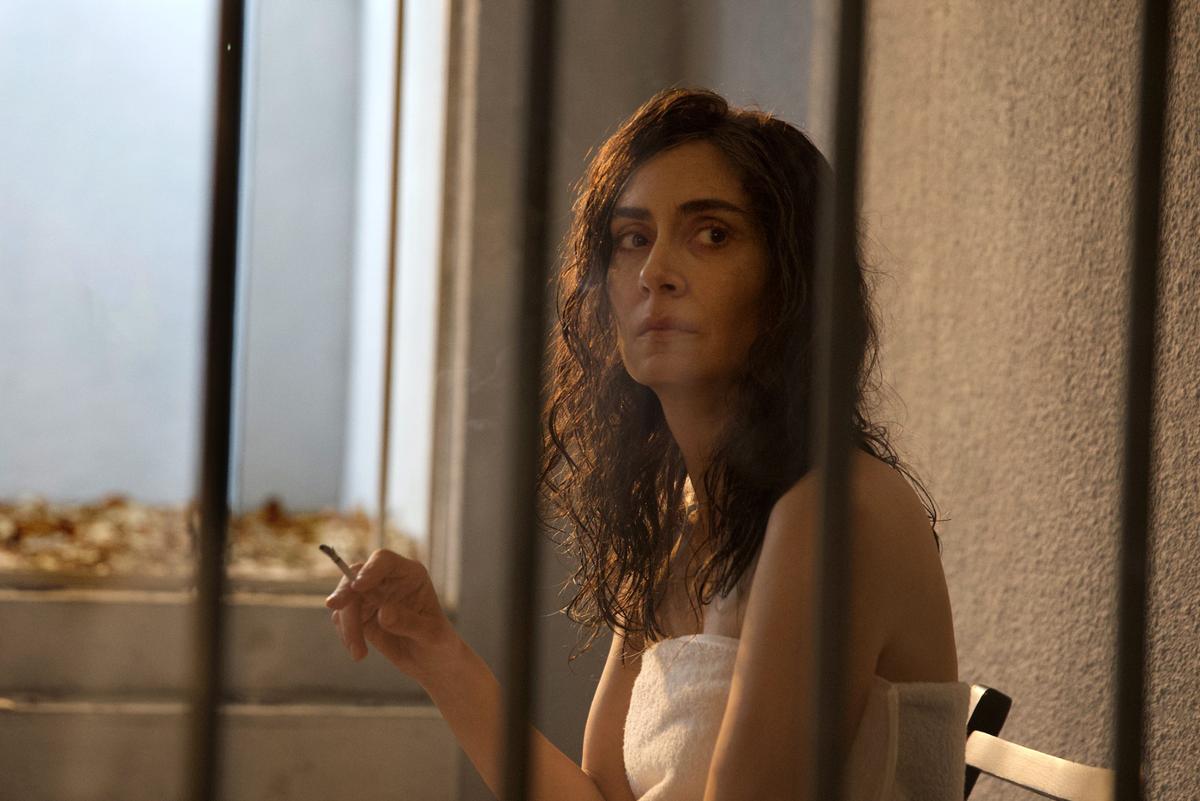
Melisa Sözen in a still from Roya, a film by Mahnaz Mohammadi.
| Photo Credit:
Courtesy Pak Film/Berlinale
Roya, which in Persian means dream, is the story of an Iranian teacher who is imprisoned in Tehran’s Evin Prison for her political beliefs and is faced with a choice: to either make a forced televised confession or remain confined to her 3 sq.m. cell. The film channels Mohammadi’s own time in prison.
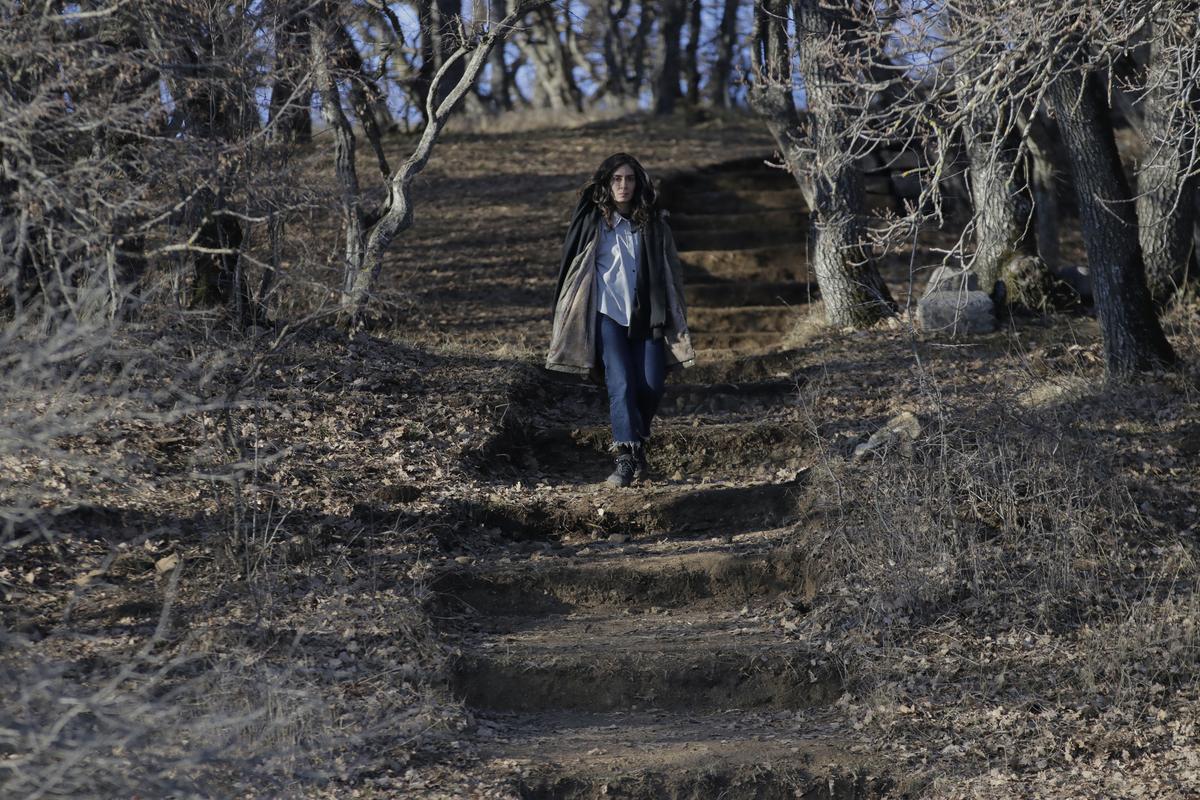
A still from Roya.
| Photo Credit:
Courtesy Pak Film/Berlinale
‘When I becomes we’
Her active involvement in ‘Campaign for Equality’ in 2006, to demand changes to discriminatory laws against Iranian women, put her in the line of fire. The Islamic Regime arrested her multiple times: in 2007, 2009 (when she wrote an open letter during post-election unrest), 2011, and in 2014 (when she spent five years in Evin Prison). She has also been banned by Iran from making films — after her debut feature Son-Mother (2019) — because of her long history of activism and socially critical filmmaking. “I’m a woman, I’m a filmmaker, I’m guilty. But now it’s not ‘I’, it’s ‘we’,” says Mohammadi. Her deeply humanistic films focus on lived experiences under repression, giving voice to those silenced by the system. “Resistance is not opposing a force, but refusing to disappear,” she says, “In childhood, I used to think, ‘Where is hope? Maybe when I’m grown-up, I will go and get that hope’. But through life I’ve learnt it is not like that; it is the way of your living and practising. With cinema, you’re making hope.” Days before the bombings, Mohammadi spoke of the western world’s hypocrisy and silence of the Leftists on Iran. “So many countries didn’t see our pain. We just became part of the Islamic Republic’s property. In 2009, I wrote [about] this, but who listened? Nobody. People inside Iran are fighting for survival. And, still I have hope,” she says. “After the [January] massacre [that killed around 30,000 Iranians], I think the people got more motivation for change. What I heard is that they didn’t believe the Islamic Republic could see the Persian New Year. Just imagine how hopeful they were — because for them, the regime’s killing of their children would end. It will be over.” In retrospect, her words sound prophetic.

Sreemoyee Singh: ‘Resisting every day and pushing the boundaries, every Iranian has done that’
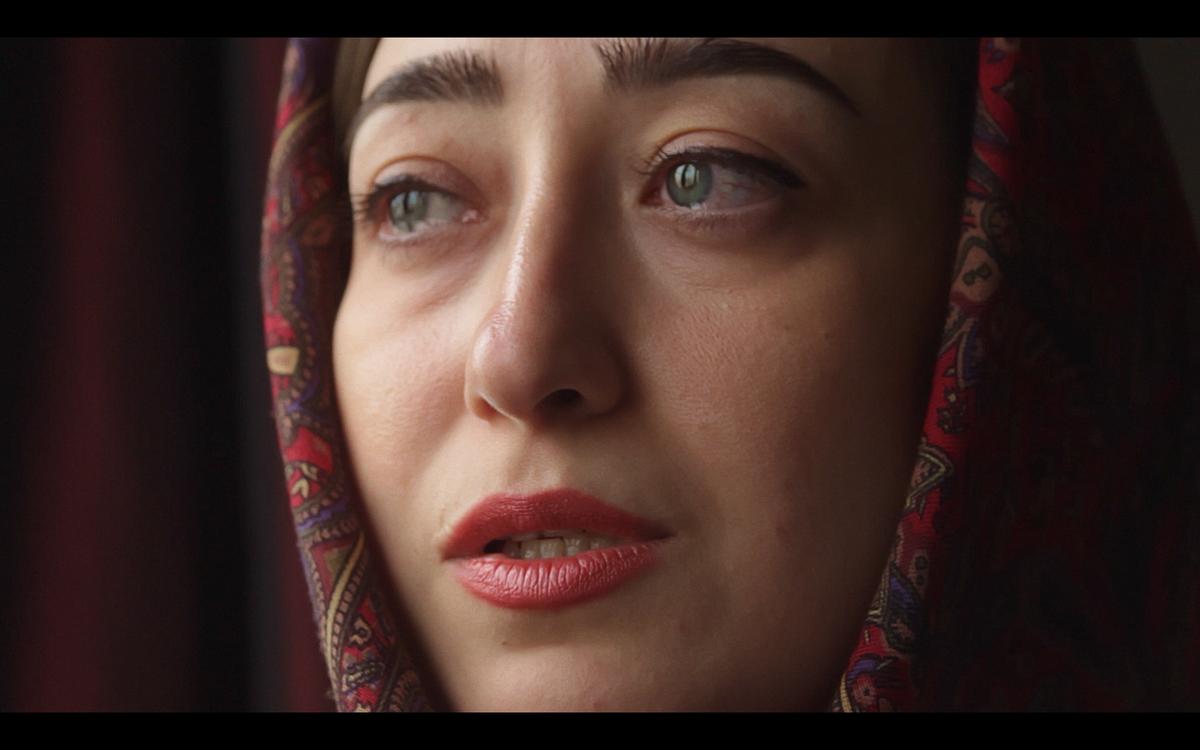
A still from Be Kucheye Khoshbakht (And, Towards Happy Alleys).
| Photo Credit:
Courtesy Happy Alley Films
The Kolkata filmmaker’s insightful documentary Be Kucheye Khoshbakht is a love letter to Iranian cinema, poetry and culture. Shot entirely in Iran over six years (till 2019), in Farsi, this travel diary is replete with intimate conversations with local filmmakers such as Jafar Panahi, actors, scholars, activists and everyday women — to reveal how creativity and resistance flourish under censorship and social repression.
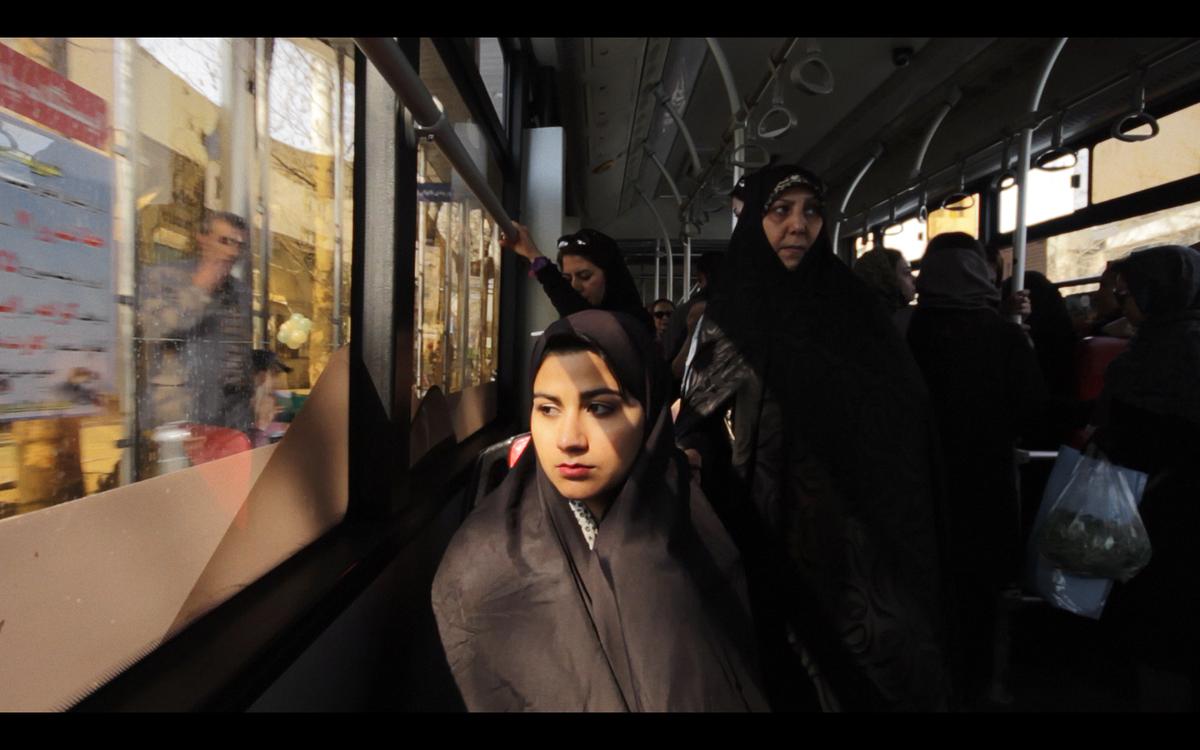
A still from Be Kucheye Khoshbakht (And, Towards Happy Alleys, 2023).
| Photo Credit:
Courtesy Happy Alley Films
A tragicomic scene spells out the irony. Every time a filmmaker tries to talk about censorship, well-timed construction noise drowns it out. In another scene, Singh sings in Farsi along with a shopkeeper, Panahi by her side. (Singing in public will land you in jail in Iran.) Singh’s film also captures women watching and cheering on a football match. In 2018, women were allowed to watch the Fifa World Cup in Tehran. They could sing and rejoice with men at the stadium — an exception to the norm.
The documentary has travelled around the world to more than 50 festivals, and found an address on Mubi in India and Criterion in the U.S. Singh is just back from the film’s screening at Bengaluru’s Christ University, among others.
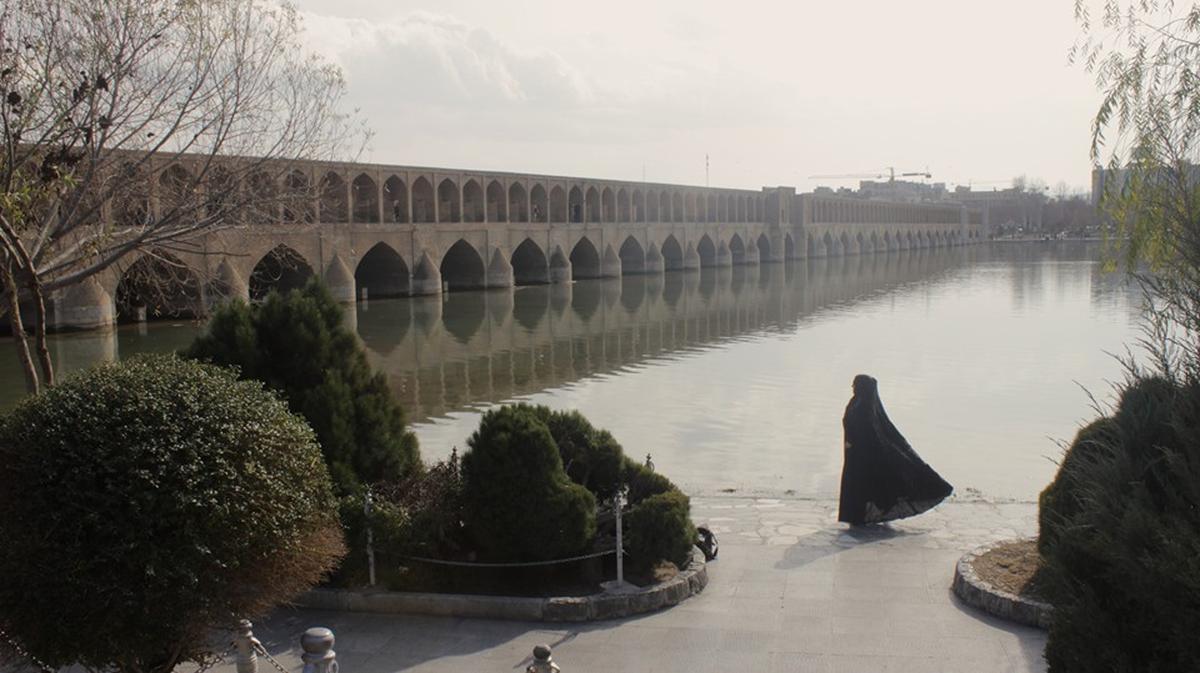
A still from Be Kucheye Khoshbakht (And, Towards Happy Alleys).
| Photo Credit:
Courtesy Happy Alley Films
A geopolitical mess
“A lot of Iranians are celebrating on the streets, happy and relieved about Khamenei’s death because, since 1979, this regime has been the reason for thousands of Iranians being executed, spending their lives in prison, and more,” says Singh. But, at the same time, she shares that her friends in Iran feel stuck in this geopolitical mess. “They’ve told me that ‘we are stuck between three evil forces: the IRGC [Islamic Revolutionary Guard Corps], which has ruined our lives; Israel, which is on a genocidal spree; and the U.S., which is complicit in all these war crimes. Between them, one has died now. But the fact is that Tehran is still being bombed and destroyed. Israel cannot bring liberation to Iran because it doesn’t care about human life or dignity.”
The filmmaker, who prefers to use the word “resistance” instead of “activism”, says, “Resisting every day and pushing the boundaries of what is not allowed, every Iranian has done that.” She shares an incident from her time in Iran, when she was travelling in a bus with her friend, a vocal rebel against the government. “I was very careful about my scarf, but hers would fall off all the time. I’d tell her, ‘Do you not want to be careful? What if you’re picked up by the cops?’ And she said, ‘All Iranian women have been picked up by the cops for not wearing the hijab properly. They’ll grind you for five-six hours, sometimes for 24 hours, but then you’ll be let go of. It’s a part of living.’ I found that painful to hear.”
Singh adds, “After the Mahsa Amini case [the 22-year-old Kurdish Iranian was killed in police custody in 2022], you will see that nobody really wears the veil on the street. Over the years, women have pushed the boundaries of the law on compulsory hijab and the state’s idea of modesty.”
Defiance enriches art
In the last decade, not many have been making films in Iran because it’s mostly state-backed propaganda films that are green-lit, states Singh. “The crackdown on artists has been increasing. Filmmakers like Manijeh Hekmat, who used to release their films, have stopped making them in Iran. They are looking outward now, for co-productions, and filming outside. I interviewed Jafar Panahi and Mohammad Rasoulof for my Ph.D [on ‘The Exiled Filmmaker in Post Revolution Iranian Cinema’]. Rasoulof said that every time they took him to prison, he would write his scripts there.” Both Rasoulof and Panahi have been calling out for the world to take note of what is happening in Iran, “calling for help so that people can amplify the cause of Iran,” she says. Panahi has been sentenced in absentia to one year in prison and has a travel ban. Iranian films have earned three Oscar nominations this year — Panahi picking up two for It Was Just An Accident (Best International Feature and Best Original Screenplay), and debutants Mohammadreza Eyni and Sara Khaki for Cutting Through Rocks (Best Documentary Feature). “It’s not easy to throttle artists because they’ll always find a way to a language to express themselves,” adds Singh.
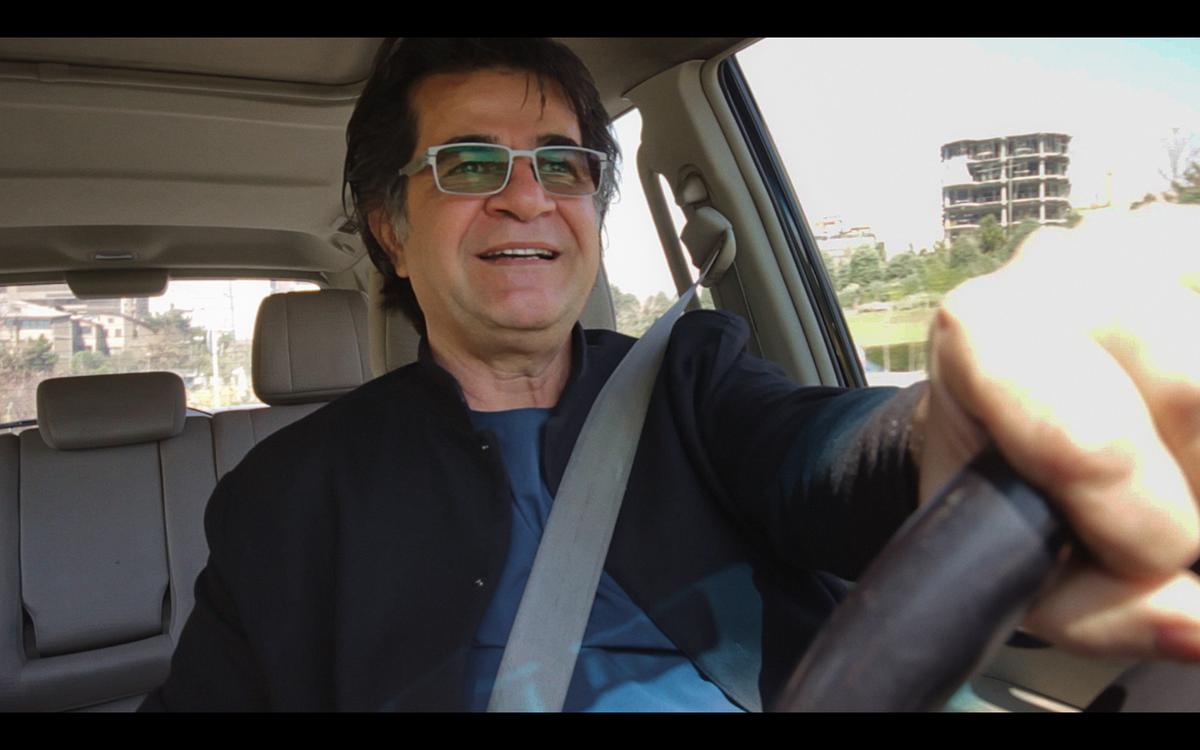
Iranian filmmaker Jafar Panahi in a still from Sreemoyee Singh’s documentary Be Kucheye Khoshbakht (And, Towards Happy Alleys,2023).
| Photo Credit:
Courtesy Happy Alley Films
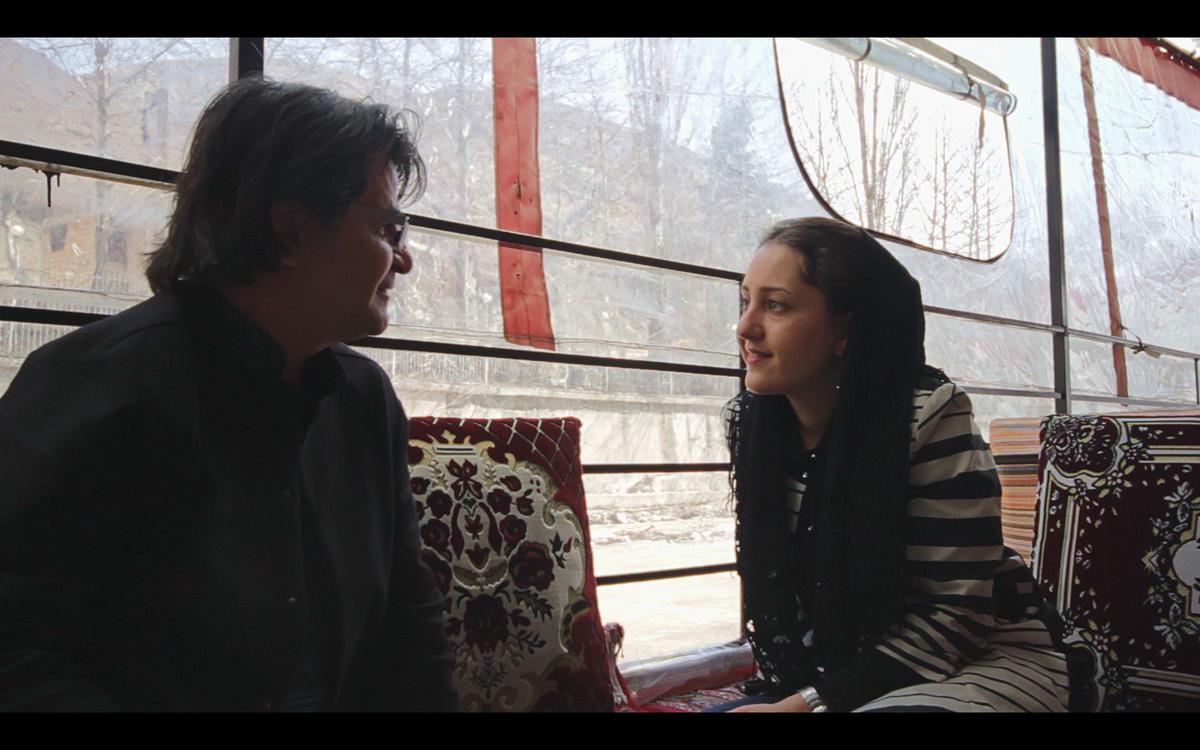
A still from Be Kucheye Khoshbakht (And, Towards Happy Alleys).
| Photo Credit:
Courtesy Happy Alley Films
Understanding Iran through pop culture
Singh’s documentary Be Kucheye Khoshbakht/And, Towards Happy Alleys (2023) is more relevant than ever at the moment. The filmmaker urges that people “follow Iranians [on social media]” and listen to them talking about what’s happening. “What comes out might be conflicted, but now is the time for us to listen to the stories coming out of Iran, without any judgement. We should educate ourselves about the history of Iran, and watch its cinema.” Singh, who studied Persian in Tehran, encourages to start by reading books and watching films by Iranians. “Marjane Satrapi’s Persepolis 1 and 2 are nice,” she says. “Modern poetry by Sohrab Sepehri, Forugh Farrokhzad and Ahmad Shamlou; cinema that has been critical of the regime, like Offside (2006), Crimson Gold (2003), and Taxi (2015) by Panahi; Where Is The Friend’s House? (1987), Taste of Cherry (1997), and Ten (2002) by Abbas Kiarostami; A Moment of Innocence (1996) and The Silence (1998) by Mohsen Makhmalbaf,” she says.
‘People are hurt, angry, shocked’
After the recent bombings, Singh has heard back from only one friend in Iran. “This is the longest I haven’t been in touch with them,” she tells me over the phone. “Nothing is going through. VPNs are not working; messages have single ticks.” She mentions meeting a young Iranian filmmaker in Kolkata. Mohammadreza Azadi, 36, came to India just before the bombings to attend DocedgeKolkata, an international incubation and pitching event for documentary projects. The last conversation he had with his family was that they were evacuating Tehran because of the continued bombings. “The situation is similar to last year, when Israel first bombed Iran,” Singh translates Azadi’s words for me. “Everything is closed. A lot of people have evacuated and moved to smaller cities. Many important buildings have been damaged by the bombs; they are destroying Tehran.”
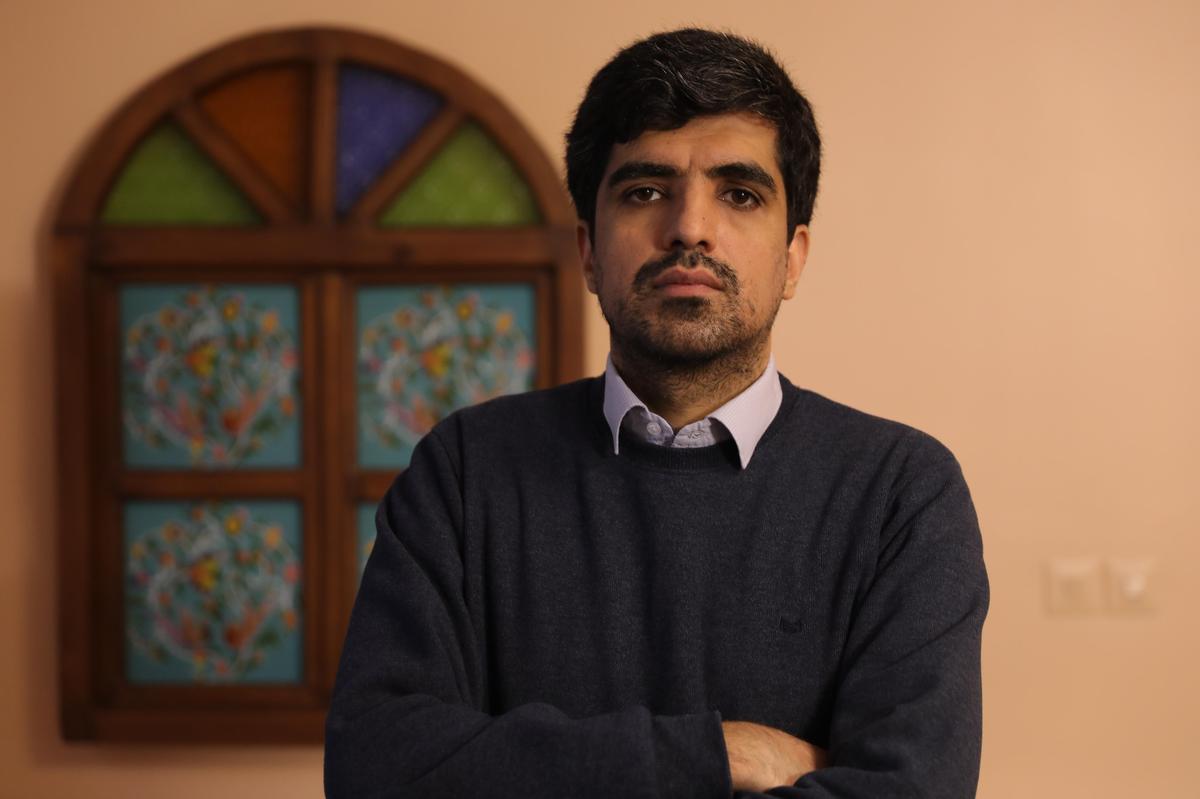
Iranian filmmaker Mohammadreza Azadi.
Singh adds, “The non-stop bombings are not targeted. We know about the school [the girls’ school that was bombed on February 28, killing over 160 people], but there is also the Gandhi Hospital, where there were patients, children, and babies in incubators. And the Golestan Palace, it’s destroyed.”
A homesick Azadi yearns to return, but the airspace is closed. “People are hurt, angry, shocked and restless. A lot of them are against this attack. We have seen what America’s attack on Iraq and Afghanistan did. The people of Iran know that these attacks will not bring happier days,” he concludes.
tanushree.ghosh@thehindu.co.in