





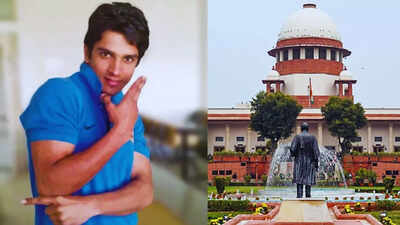
NEW DELHI: Harish Rana, the first patient in India to be permitted passive euthanasia under a Supreme Court order, passed away Tuesday after spending 13 years in a vegetative state. The end came at 4.10pm at AIIMS, with family by his side, marking the culmination of a legal battle over the right to die with dignity. Rana, 31, had been under the care of a specialised palliative team at the institution since March 14. Doctors said his condition began deteriorating Tuesday morning and the end was medically expected. His death followed withdrawal of life-sustaining support – primarily artificial hydration and feeding – in line with the SC directive.The family has donated his corneas and heart valves. “His passing followed a natural course. We provided only comfort care, without any active medical intervention. There was no artificial hydration or feeding, and no attempt was made to revive him through medication or CPR,” an AIIMS doctor said, adding he remained comfortable over the last 10 days with no visible distress.He passed away peacefully.” His family members drew comfort from seeing him at ease, the medical team said. Media cell in-charge Prof Rima Dada said Rana was admitted to the palliative oncology unit, led by Dr (Prof) Seema Mishra, HoD, onco-anaesthesia. On March 11, the Supreme Court allowed Rana to exercise his “right to die with dignity”, noting there had been no improvement in his condition for 13 years and that the obligation to continue treatment does not hold when there is no hope of recovery. He was shifted from his Ghaziabad home to AIIMS for palliative care three days later. Harish’s life took a tragic turn in 2013 when he fell from the fourth floor of his paying guest accommodation in Kharar and suffered severe brain injury. He was in the final semester of his BTech degree at Punjab University. Despite treatment at multiple hospitals, he developed diffuse axonal injury and remained in a permanent vegetative state with quadriplegia and 100% disability. Since then, he had been bedridden, dependent on a feeding tube and constant care. His parents, Ashok Rana and Nirmala Devi, cared for him at home for over a decade, under severe emotional and financial strain. His father had told the apex court that passive euthanasia would restore Harish’s dignity after years of irreversible suffering. Hospital officials said the care followed was in line with standard palliative protocol, focused on dignity and relief from distress rather than prolonging life through invasive measures. Doctors said the body would be kept in the hospital mortuary overnight, and the cremation will take place Wednesday.