





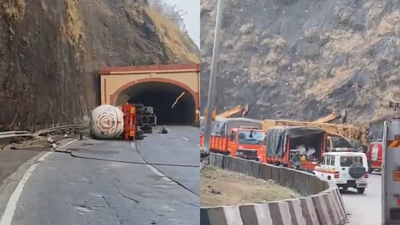
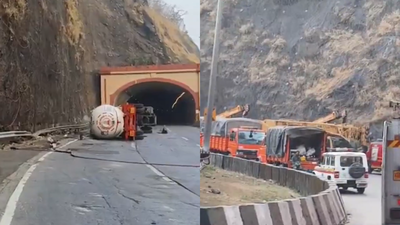
Pune: The toppled propylene tanker on the Pune-Mumbai Expressway late Tuesday night, which disrupted traffic for several hours stretching till early Thruday, exposed serious gaps in Maharashtra’s preparedness to handle hazardous material emergencies, disaster management experts warned.Propylene, a highly flammable hydrocarbon gas widely used in petrochemical and plastic manufacturing, presents unique and severe operational challenges when a tanker carrying it turns on its side. Unlike conventional fuel spills that can often be contained using standard firefighting protocols, a propylene leak can escalate rapidly into a catastrophic explosion, making rescue, containment and recovery operations extremely complex.According to experts, the most critical challenge during such incidents is the absence of specialised hazardous materials (HazMat) response teams trained and equipped to deal with pressurised gas tankers. Propylene is transported in a liquefied form under high pressure, and when a tanker topples, even a minor crack in the valve or shell can trigger a rapid release of gas.Major General P K Shrivastava (retired), a chemical, biological, radiological and nuclear (CBRN) expert, said the incident should serve as a wake-up call for the state govt. “Maharashtra urgently needs dedicated HazMat units along major highways such as the Pune-Mumbai Expressway to ensure a quick and professional response to chemical transport accidents,” he told TOI.Bhalchandra Chavan, director of the state disaster management department, admitted that they currently lack the technical expertise required to handle such hazardous material emergencies.“We acknowledge that we do not have the specialised capability to operate and manage such incidents. We will look into this seriously and take necessary corrective measures in the coming days. Our personnel will also be trained in coordination with other specialised agencies,” Chavan told TOI.Shrivastava stressed the need for regular drills involving chemical tankers, improved coordination between transport companies and emergency services, and specialised training for local fire brigade personnel. “Local fire teams are often the first responders, but without proper training and equipment, their task becomes extremely risky,” he said.