





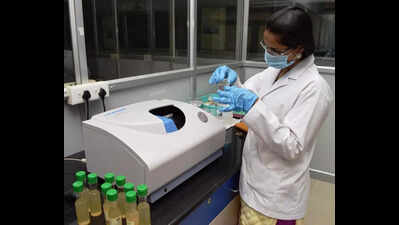

Mumbai: A 78-year-old fisherman from Worli lost a portion of his left foot due to an infection caused by a rare “flesh-eating” bacteria, according to doctors who treated him for a 20-day period before discharging him last week.The bacteria was identified as Vibrio vulnificus, belonging to the same family that causes cholera, an acute diarrhoeal infection. Vibrio vulnificus is found along the coasts, and infections could be caused either by eating contaminated raw shellfish or oysters or exposure due to broken skin while wading through contaminated salt or brackish water.“Vibrio vulnificus infections have been reported in India, but are extremely rare,” said Dr Gunjan Chanchalani, who heads the critical care department in Wockhardt Hospital, near Mumbai Central railway station, and was part of the team that treated the fisherman. On June 26, the fisherman was brought to the hospital in a near-death situation. “He was in septic shock, with a bad left leg wound. We realised the infection was spreading through his body and his blood pressure was low,” said the doctor.Through scans, tests, and history-taking from family members, the doctors realised he had necrotising fasciitis (flesh-eating disease) after a minor foot injury during a routine fishing trip off the Worli coast. He recalled a sharp prick while wading through brackish water a few days earlier. Necrotising fasciitis, which can be fatal, is caused by a combination of different bacteria, with the most common being Group A Streptococcus and Staphylococcus aureus. It is known to spread throughout the body within 48 hours, and the key is to identify the organism causing it and administer the right antibiotic. The Wockhardt microbiologists found Vibrio vulnificus in the culture they grew in the lab within 48 hours, and he was started on doxycycline, the antibiotic that works on cholera as well.However, as the infection spread through his bloodstream (sepsis) and lungs, he was on a ventilator for seven days. Also, surgeons had to carry out three debridements—removal of dead (necrotic) skin tissue to help the wounded leg heal — but they had to finally amputate the front portion of his left foot. “His son told us fishermen in their colony have had similar infections,” said Dr Chanchalani. “This could be due to salinity of the sea water getting reduced or pollution due to climate change,” she added.Dr Rahul Pandit, who heads the ICU at H N Reliance Hospital in Girgaum, said, “Flesh-eating is a loosely used terminology; the bacteria destroy the skin, soft tissue, and fascia (muscles).” Necrotising fasciitis is not commonly seen in Mumbai, he said, with a few ICUs getting one or two cases a year.