





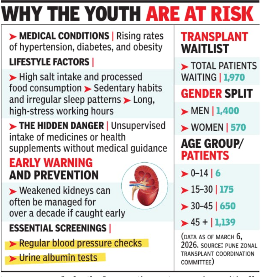
PUNE: A decade ago, nephrologists primarily treated patients over the age of 60 for chronic kidney ailments. Today, however, medical professionals are reporting a worrying shift: patients in their early 20s are increasingly being diagnosed with severe kidney disease.On World Kidney Day, doctors are highlighting a surge in lifestyle-related triggers, including diabetes, hypertension, high salt intake, and consumption of processed foods. Sedentary habits, irregular sleep patterns, and long working hours are further compounding the crisis among younger population.
Doctors report a worrying trend of patients in their early twenties diagnosed with severe kidney ailments.
Data from the Pune Zonal Transplant Coordination Committee (ZTCC) revealed a stark reality. As of March 6, 2026, there are 1,970 patients registered and awaiting kidney transplants in the region, comprising 1,400 men and 570 women. Aarti Gokhale, Pune ZTCC Coordinator, noted the concerning age distribution: “Our data shows six patients aged 0-14 years, 175 aged 15-30, and 650 aged 30-45 awaiting transplants. With over 800 people under the age of 45 on the list, it is clear that kidney failure is no longer a disease confined to the elderly.”Chronic kidney disease (CKD) is now among the top ten causes of death from non-communicable diseases worldwide, with a global prevalence of 9% to 13%.Dr. Swati Mane, consultant nephrologist at Jupiter Hospital, said, “The rising incidence of CKD among the youth is predominantly driven by hypertension, diabetes, and obesity. Another significant factor is the unsupervised intake of medicines or supplements without medical guidance.” For those with end-stage kidney disease, a transplant is the final hope for a better quality of life and reduced mortality. However, the demand far outweighs the supply.“India ranks third globally in total organ transplants after the US and China, but our deceased organ donation rate remains critically low,” said Dr Sagar Gupta, director and head of kidney diseases and transplant Medicine at Asian Hospital. “With only 1,000 to 2,000 deceased donations occurring annually, we are heavily dependent on living donors..” Dr Avinash Ignatius, senior nephrologist and transplant physician at Noble Hospital and Research Centre, said, “Lack of awareness often leads to delayed diagnosis, turning a manageable condition into a life-altering crisis for people in their 20s and 30s. Once the disease reaches an advanced stage, it affects a person’s livelihood and income, which is challenging in modern nuclear families where social support may be limited.” he said.