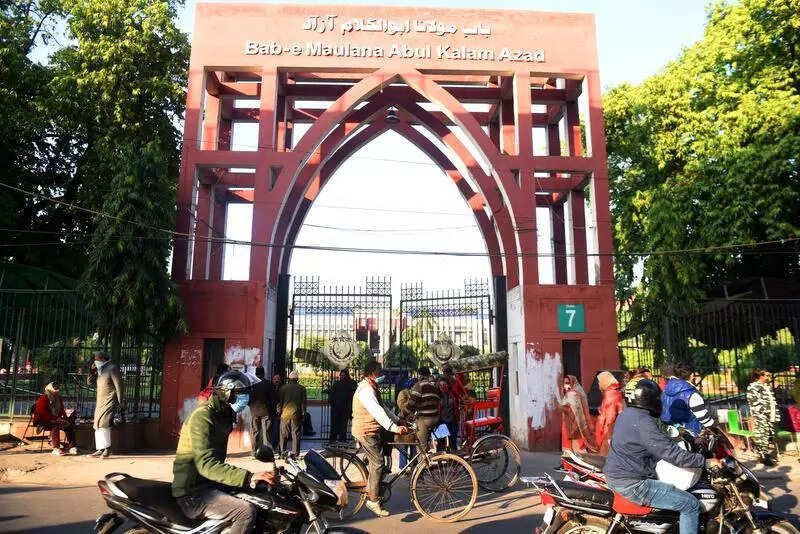






New Delhi: Delhi Police on Tuesday filed a supplementary reply before a court in the Turkman Gate case. It alleged that eight accused were part of an “unlawful assembly” and they “indiscriminately pelted stones” at police personnel during the anti-encroachment drive held in early Jan. The alleged violence resulted in injuries to five police personnel and one civilian.However, the court expressed dissatisfaction over the absence of accused-specific allegations in the reply and cautioned the investigating officer to remain “mindful” of inconsistencies between oral submissions and the written record.
Additional sessions judge Bhupinder Singh, while hearing bail pleas of three accused—Mohd Areeb, Naved and Athar—questioned the prosecution’s “conviction” in identifying the accused from the footage, particularly in the admitted absence of completed facial recognition analysis, before reserving the bail order for Feb 6.Opposing bail for all the eight accused, additional public prosecutor (APP) Atul Shrivastava submitted that they were present at the scene and acted with a “common intention” to obstruct the Municipal Corporation of Delhi‘s demolition drive initiated pursuant to High Court directions. The APP further contended that if released on bail, the accused could influence the ongoing investigation.The defence, however, sought bail primarily on the ground of parity, relying on the earlier bail granted to co-accused Mohd Ubedullah by a separate sessions court on Jan 24. The prosecution, however, countered that the said bail had been granted on the count of accused’s father’s illness and the absence of other male caretakers—which didn’t apply to the present accused.With respect to Areeb, the prosecution alleged that he circulated videos of the demolition to “instigate” others through a WhatsApp group named “Chatter Box.” While the defence argued that Areeb merely forwarded messages, the APP played a video allegedly shared by him, in which a voice is heard saying, “Aa jao mere bhai, yeh log aa gaye hai todne phodne ke liye.”The prosecution claimed the video was also sent to other WhatsApp groups, including a 191-member ‘Islamic Group’, and deleted after the accused’s apprehension. The defence, however, maintained that Areeb’s presence in the area was natural owing to his workplace being nearby.Athar and Naved sought bail on the ground of natural proximity, citing their residence near the site, and argued that their faces were not clearly visible in the video footage—an observation the court agreed with. The prosecution claimed Athar was identified through a constable’s statement and the “jacket he was wearing,” prompting the defence to question identification based solely on clothing. In Naved’s case, the investigating officer asserted he was “apparently visible” at the 16-second mark of the footage, a claim the court viewed with caution, in light of the pending facial recognition analysis.