





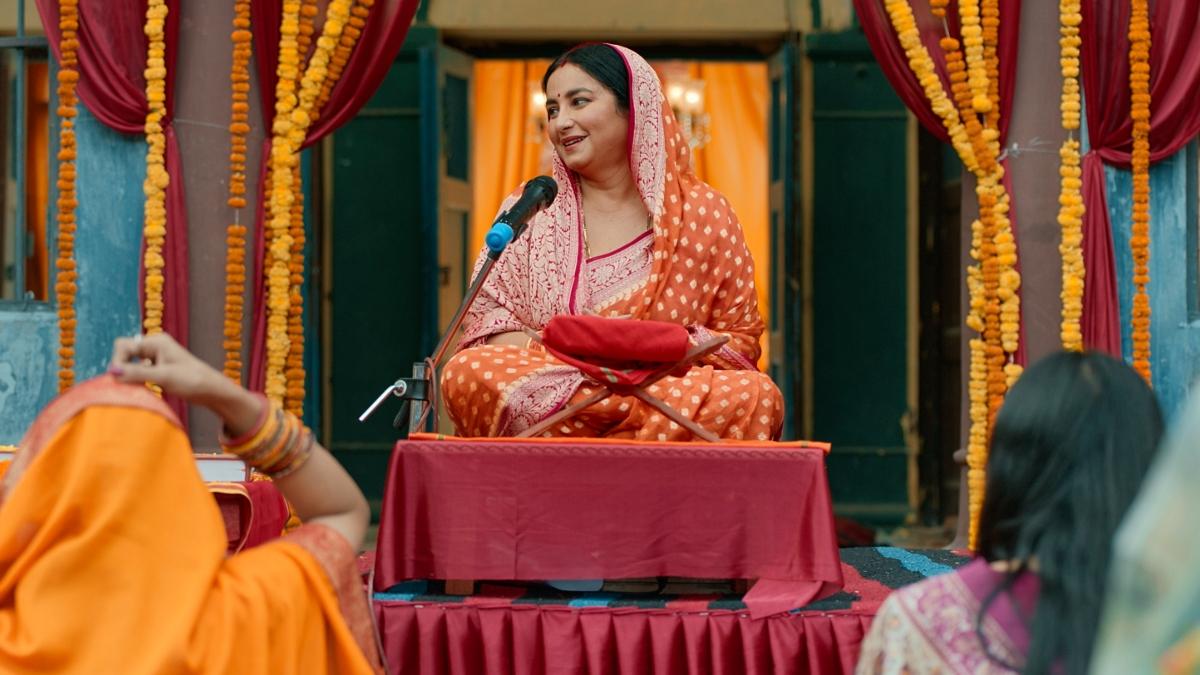
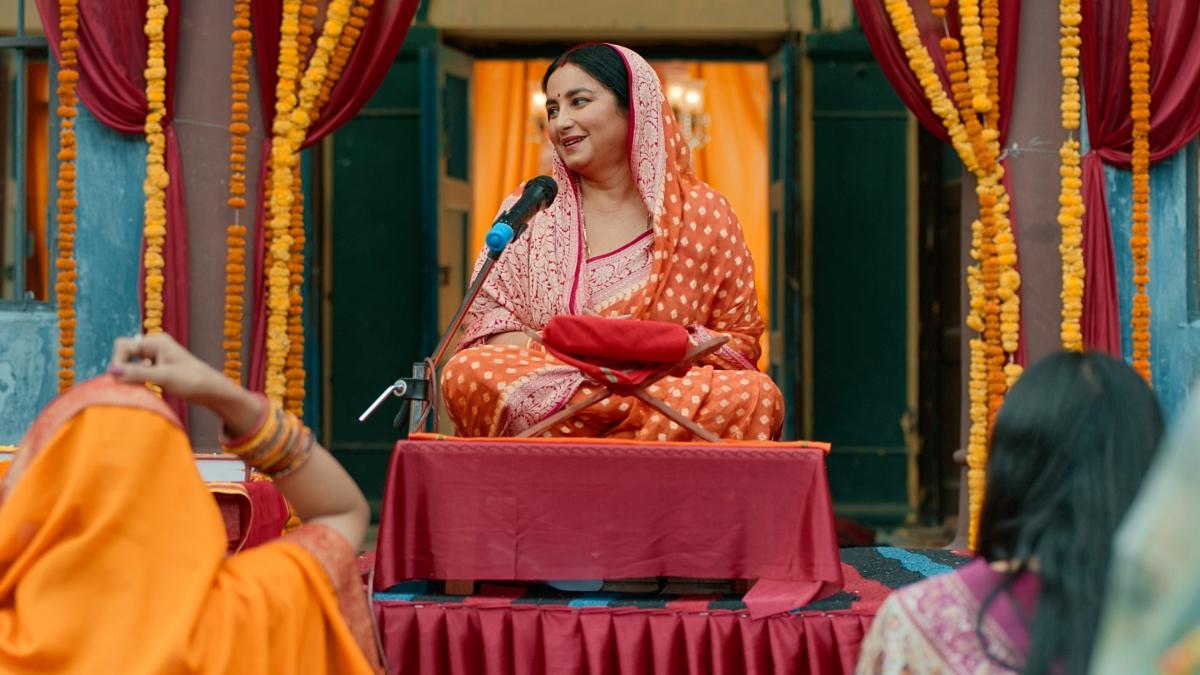
A quaint, easy-going charm follows Divya Dutta’s Chiraiya, often invoking the long-lost pleasures of watching a carefree television serial from the early 2010s. Written by Divy Nidhi Sharma, known for writing popular TV shows, Chiraiya is set in a traditional Indian household, dutifully run by Kamlesh (Divya), who handles the responsibilities of a wife, daughter-in-law, and a mother with a purposeful reckoning. However, she is not forever meek and submissive, like versions of such housewives glorified on TV for decades. The show is acutely aware of its familiar setup, as it doesn’t overlook the patriarchal overtones embedded within and rises up to stage a rebellion against the horrors that take place behind closed doors.
Adapted from the Bengali series Sampurna, the narrative of Chiraiya focuses essentially on the older bahu of the house,Kamlesh, and the newly wedded bride, Pooja (Prasanna Bisht), married to Arun (Siddharth Shaw), a seemingly harmless chocolate boy raised with love by Kamlesh. The two are close, and Kamlesh believes Arun can do nothing wrong. So, when a distraught Pooja tells Kamlesh about Arun’s forced sexual advances towards her on their first night, Kamlesh slaps her in disbelief. For her, the concept of consent in a marriage doesn’t exist. Soon, though, she goes through a transformation as she visits a local NGO and speaks to experts, who inform her about consent and the reality of marital rape. The bubble of a ‘perfect family’ bursts as she begins to see Arun as the entitled, misogynistic man he has become
A still from the show
| Photo Credit:
JioHotstar
Chiraiya (Hindi)
Episodes: 6
Duration: 30 minutes
Cast: Divya Dutta, Sanjay Mishra, Prasanna Bisht, Faisal Rashid
Director: Shashant Shah
Writer: Divy Nidhi Sharma
Synopsis: When a newly wed bride is raped by her husband on the first night, she seeks help of her courageous sister-in-law to get justice
Sharma spends some time exploring how the upbringing of such men instills a patriarchal mindset in their personality. Through bite-sized flashbacks, smaller instances from Arun’s childhood are shown when Kamlesh unconsciously infused a sense of superiority in him. Even though a bit too direct and filmed rather awkwardly, these simplistic sequences carry the spirit of critical thought in understanding the early roots of toxic masculinity. After an initiation from Pooja, Kamlesh takes it upon herself to unlearn the facets of patriarchy that she had doubtlessly internalised for decades. It is a subversive feat for a character existing within the landscape of a popular television setup to break away from the shackles of conservatism and question the powerful men in the house.

Divya’s assured performance eases into this transformation as she plays her own version of the traditional bahu without touching the cliches. Divya’s work on the character’s local dialect becomes one of the gateways to understand her naivety as she brightens even some of the flat portions of the show with her screen presence. Her confrontations with the hypocritical patriarch of the household, played with brevity by Sanjay Mishra, lead to genuine moments of reflection.
A still from the show
| Photo Credit:
JioHotstar
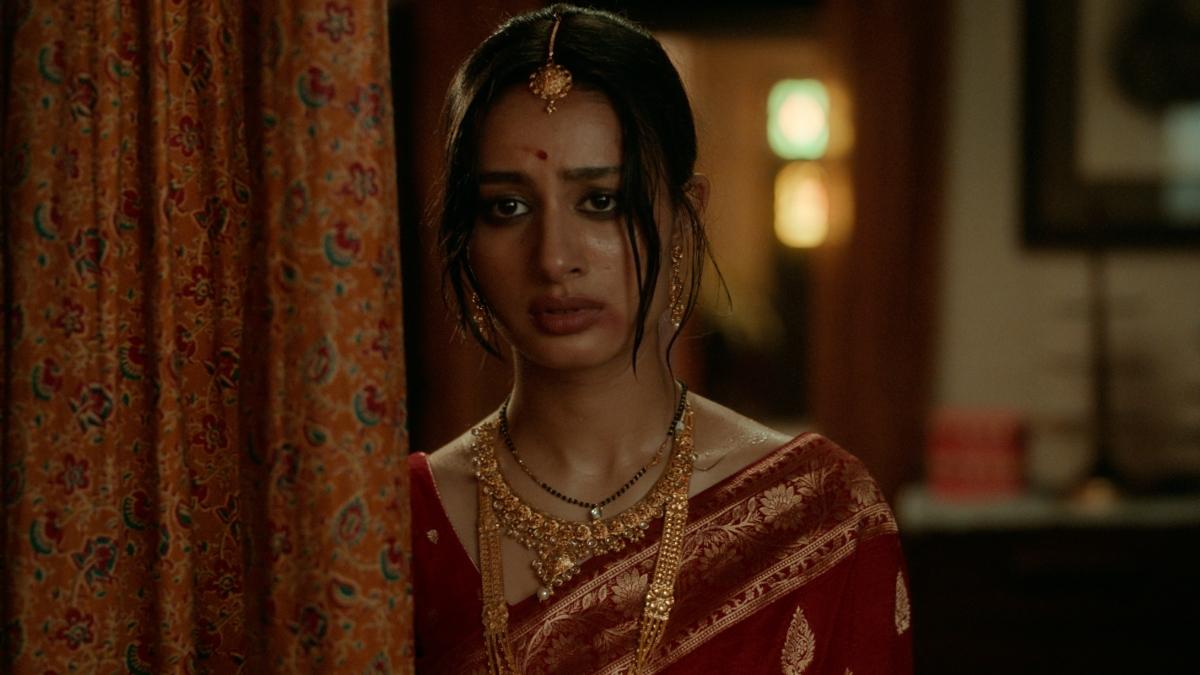
The show falters primarily in designing the character of Pooja, as it resorts to melodrama to understand her anguish and pain. She is a vocal youngster who is seen at a Pride parade. Hence, her lack of agency during her marriage feels confusing and rather convenient. It is also partly due to how dramatically she is played by Prasanna, leaving little room for complexity.
On the other hand, men are written mindfully by Sharma, who is conscious not to let them take center stage as Kamlesh and Pooja fight against Arun. Kamlesh’s husband is portrayed as someone lacking the courage to speak against his father, even when his sympathies lie with the women. Even though he remains complicit in the ordeal through his silence and inaction, it still feels refreshing when he says, “Mai hero nahi ban sakta, lekin hero ka pati ban sakta hun (I cannot be the hero, but I can become the hero’s husband)”, extending his support to Kamlesh while still fighting his own battle of not being able to speak up.

There is a sense of resilience in the dialogues that accentuates the show’s themes. Like the evocative realisation that Kamlesh has after looking through the cracks in the family, summed up beautifully in a line about the need to stage quieter rebellions as she says, “Kranti jungle me sher ki tarah nahi, rasoi me billi ki tarah aati hai (Revolution arrives not like a lion in a jungle but like a cat in a kitchen)”.
By staging a rebellion in the household, Chiraiya has a definitive say on tackling marital rape, as it also acknowledges the limitations of law in the country, which doesn’t criminalise it. Through its accessible storytelling, the show offers a sharp portrayal of patriarchy and its impact on families, even though the presentation lacks finesse, making it clunky in some portions. The show also blends with the tone of JioHotstar, as it invokes memories of its television-like aesthetics while introducing freshness. The course correction is timely, but it needed a bit more flourish to live up to its gleam.
Chiraiya is currently streaming on JioHotstar
Published – March 20, 2026 04:33 pm IST


