





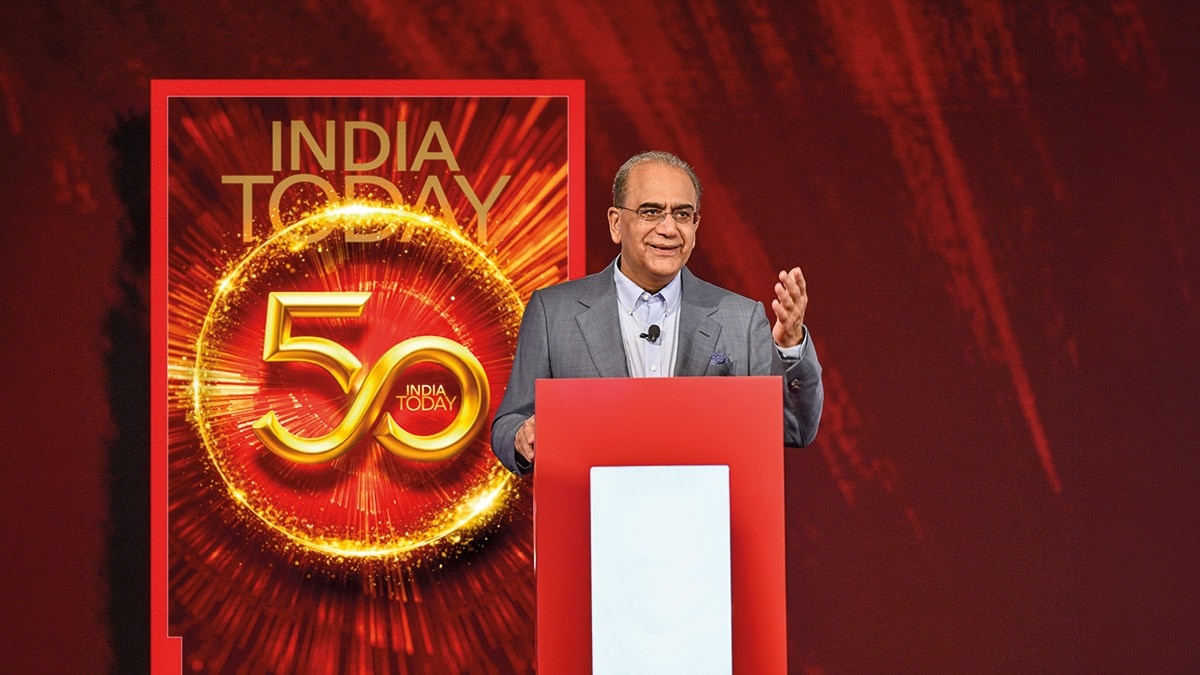
The 23rd edition of the India Today conclave is a special occasion. india today magazine has completed 50 years of publication. If you look at what the India Today Group is today, you will see a multi-media powerhouse reaching the minds of 750 million people. Yet it all began with a single magazine. The fountainhead from which everything else flowed. A foundation now 50 years deep. As Editor-in-Chief through this half-century, I have had the privilege of watching history unfold from a ringside seat. Over these decades, I have seen a nation capable of dramatic transformation.
From a country that was not only an LDC (Less Developed Country) but also an RDC (Refuse-to-Develop Country), India has become one of the world’s fastest-growing major economies. That journey has seen us pass through terrorism, social upheaval, polarisation, riots, assassinations, natural disasters and wars. Yet, we have endured. Above all, we have survived as a democracy, imperfect but resilient, and that alone is reason for gratitude and pride.
This year, it seems, the conclave had a date with history. The theme for the conclave, ‘Breakthroughs and Breakdowns’, was decided many months ago. Little did we know then that a full-scale war would erupt not so far from us, reminding us of how fragile global stability can be. On the one hand, it messed up our conclave programme as many of our foreign speakers were unable to travel. On the other hand, what better time to take stock of the world without illusions, and reflect on where we are heading? That has always been the purpose of our conclaves. We are living through one of the most extraordinary Breakthroughs in human history: Artificial Intelligence. Yet we are witnessing the oldest Breakdown of human civilisation: WAR.
Scientific discovery, technological capability and economic power are advancing at breathtaking speed. At the same time, institutions are fraying, norms are weakening and the global order is crumbling. That is the paradox of our times. While our intelligence has become Artificial, our instincts can still be Primitive. We are living in an age where a single miscalculation, diplomatic or technological, can erase years of progress. And ironically, some of our most advanced technologies are already shaping how modern warfare is conducted. Progress and disruption are no longer sequential. They are simultaneous.
Artificial Intelligence has moved from experimentation to deployment. It is reshaping productivity, creativity, governance and everyday life. Capabilities once reserved for large organisations are now available to individuals. India stands to benefit enormously from this transformation. With our scale, skills and digital public infrastructure, we are well placed to convert innovation into opportunity. We are no longer merely consuming technology. We are beginning to shape it.
Yet technology can also produce breakdowns. AI raises difficult questions about work, inequality and social stability. Productivity gains do not automatically translate into shared prosperity. If societies generate wealth faster than they generate inclusion, progress can easily turn into regression. AI is like fire. It can cook your food or burn your house down. Deepfakes can destroy reputations in seconds. Algorithms can polarise societies faster than we can repair them. If we exchange our values for efficiency, we lose. In all this turbulence and transformation, we must remain anchored in our ethics and our independence of judgement.
As an aside, I am sometimes asked whether a robot will one day replace the editor of india today. My wife might say a robot who does her bidding without question would certainly be easier to live with! But journalism is not only about processing information. It is about sensing reality—the atmosphere, the voices, the sentiments, the tensions of a moment. No machine can fully replicate that. AI will help journalists tell richer stories, but a human must remain in the driving seat, with one foot on the brake. So, I think I will still have a job. And my wife will continue to suffer me till AI improves.
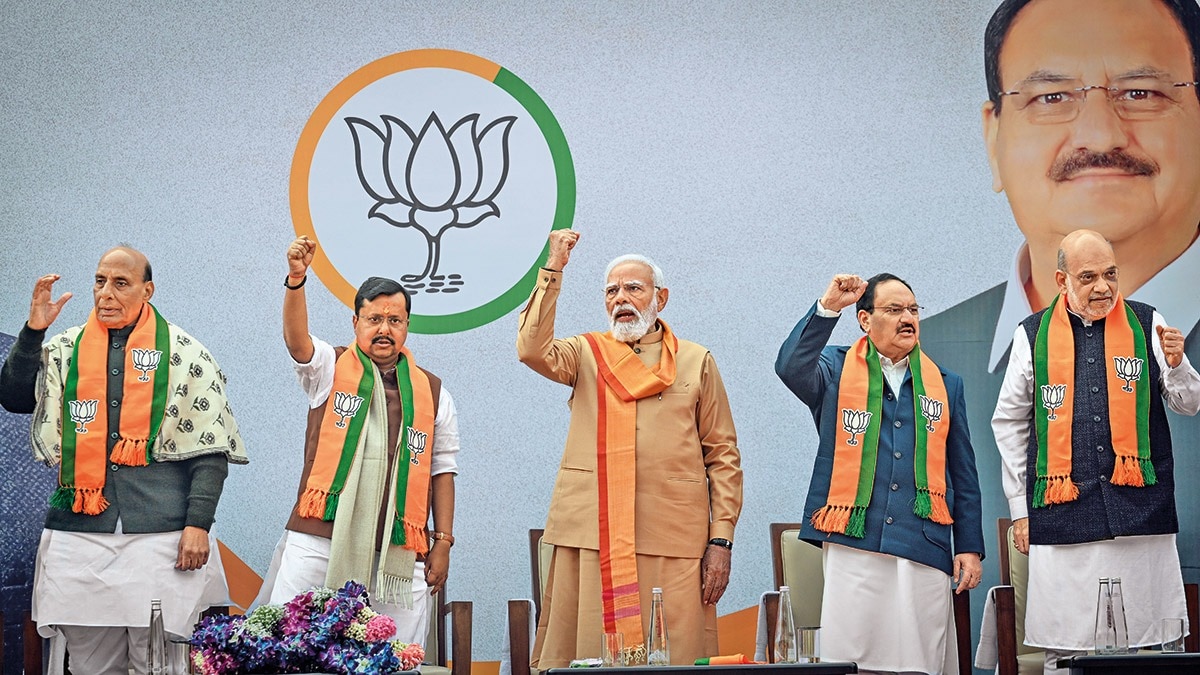
Beyond technology, we are also witnessing geopolitical shifts. Globalisation, once the engine of growth, is under strain. Supply chains are fragmenting. Trade is becoming politicised. Efficiency is increasingly being sacrificed at the altar of security. Yet there is also a breakthrough hidden within this disruption. President Donald Trump’s bid to reassert American dominance in his second term has without doubt unsettled the old global order. But that has resulted in the world becoming more multipolar, more contested and more fluid. For countries like India, this creates space—economic, diplomatic and strategic. Prime Minister Narendra Modi has ensured that India’s voice carries greater weight today than at any time in our post-Independence history.
But there are deeper breakdowns we must confront. Climate change is no longer a distant threat; it is a present reality. Extreme weather, water stress and food insecurity are already reshaping economies and politics. The tragedy is that solutions are available, but collective resolve remains inadequate. And then there is the erosion of trust. Trust in institutions. Trust in information. Trust in leadership. Democracies rarely collapse overnight. They weaken gradually, when conversation gives way to shouting, when disagreement becomes disloyalty and when facts become optional. Democracy needs oxygen. And that oxygen is free speech and a vibrant media. That is why platforms like the India Today conclave matter.
For more than two decades, this gathering has brought together leaders, thinkers and critics, not to manufacture agreement, but to sharpen understanding. In an age defined by breakthroughs and breakdowns, this role becomes even more important. The defining question before us is not whether the world will change. It already has. The real questions are whether we can convert breakthroughs into lasting progress without triggering dangerous breakdowns. Can innovation coexist with inclusion? Can growth align with sustainability? Can power be exercised with restraint?
You may not like the answers, but you must engage with them. Because in times like these, the greatest danger is not disruption. It is complacency.
– Ends
Tune In