





In 2022, when Britain-based Pakistani indie filmmaker Seemab Gul was covering the floods across Pakistan, she came across ‘ghost schools’ in Sindh and Balochistan. A chink in Pakistan’s armour, ‘ghost schools’ are basically either empty and hollow buildings that were never completed or are being used by local feudal lords as either barns or warehouses. Gul juxtaposes the need for education (girls’ education, especially, and forced school dropouts) with infrastructural lack, the rising numbers of empty school buildings owing to the lack of teachers, etc.
A Berlinale talent, Gul’s Ghost School, which had its world premiere last year at TIFF, now heads to the 76-year-old Berlin International Film Festival for its European premiere in the Generation Kplus (children and young adult film) competition. “Some of my favourite Iranian cinema and Romanian new wave films have come out of Berlinale. I always get inspired by the diverse and eclectic taste of the programmers,” says Gul, in whose films (Sandstorm; Ghost School), schoolgoing adolescent young girls are the protagonists. And while horror would have been the obvious genre for Ghost School, Gul veered towards magic realism.

Ghost School and Sarmad Khoosat’s Lali are the first Pakistani narrative feature films to premiere at the Berlinale ever. While Gul’s film is an international co-production making its European premiere, Khoosat’s is a fully homegrown, Pakistan-produced film, making its world premiere in the prestigious Berlinale Panorama segment, the first Pakistani film in 30 years in this section. Both films have a thematic “ghost” touch. “It’s surprising that no Pakistani feature films have played at Berlinale before, apart from one documentary. For filmmakers from countries where cinema is nearly abandoned, it means a lot to showcase our work and be seen by diverse and keen audiences and be a part of the international film community,” she says. Ghost School will have five screenings at the 76th Berlinale, which is set to take place from February 12 to 22.
Edited excerpts from an interview with Seemab Gul:
What has been your association with the Berlinale festival?
I was a part of the Berlinale Talents programme in 2019, which was a great experience. It was a supportive environment with talented young filmmakers and with masterclasses and screenings. I’ve since attended the European Film Market (EFM) at Berlinale a couple of times and found it a fruitful place to network.

Teen years and school are recurring themes in your films, as seen in your short film Mulaqat/Sandstorm (2021). Tell us about your new film.
Ghost School is my debut feature film, which is an exploration of the systemic corruption in rural Pakistan, where thousands of ‘ghost schools’ exist only on paper, leaving countless children without access to education. These schools remain abandoned while officials and teachers still collect salaries, perpetuating a cycle of ignorance and poverty.
Told through the eyes of a curious and brave young girl, the film highlights the innocence and determination of a child questioning the injustice around her. My other films are often about the female experience told through a female lens in Pakistan. I like the idea of my films being timeless, although Sandstorm was clearly set in the modern day.
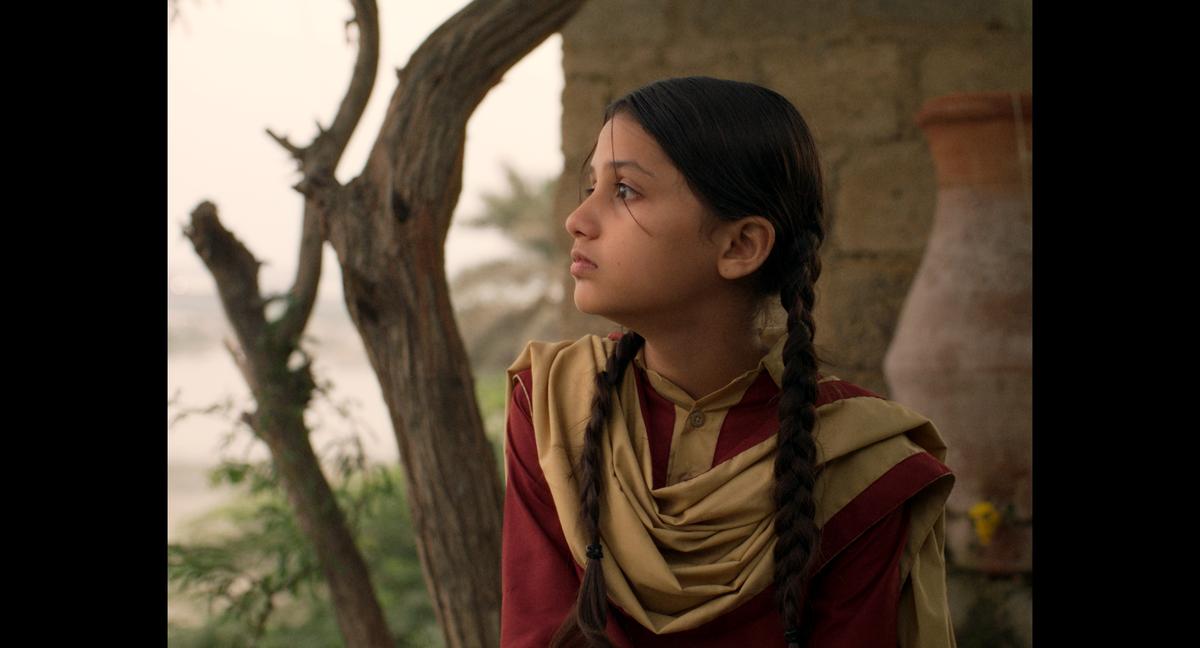
Child actress Nazualiya Arsalan plays the lead character, Rabia, in Pakistani film Ghost School (2025).
| Photo Credit:
Special Arrangement
According to the latest data, 62% out-of-school children are females in Pakistan. Could you tell me a little more about these ‘ghost schools’? Did you witness them growing up before you left for the UK?
There is no concrete research into ‘ghost schools’, and I didn’t witness them growing up in Karachi. Recently, I searched a lot and asked academics who had done some research; however, that was also dated. ‘Ghost schools’ are basically either empty and hollow buildings that were never completed, or are being used by local feudal lords as either barns or warehouses. It’s an open secret in Pakistan, yet no one knows how to tackle this problem, which affects girls and boys equally. Girls’ education, however, is a more complex matter, which depends on the fear of girls travelling to school and, in some cultures, their families do not support it. In my personal experience, though, most parents wanted to send their girls to schools if they were local and trustworthy. But schools often have more serious problems with teachers who got their jobs through connections and barely know how to teach. Further, there is a problem of poverty where children, boys and girls, often leave school to work to make ends meet. In some conservative families, for example, the Pashtuns, they get their girls married early.
Society cannot evolve when there is corruption creating poverty. Although the government tries to tackle this, there is a push towards privatisation by the IMF (International Monetary Fund), etc. This is making the situation worse for the poorest and peasant children, who are in the millions. These are all the reasons for lack of education in Pakistan.
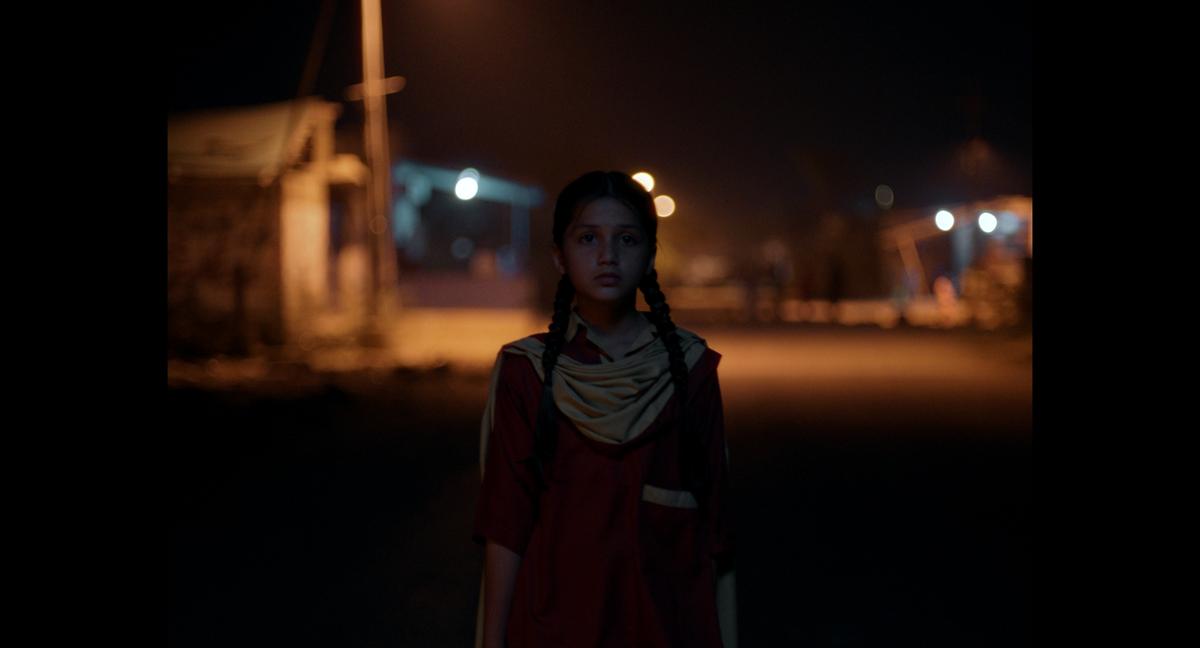
A still from ‘Ghost School’(2025), which premieres in the Generation Kplus segment at the 76th Berlinale.
| Photo Credit:
Special Arrangement

How did you come to make a film on this subject?
In 2022, when I was covering the floods across Pakistan, I came across ‘ghost schools’ in Sindh and Balochistan. What broke my heart was to see a ghost hospital and a ghost college with my own eyes. Ghost schools are more common, though (in thousands), and initially I thought about making a documentary about just one student asking villagers why her school shut down. But when I sat to write the screenplay, it just made sense to make a narrative film.
Could you elaborate a little on the theme of ghosts in Pakistani society and cinema, in terms of gender and the female experience in a patriarchal South Asia.
My film is more about a female student’s struggle to get answers from the elders and villagers as to why her school is closed. I took the term ‘ghost’ schools literally, yet metaphorically explored the idea of a haunted school. Djinn are very much a part of Pakistani folk tales and are widely accepted, yet when these buildings remain empty for years, it becomes an easy solution to call them haunted by djinn. My strong female protagonist, however, finds the courage to see whether these rumours are true or just tall tales. I had the option to move more towards horror, which is fashionable these days, but I wanted to steer towards magical realism instead.
Now, as an outsider, do you face criticism from within Pakistan, do you hope to release your film in Pakistani theatres?
I’ve faced minor criticism for choosing difficult subjects that may show Pakistan in a poor light. But as long as these problems persist, I want to depict them in my films to open debates on these important topics.
I hope to bring Ghost School to cinemas in Pakistan this year and am open to releasing it on TV and other platforms. I would like to do this in Pakistan as well as South Asia, including India.
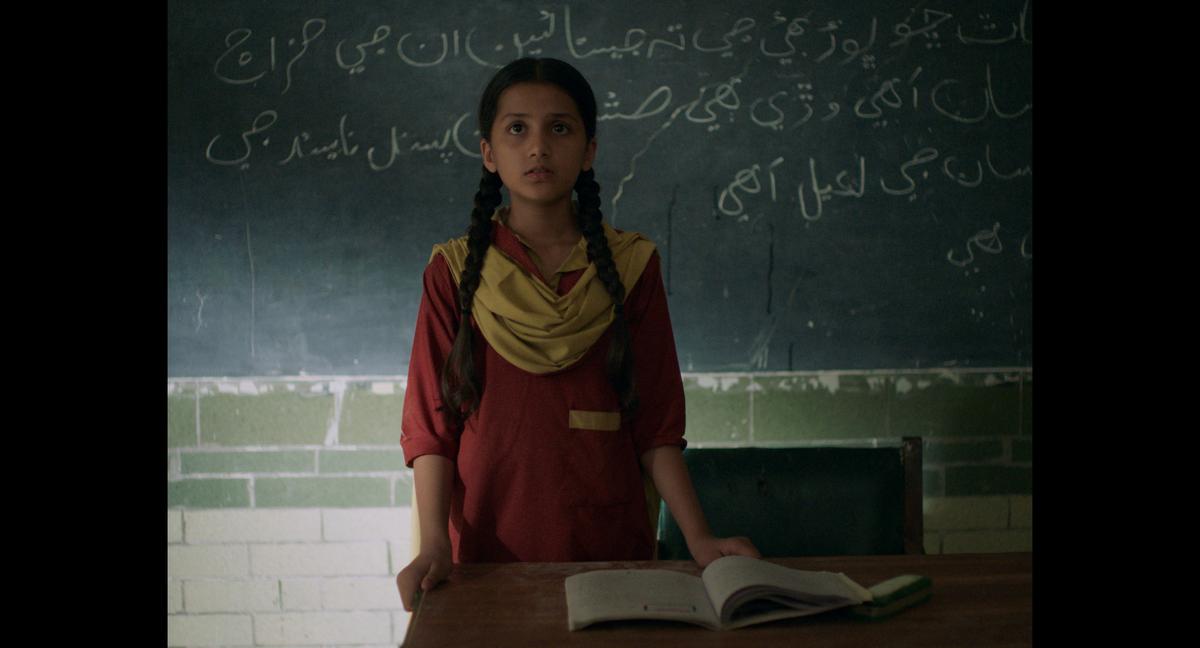
A still from ‘Ghost School’
| Photo Credit:
Special Arrangement

How challenging was it to make this film?
I initially made this film after my other film was postponed, and I got tired of waiting for producers and financiers, so I decided to borrow money to finance, write, direct and produce Ghost School all within a year. I wrote to over a hundred contacts around the world, but no one in the industry helped, so I borrowed from family and friends. The film was shot in November 2024 and premiered at TIFF (Toronto International Film Festival) in September 2025. The film was shot in two different villages on the outskirts of Karachi, Chashma Goth and Darsano Chano (which translates as the village of education). All the 200 cast and crew members were local, apart from one, the cinematographer, Zamarin Wahdat, who is an Afghan-born German. When in post-production, the film later got support from the Hamburg Film Fund and the Red Sea Film Fund. This really helped me financially, but I am still paying back debts.
What do you feel about creative friendships/collaborations between India and Pakistan? Can art heal wounds?
As a filmmaker interested in social-realist cinema, I do believe in the power of film to reflect on our times, to create dialogue on urgent topics and to heal wounds, too. I even thought about a film festival that could bring together all South Asians in a neutral country. There are already Pakistani dramas playing on Zee TV and on other Indian platforms. So, I don’t understand why we can’t have each other’s films in our cinemas. This could bring cultural exchanges while creating empathy amongst our populations and, thus, peace in the region. Although popular cinema is important and is necessary for the industry to thrive, it shouldn’t be used for national propaganda. More importantly, we need diverse films from a wide range of filmmakers to create a more interesting cinema culture.
Published – February 15, 2026 01:57 pm IST